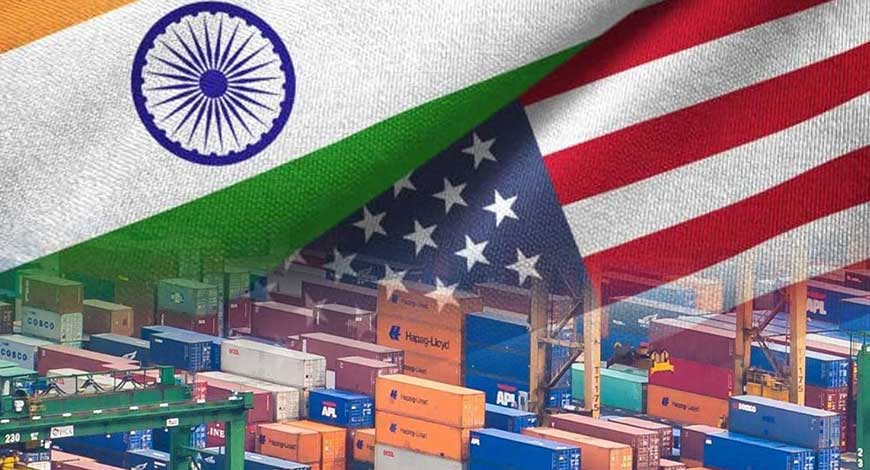
India has firmly excluded agriculture and dairy from the scope of the proposed India–US trade agreement, with government sources confirming that there will be no compromise on these sensitive sectors.
According to sources, agricultural products will not be part of the trade pact, underscoring India’s long-standing policy of safeguarding its farm economy from large-scale external competition.
Why Agriculture and Dairy Are Sensitive
Agriculture remains a cornerstone of India’s economy, employing nearly 45% of the workforce and contributing around 15–16% to GDP. When allied sectors are included, the farm economy supports livelihoods for more than half the population.
Dairy holds even greater strategic weight. India is the world’s largest milk producer, accounting for nearly 24% of global output. Unlike many developed economies dominated by large-scale corporate farms, India’s dairy sector is built on small and marginal farmers operating within cooperative and decentralized systems.
Opening these sectors to unrestricted imports has historically triggered concerns over:
- Farmer income stability
- Price volatility
- Food security
- Rural employment
Given the political and economic sensitivity, any trade concession in these areas carries significant domestic implications.
Firm Stand on Farmer Protection
Sources said the government remains unequivocal that farmer interests will not be diluted under any bilateral agreement. This position aligns with India’s stance at the World Trade Organization (WTO), where it has consistently sought special safeguards and policy flexibility for developing nations with large agrarian populations.
Read More: Heritage Foods Welcomes Union Budget 2026
India has previously resisted pressure to lower agricultural tariffs or reduce domestic support, citing structural differences between Indian smallholder farming and industrial agriculture in developed countries.
Focus Shifts to Non-Agricultural Sectors
With agriculture and dairy kept out of the negotiations, the India–US trade deal is expected to concentrate on non-agricultural areas such as industrial goods, selected manufacturing segments, technology, and trade facilitation measures.
Officials have indicated that India’s broader trade strategy prioritises:
- Selective market access
- Protection of vulnerable domestic sectors
- Balanced and sustainable trade growth
The approach mirrors India’s recent trade negotiations, where sensitive sectors were deliberately excluded to preserve domestic economic stability.
The government has reiterated that trade liberalisation must not come at the expense of farmer livelihoods, especially in sectors characterised by fragmented landholdings and small-scale production systems.
Join Our “Dairy & Food Jobs Updates” WhatsApp group
Disclaimer
I do my best to share reliable and well-researched insights but occasional errors or omissions may slip through. Please view all content as informational.
Stay informed on all the latest news updates
All Agriculture Books Free Download
All Dairy Technology Books Free Download
All Agricultural Engineering Books Free download
All Horticulture Books Free Download
All Fisheries Science Books Free Download
For Daily Update follow us at:
Facebook Telegram Whatsapp Instagram YouTube
The contents are provided free for noncommercial purpose such as teaching, training, research, extension and self learning.
If you are facing any Problem than fill form Contact Us
If you want share any article related Agriculture with us than send at info@agrimoon.com with your contact detail.