Initiative across nine states aims to strengthen formal milk procurement, improve payment transparency and expand market access for small dairy producers.
GUJARAT: A proposed national multi-state cooperative, being developed with institutional support from the National Dairy Development Board (NDDB), aims to connect approximately 20,000 village cooperative societies across nine states, bringing more dairy producers into organised milk procurement and marketing channels.
The initiative, identified as the Cooperative Milk Producers’ Organization Multi-State Limited, is aligned with the Union Ministry of Cooperation’s Sahkar Se Samriddhi framework. Its proposed network covers Andhra Pradesh, Bihar, Gujarat, Maharashtra, Madhya Pradesh, Punjab, Rajasthan, Uttar Pradesh and West Bengal.
The stated objective is to strengthen the links between village-level milk collection, formal procurement systems and larger dairy markets, with a focus on improving payment transparency and market access for small-scale producers.
Bridging the gap between informal and cooperative markets
The proposed cooperative is intended to bring village-level multipurpose cooperative societies into a common procurement network. By strengthening institutional market access, it aims to reduce producers’ dependence on informal milk buyers and local intermediaries.
Union Home and Cooperation Minister Amit Shah has highlighted the potential difference between prices received through informal channels and those available through cooperative systems. According to the figures cited in the source report, producers selling milk to informal traders may receive around ₹35 per litre, while cooperative payments, including component-based dividends, can reach up to ₹55 per litre.
Actual payments vary according to local market conditions, milk quality, fat and solids-not-fat (SNF) content, cooperative policies and applicable incentives. The cited figures should therefore be treated as illustrative rather than guaranteed prices for all participating farmers.
Cold-chain infrastructure and quality-based procurement
The proposed network is expected to link village collection points with bulk milk coolers, insulated tankers and dairy-processing facilities.
The stated operational objective is to cool collected milk to approximately 4°C within a few hours of milking, helping preserve quality during storage and transportation. Effective implementation will depend on collection schedules, cooling capacity, electricity availability and transport logistics.
The planned procurement system also envisages automated milk testing, computerised weighing and direct bank transfers to producers. Standardised records and audit procedures are intended to improve traceability and accountability across participating societies.
Also Read: The Hidden Cost of Dairy Wastage: Rethinking Inventory Management in India’s Dairy Industry
Access to more consistent raw-milk supplies could support processing operations producing liquid milk, cheese, paneer and skimmed-milk powder, depending on the capacities and product requirements of the dairies involved.
Potential support for small and women dairy farmers
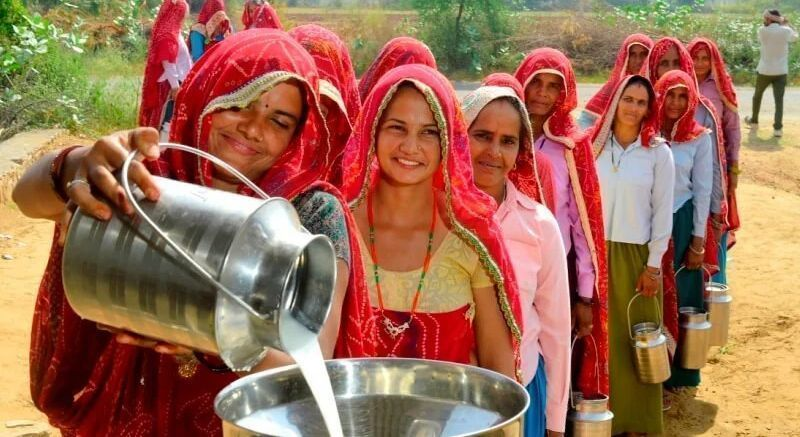
The initiative is intended to benefit small and marginal producers, landless households and women engaged in dairy farming by providing more structured routes to market and regular payment arrangements.
More predictable milk income can help households manage recurring expenses such as cattle feed, veterinary care and other farm inputs. The source report also indicates that NDDB’s institutional support could help participating organisations access credit for bulk feed purchases and services such as artificial insemination.
The availability and terms of such support will depend on the financing arrangements and implementation mechanisms established for member cooperatives.
Rollout planned towards 2027
The proposed expansion towards 20,000 village societies is expected to continue through 2027. The scale of the network makes coordination among village cooperatives, state-level institutions, procurement agencies and processing facilities important to its implementation.
If successfully established, the network could strengthen formal milk procurement in the nine participating states. Its impact will ultimately depend on the number of societies that become operational, the volume of milk procured, payment reliability and the extent to which participating farmers gain access to remunerative markets.
The initiative reflects a broader effort to strengthen cooperative institutions as a route to organised dairy marketing and more transparent producer payments.
Join Our “Dairy & Food Jobs Updates” WhatsApp group
Follow the Agri Jobs Updates channel on WhatsApp:
Disclaimer
I do my best to share reliable and well-researched insights but occasional errors or omissions may slip through. Please view all content as informational.
Stay informed on all the latest news updates
All Agriculture Books Free Download
All Dairy Technology Books Free Download
All Agricultural Engineering Books Free download
All Horticulture Books Free Download
All Fisheries Science Books Free Download
For Daily Update follow us at:
Facebook Telegram Whatsapp Instagram YouTube
The contents are provided free for noncommercial purpose such as teaching, training, research, extension and self learning.
If you are facing any Problem than fill form Contact Us
If you want share any article related Agriculture with us than send at info@agrimoon.com with your contact detail.