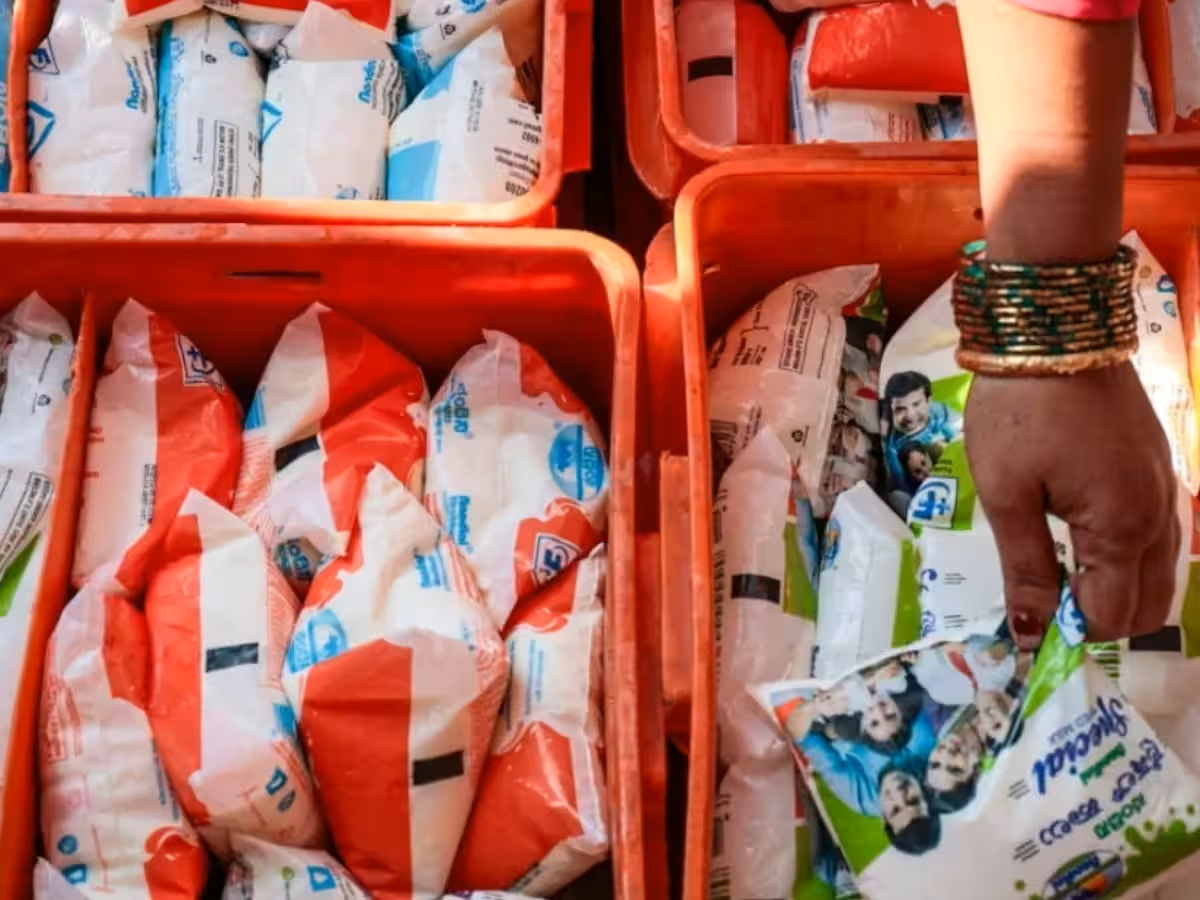
Indian milk prices have increased by approximately ₹4–₹8 per litre during FY2026–27, despite the traditional winter flush season, as tight milk supplies, lower butterfat availability, limited skimmed milk powder (SMP) stocks and rising input costs continue to put pressure on the dairy industry.
According to market reporting by The Economic Times on November 18, 2026, citing a sector assessment by CareEdge Ratings, major dairy cooperatives and private companies implemented fresh retail price increases of ₹2–₹6 per litre in November 2026. These revisions followed an earlier ₹2-per-litre increase by Amul and Mother Dairy in May 2026.
The developments indicate that seasonal improvements in milk production have not translated into significant retail price relief for Indian consumers.
1. Why are milk prices rising despite the winter flush?
The October-to-February winter flush normally supports higher milk production due to favourable weather, improved fodder availability and seasonal calving patterns, particularly among buffaloes.
However, the current market is experiencing tighter raw milk availability and changes in milk composition in some procurement regions.
CareEdge Ratings highlighted natural fluctuations in dairy production, noting that India’s milk output reached an estimated 256.8 million tonnes in FY26, while daily per-capita milk availability increased from 485 grams in FY25 to 498 grams in FY26.
Another concern is lower butterfat content in raw milk in certain procurement zones. Since fat is an important component for manufacturing cream, butter and ghee, dairies may need to procure larger volumes of milk to obtain equivalent quantities of these products.
Limited domestic SMP inventories are also adding pressure on dairy processors seeking to secure milk solids.
2. Rising cattle feed and processing costs
Higher input costs are adding to the pressure on milk procurement prices and dairy processing margins.
Cattle feed and fodder reportedly account for approximately 70–75% of farm-level milk production expenses. Increases in the prices of oilseed cakes, soybean meal, rice bran and maize can raise the cost of maintaining productive dairy animals.
Other cost pressures include:
- Raw milk procurement: Higher farmgate payments to maintain milk supply.
- Energy: Rising electricity and diesel expenses.
- Packaging: Approximately 30% increase in low-density polyethylene (LDPE) milk pouch film prices, as reported.
- Processing and distribution: Higher operating and transportation expenses.
These combined pressures affect both farmers and organised dairy processors, making cost management increasingly important.
3. Retail milk prices increase across major markets
Following the November 2026 revisions, the reported prices of selected milk categories in major metropolitan markets such as Delhi-NCR reached:
| Milk category | Reported retail price |
|---|---|
| Full-cream milk | ₹76/litre |
| Toned milk | ₹62/litre |
Average national retail milk realisations reportedly increased from ₹59.1 per litre in FY26 to ₹60.4 per litre in the first half of FY27.
The cumulative ₹4–₹8-per-litre increase varies across brands, regions and product categories; it should not be interpreted as a uniform nationwide price revision.
4. Organised dairy sector faces procurement competition
India’s dairy market continues to have a substantial unorganised segment.
According to the sector assessment cited in the report, only around 30–35% of the country’s marketable milk surplus moves through organised cooperative and private dairy channels.
Also Read: Amul Dairy Inaugurates 66 kV Substation in Anand to Support Growing Processing Capacity
Processing plants in the organised sector are reportedly operating at approximately 80% capacity utilisation.
Despite current cost pressures, dairy companies are continuing investment plans. The sector is expected to see more than ₹15,000 crore in capital expenditure through FY29, with investments directed towards value-added dairy categories such as:
- Curd and fermented dairy products.
- Paneer and cheese.
- Ghee and butter.
- Other value-added dairy beverages.
However, expanding processing capacity will also require stronger village-level milk collection, chilling infrastructure, veterinary extension services and direct farmer procurement networks.
5. Impact on consumers and the wider food market
Higher liquid milk prices can influence the cost of several dairy-based products because milk is a major raw material for paneer, curd, khoa, butter and traditional Indian sweets.
Consequently, sustained increases in milk procurement and processing costs may put additional pressure on household grocery budgets, sweet manufacturers, restaurants and foodservice businesses.
The impact can be particularly relevant during the winter wedding season, when demand for dairy-based foods and sweets is traditionally strong.
6. Milk price outlook through March 2027
CareEdge Ratings expects retail milk prices to remain firm through March 2027, with potential upward pressure if fodder costs remain elevated or SMP inventories tighten further ahead of the lean summer season.
The outlook will depend on several factors:
- Raw milk availability and seasonal production.
- Farmgate procurement prices.
- Milkfat and SNF composition.
- Cattle feed and fodder costs.
- Domestic SMP inventory levels.
- Energy, packaging and distribution expenses.
What this means for India’s dairy industry
The current price trend highlights an important challenge for India’s dairy sector: higher milk production does not automatically translate into lower consumer prices.
Milk composition, procurement competition, input inflation, processing costs and seasonal supply patterns all influence the final retail price.
For dairy cooperatives and private processors, the priority will be to maintain farmer procurement incentives while improving milk collection efficiency, processing productivity and supply-chain management.
As India approaches the lean summer season of 2027, the balance between farmer remuneration, processor margins and consumer affordability will remain a key issue for the dairy industry.
Join Our “Dairy & Food Jobs Updates” WhatsApp group
Follow the Agri Jobs Updates channel on WhatsApp:
Disclaimer
I do my best to share reliable and well-researched insights but occasional errors or omissions may slip through. Please view all content as informational.
Stay informed on all the latest news updates
All Agriculture Books Free Download
All Dairy Technology Books Free Download
All Agricultural Engineering Books Free download
All Horticulture Books Free Download
All Fisheries Science Books Free Download
For Daily Update follow us at:
Facebook Telegram Whatsapp Instagram YouTube
The contents are provided free for noncommercial purpose such as teaching, training, research, extension and self learning.
If you are facing any Problem than fill form Contact Us
If you want share any article related Agriculture with us than send at info@agrimoon.com with your contact detail.