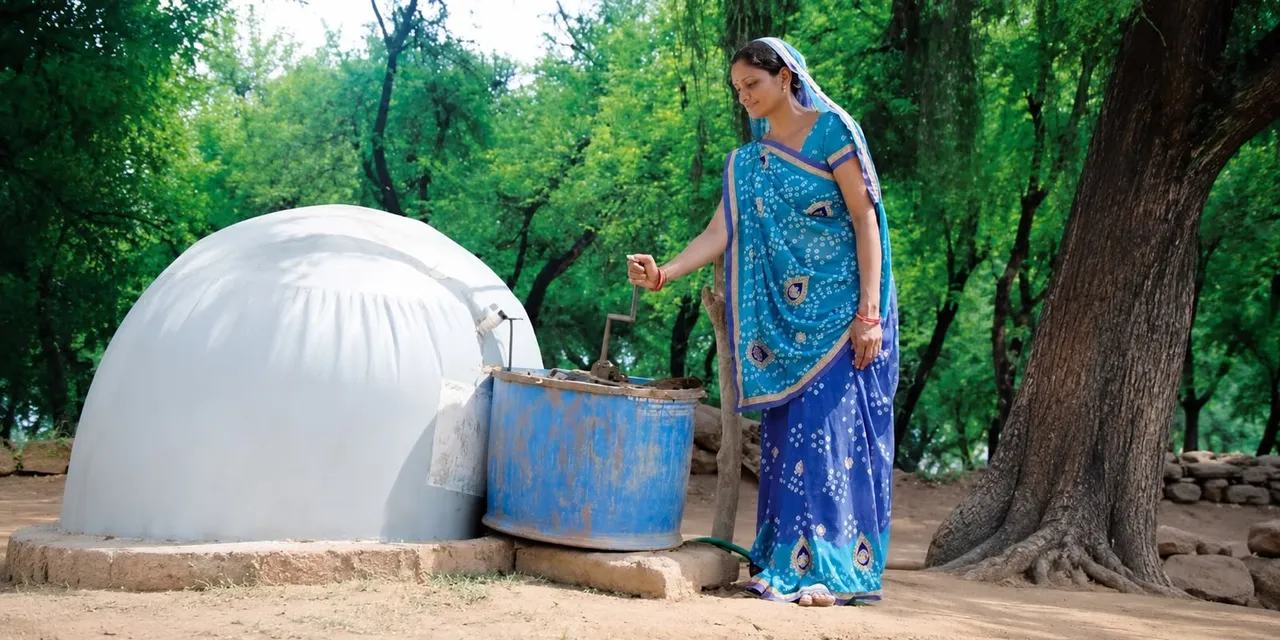
A simple idea brought home by a woman in Gujarat has transformed the way an entire village cooks, manages waste and earns a living.
In Zakariyapura, women once spent hours cooking on traditional wood-fired stoves, exposing themselves to smoke, eye irritation and respiratory problems. Rising household expenses and the cost of cooking fuel added to the financial pressure faced by families.
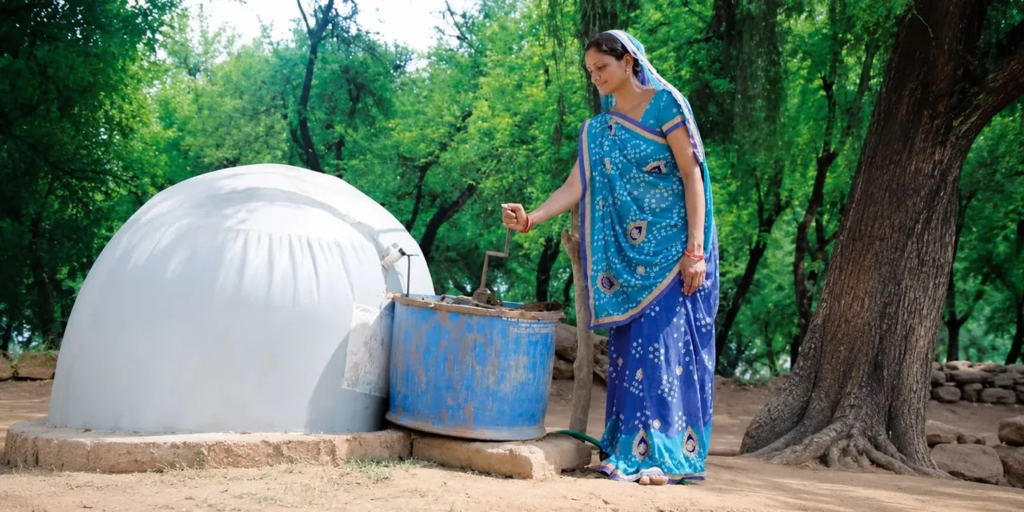
The turning point came when Madhuben, a village resident, visited a biogas plant in a neighbouring village. Impressed by the way cattle dung was being converted into cooking fuel, she encouraged families in Zakariyapura to adopt the technology.
368 households adopt biogas
With support from the National Dairy Development Board (NDDB), biogas plants were installed in all 368 cattle-owning households in the village.
The plants use cattle dung and water to generate biogas for cooking, while producing nutrient-rich slurry as a by-product.
The initiative reduced households’ dependence on firewood and LPG, while also helping women spend less time collecting fuel and cooking in smoke-filled kitchens.
Waste becomes an additional source of income
The impact went beyond clean cooking.
Women in the village came together to establish an all-women manual cooperative to process and market the organic fertiliser produced from biogas slurry.
Also Read: Maharashtra Milk Prices to Rise by ₹2/Litre from August 11; Centre Says No Proposal for Milk MSP
As a result, participating households can earn around ₹3,000–₹5,000 per month from the additional livelihood opportunity.
The model has also created wider social benefits. Reduced dependence on firewood has saved time for women and girls, while improved household economics have helped ease financial pressures on families.
A model for circular dairy development
Zakariyapura demonstrates how livestock waste can become an economic resource rather than a disposal problem.
The model creates a simple circular system:
Cattle → Dung → Biogas → Clean cooking → Slurry → Organic fertiliser → Additional income
The village’s experience highlights the potential of biogas, organic fertiliser production and women-led cooperatives to strengthen rural livelihoods while supporting cleaner energy and sustainable dairy farming.
For India’s dairy sector, such models could become an important part of circularity and sustainability, particularly as programmes such as White Revolution 2.0 increasingly focus on creating additional value from livestock resources.
Join Our “Dairy & Food Jobs Updates” WhatsApp group
Follow the Agri Jobs Updates channel on WhatsApp:
Disclaimer
I do my best to share reliable and well-researched insights but occasional errors or omissions may slip through. Please view all content as informational.
Stay informed on all the latest news updates
All Agriculture Books Free Download
All Dairy Technology Books Free Download
All Agricultural Engineering Books Free download
All Horticulture Books Free Download
All Fisheries Science Books Free Download
For Daily Update follow us at:
Facebook Telegram Whatsapp Instagram YouTube
The contents are provided free for noncommercial purpose such as teaching, training, research, extension and self learning.
If you are facing any Problem than fill form Contact Us
If you want share any article related Agriculture with us than send at info@agrimoon.com with your contact detail.