
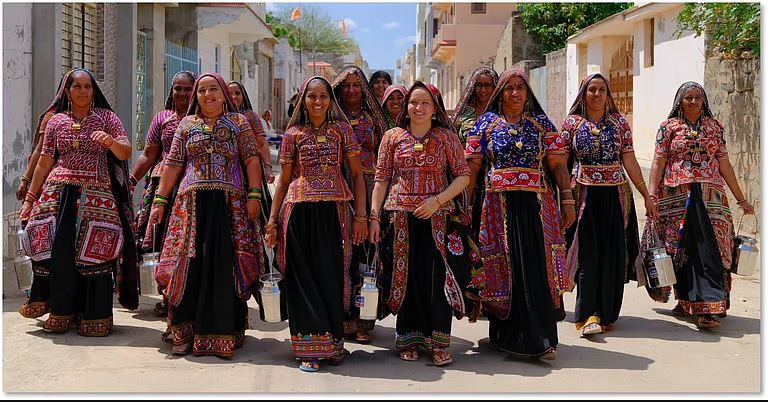
From the Kaira farmers’ struggle against a private milk monopoly to the expansion of women-led dairy cooperatives, India’s cooperative movement has transformed rural livelihoods. Its next challenge is ensuring that women who do the work also hold membership, decision-making power and income.
Sardar Vallabhbhai Patel, widely known as the “Iron Man of India” for his role in integrating more than 500 princely states into the Indian Union, also played an important role in shaping India’s cooperative movement. His support for the Kaira farmers’ struggle against an entrenched private milk procurement system helped lay the foundation for the cooperative model that later became Amul.
That vision continues to influence India’s dairy economy. However, the movement’s next phase must address a fundamental question: do the women who contribute much of the labour in dairy farming also have an equal share in ownership, income and decision-making?
The farmers’ struggle that gave birth to the Amul model
In the mid-1940s, milk producers in Kaira district, Gujarat, were dependent on Polson, a private dairy operating under the Bombay Milk Scheme. The arrangement gave Polson and its contractors a dominant position in milk procurement, leaving farmers with limited alternatives and little control over the prices they received.
The farmers, led by Tribhuvandas Patel, approached Sardar Vallabhbhai Patel for support. Patel encouraged them to organise collectively, challenge the existing procurement arrangement and establish their own cooperative system.
The resulting milk strike in 1946 became a turning point in the history of India’s dairy sector. It led to the formation of the Kaira District Co-operative Milk Producers’ Union, which eventually developed into the Amul cooperative movement.
Tribhuvandas Patel led the farmers’ organisation, while Verghese Kurien, who joined the initiative in 1949, played a decisive role in developing its processing, marketing and institutional capabilities.
The model established a three-tier cooperative structure: village-level societies procure milk from producers, district unions process it, and state federations handle marketing. This Anand Pattern later became the institutional foundation for Operation Flood, launched in 1970 by the National Dairy Development Board (NDDB).
India became the world’s largest milk producer in 1998 and now contributes a substantial share of global milk production. The cooperative network has grown into a major institutional system involving millions of dairy producers.
Women: The workforce behind India’s dairy economy
Although the original Kaira movement focused on farmers as a collective, women have long performed a substantial share of the work that sustains dairy production.
Their responsibilities commonly include feeding animals, cleaning sheds, milking, caring for sick livestock and managing daily milk-related activities. Yet this contribution has not always translated into formal recognition as dairy producers or cooperative members.
Government estimates cited in the supplied material indicate that women account for nearly 70% of the workforce in dairy farming. Their role is particularly important in smallholder and household-based dairy systems, where livestock management is closely integrated with family responsibilities.
Cooperatives can provide a route towards greater economic recognition. Regular payments for milk, formal membership, voting rights and participation in profit-sharing can help women gain greater control over household income and productive assets.
This is especially significant in rural areas, where women’s agricultural and livestock-related work is often treated as unpaid family labour.
The gap between women’s labour and cooperative ownership
Despite their contribution to dairy farming, women remain under-represented in formal cooperative membership and leadership.
Figures attributed to NDDB and government sources place women’s membership in dairy cooperatives at approximately 30–35%. This represents progress compared with a mid-1990s estimate cited in an FAO paper, which put women’s membership at around 16%.
However, the difference between women’s share of dairy work and their share of cooperative ownership remains substantial.
The challenge is not simply to increase the number of women working in dairying. It is to ensure that they are formally recognised as producers, members and decision-makers.
Gujarat offers examples of women’s growing participation
Gujarat provides several examples of institutional efforts to strengthen women’s representation in dairy cooperatives.
Section 74(1B) of the Gujarat Co-operative Societies Act, 1961, provides for the reservation of two seats for women on the managing committees of specified cooperative societies. The 2023 amendment to the Multi-State Co-operative Societies Act also introduced provisions for women’s representation on managing boards.
According to figures cited in the supplied material, women held approximately 80,000 seats on village dairy society committees in Gujarat, compared with 70,200 in 2020. In 2023, Amul’s managing director reportedly stated that women occupied around 38% of committee positions in the cooperative network.
The number of women-led dairy cooperative societies in Gujarat also increased from 3,764 in 2020 to 4,562 in 2025. These societies reportedly handle around 26% of the state’s milk and have recorded a 43% increase in revenue.
Also Read: Karnataka Raises Milk Prices by ₹8 per Litre from November 1; Farmers to Receive ₹7 of Increase
These developments demonstrate the potential of women’s participation in cooperative institutions. At the same time, representation figures indicate that further progress is needed to ensure that women have a meaningful role in leadership and ownership.
White Revolution 2.0: An opportunity to strengthen women’s participation
The expansion of dairy cooperatives under White Revolution 2.0 provides an opportunity to address this gap.
The Ministry of Cooperation has announced plans to establish 75,000 new dairy cooperative societies, with the objective of expanding organised milk procurement and bringing more women dairy farmers into the cooperative network.
Another initiative mentioned in the supplied material is the Sardar Patel Cooperative Dairy Federation, launched in July 2025 as a multi-state platform intended to connect village dairy cooperatives beyond Gujarat.
As the cooperative model expands into new regions, the design of these institutions will be important. Increasing the number of societies alone will not guarantee women’s empowerment. Membership rules, payment systems, access to finance and representation in management must also support their participation.
What needs to change?
For cooperative expansion to translate into meaningful economic empowerment, women’s participation must extend beyond their contribution to daily farm operations.
Some important priorities include:
- Direct cooperative membership: Women who manage livestock and supply milk should be formally recognised as members and producers.
- Financial independence: Milk payments should be credited directly into women’s own bank accounts wherever they are the recognised suppliers.
- Access to credit and insurance: Women dairy farmers should have better access to livestock loans, animal insurance and other financial services.
- Asset ownership: Greater recognition of women’s ownership or co-ownership of livestock and other productive assets can strengthen their economic position.
- Leadership opportunities: Women should be represented not only on cooperative committees but also in positions such as chairperson, secretary and other decision-making roles.
- Training and technical support: Access to animal healthcare, breeding services, fodder management and dairy technology can improve productivity and strengthen women’s role as independent dairy entrepreneurs.
From participation to ownership: Completing Patel’s vision
Sardar Vallabhbhai Patel’s support for the Kaira farmers’ movement helped establish a principle that continues to shape India’s dairy economy: producers gain greater bargaining power when they organise collectively and participate in the institutions that procure, process and market their products.
For women in dairying, this principle needs to go further. Their contribution must be recognised through formal membership, control over income, ownership of productive assets and participation in cooperative leadership.
India’s dairy cooperative movement has demonstrated how collective organisation can transform a fragmented rural economy into a major national industry. White Revolution 2.0 offers an opportunity to extend that transformation by making women equal stakeholders in the institutions they help sustain.
The most meaningful way to honour Patel’s cooperative vision is to ensure that the woman who rises before dawn to milk the animals is not merely counted as a worker, but recognised as an owner, a member and a decision-maker in India’s dairy economy.
— Tanya Mittal and Dr. Cchavi Vasisht
Join Our “Dairy & Food Jobs Updates” WhatsApp group
Follow the Agri Jobs Updates channel on WhatsApp:
Disclaimer
I do my best to share reliable and well-researched insights but occasional errors or omissions may slip through. Please view all content as informational.
Stay informed on all the latest news updates
All Agriculture Books Free Download
All Dairy Technology Books Free Download
All Agricultural Engineering Books Free download
All Horticulture Books Free Download
All Fisheries Science Books Free Download
For Daily Update follow us at:
Facebook Telegram Whatsapp Instagram YouTube
The contents are provided free for noncommercial purpose such as teaching, training, research, extension and self learning.
If you are facing any Problem than fill form Contact Us
If you want share any article related Agriculture with us than send at info@agrimoon.com with your contact detail.