
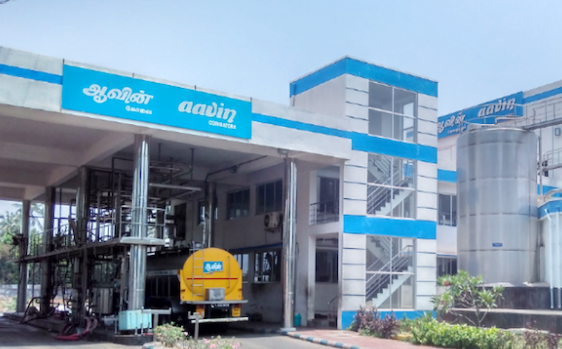
Lower cooperative procurement, stronger demand for affordable milk and competition from private dairies put pressure on retail availability.
CHENNAI: Tamil Nadu’s state-run dairy cooperative, Aavin, is facing a daily milk procurement shortfall of approximately 1 million litres, disrupting supplies across several parts of the state. Increased consumer demand for Aavin’s relatively lower-priced milk, following price hikes by private dairies, has added pressure to an already constrained supply network.
The Tamil Nadu Co-operative Milk Producers’ Federation, which operates Aavin, reportedly collects around 2.7 million litres of raw milk per day, against estimated daily requirements of approximately 3.7 million litres. Tamil Nadu’s overall milk production is estimated at around 30 million litres per day.
The supply constraints have affected Chennai and districts including Tiruvallur, Kancheepuram, Villupuram, Kanyakumari, Tirunelveli and Cuddalore, with retail outlets reporting difficulty maintaining regular packet availability.
Chennai deliveries fall amid distribution cuts
Chennai normally receives approximately 1.65 million litres of Aavin liquid milk daily. However, deliveries to the city have reportedly declined by around 25% in recent months, followed by an additional distribution reduction of 10% from September 15.
Aavin retail parlours have reported repeated stock-outs, particularly during morning sales. The supply constraints have also affected selected value-added dairy products, with some outlets recording daily availability reductions of approximately 100–200 litres.
Price gap increases demand for Aavin milk
Aavin’s relatively lower retail prices have become an important factor influencing consumer demand. Following price increases by private processors, Aavin’s green, orange and blue packet varieties are reportedly priced approximately ₹30, ₹26 and ₹22 per litre lower, respectively, than comparable privately supplied milk.
The price difference has encouraged more consumers to purchase Aavin products, particularly in urban markets. However, the cooperative’s ability to meet this additional demand remains constrained by its raw-milk procurement levels.
Private dairies compete for farmer supplies
Competition for milk procurement has also intensified. Aavin reportedly increased its procurement price by as much as ₹6 per litre, taking its purchasing rate to approximately ₹44 per litre. Private dairy processors have reportedly matched these increases to retain milk suppliers in village-level procurement markets.
The competition highlights the pressure on organised dairies to secure adequate raw-milk volumes while balancing procurement costs and consumer affordability.
Differing estimates of procurement and daily requirements
Milk agents’ associations have presented different estimates of Aavin’s daily requirements and procurement volumes. According to their figures, the cooperative needs approximately 3.3 million litres per day to serve its traditional retail booth network, while actual purchases from farmers are estimated at between 2.2 million and 2.4 million litres daily.
These estimates relate to the established booth network and should be distinguished from the broader operational figures, which place Aavin’s overall daily requirement at approximately 3.7 million litres.
Agents raise concerns over allocation to online and institutional channels
Representatives of milk agents’ associations have also alleged that approximately 500,000 litres of milk per day are being supplied through online platforms to private corporations and supermarkets.
They contend that these allocations reduce the volumes available to neighbourhood retail booths already experiencing shortages. The allegation has become part of a wider disagreement between the agents’ network and cooperative management over the distribution of available milk across different sales channels.
The claimed allocation has not been independently established in the information available and should be treated as an allegation by the agents’ representatives.
Seasonal production expected to improve availability
Aavin officials expect seasonal improvements in rural milk production to help ease the procurement shortage. Better fodder availability in milk-producing areas is expected to support higher farm-level milk output and increase deliveries to cooperative collection centres.
If procurement improves, Aavin’s processing facilities could increase liquid milk dispatches and help restore regular supplies to retail outlets.
The immediate challenge for Aavin is to bridge the gap between raw-milk procurement and market demand while maintaining affordable prices. The situation also highlights the importance of strengthening farmer procurement networks and ensuring transparent allocation across retail, institutional and digital distribution channels.
Join Our “Dairy & Food Jobs Updates” WhatsApp group
Follow the Agri Jobs Updates channel on WhatsApp:
Disclaimer
I do my best to share reliable and well-researched insights but occasional errors or omissions may slip through. Please view all content as informational.
Stay informed on all the latest news updates
All Agriculture Books Free Download
All Dairy Technology Books Free Download
All Agricultural Engineering Books Free download
All Horticulture Books Free Download
All Fisheries Science Books Free Download
For Daily Update follow us at:
Facebook Telegram Whatsapp Instagram YouTube
The contents are provided free for noncommercial purpose such as teaching, training, research, extension and self learning.
If you are facing any Problem than fill form Contact Us
If you want share any article related Agriculture with us than send at info@agrimoon.com with your contact detail.