
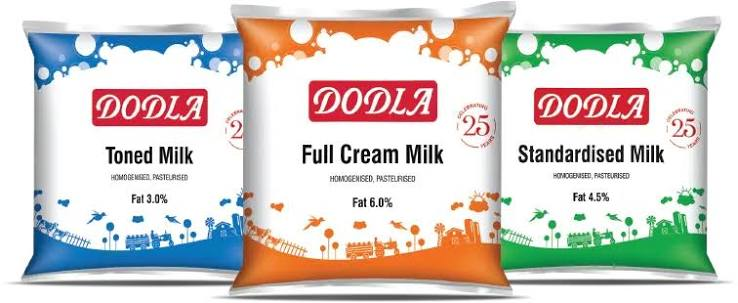
Company says laboratory findings differed on a packaged full-cream milk sample collected in January; reports no impact on operations or distribution
HYDERABAD: Dodla Dairy Limited has issued a regulatory clarification following media reports concerning a food-safety inquiry involving its Batlagundu processing facility in Tamil Nadu. The company said two authorised laboratories reported differing findings on a packaged full-cream milk sample and raised concerns about the timing of the subsequent analysis, which took place after the product’s best-before date.
The disclosure was submitted to the National Stock Exchange of India and BSE under Regulation 30 of the Securities and Exchange Board of India’s listing-disclosure requirements.
Dodla Dairy stated that the matter had not affected its milk procurement, production or commercial distribution. The company characterised the issue as a dispute concerning sample testing and the interpretation of laboratory findings.
Initial laboratory report identified low milk-fat content
According to the company’s disclosure, food-safety officers collected a 500 ml sample of packaged full-cream milk from the Nilakottai plant on January 9, 2026. The product carried a best-before date of January 12.
The initial accredited laboratory issued its report on January 20, classifying the sample as substandard because its milk-fat content did not meet the prescribed specification. The report reportedly did not identify chemical adulterants, including synthetic detergents or neutralising agents.
Milk-fat content is an important compositional parameter for full-cream milk and must comply with the applicable regulatory standard.
Referral laboratory reports a different finding
Dodla Dairy subsequently appealed the initial assessment under the applicable procedure. The sealed sample was then referred to the National Food Laboratory in Navi Mumbai for further analysis.
The referral laboratory reportedly examined the sample between March 10 and March 16 and issued its report on March 20. According to the company’s account, the report recorded the qualitative presence of detergent residues, differing from the findings of the initial laboratory.
Dodla Dairy challenged the subsequent analysis, pointing out that the sample was examined approximately two months after its stated best-before date. The company submitted a formal representation raising concerns about the timing of the examination and its relevance to interpreting the results.
The difference between the reports is central to the dispute. However, the company’s objection regarding the best-before date does not, by itself, establish that the referral laboratory’s findings were invalid. Resolving the issue would require consideration of the sampling and sealing records, storage conditions, laboratory methods and applicable regulatory procedures.
Company reports no operational disruption
Dodla Dairy said the matter had not affected its day-to-day operations, milk collection, production or commercial distribution.
The company also highlighted its wider dairy operations, including village-level milk procurement, cattle-feed manufacturing and the production of value-added dairy products such as curd, paneer, flavoured milk and ghee.
Its milk procurement network spans Andhra Pradesh, Telangana, Tamil Nadu and Karnataka, connecting farming households with organised dairy processing and marketing operations.
Business performance and quality assurance
The disclosure cited consolidated quarterly revenue of ₹1,198 crore and average daily milk procurement of 21.1 lakh litres. The company also described itself as net debt-free.
Dodla Dairy’s business includes packaged dairy products and investments in brands such as Sids Farm, alongside processing operations and expansion initiatives in East Africa.
The laboratory dispute places renewed attention on the importance of sampling protocols, sample integrity, validated testing methods and consistent interpretation of results in dairy quality assurance.
Regulatory process remains important
The case illustrates why differences between laboratory reports must be evaluated through the prescribed regulatory process rather than interpreted in isolation. A substandard finding based on milk-fat content is distinct from a finding involving a potential chemical contaminant, and each requires assessment against the relevant standards and evidence.
Join Our “Dairy & Food Jobs Updates” WhatsApp group
Follow the Agri Jobs Updates channel on WhatsApp:
Disclaimer
I do my best to share reliable and well-researched insights but occasional errors or omissions may slip through. Please view all content as informational.
Stay informed on all the latest news updates
All Agriculture Books Free Download
All Dairy Technology Books Free Download
All Agricultural Engineering Books Free download
All Horticulture Books Free Download
All Fisheries Science Books Free Download
For Daily Update follow us at:
Facebook Telegram Whatsapp Instagram YouTube
The contents are provided free for noncommercial purpose such as teaching, training, research, extension and self learning.
If you are facing any Problem than fill form Contact Us
If you want share any article related Agriculture with us than send at info@agrimoon.com with your contact detail.