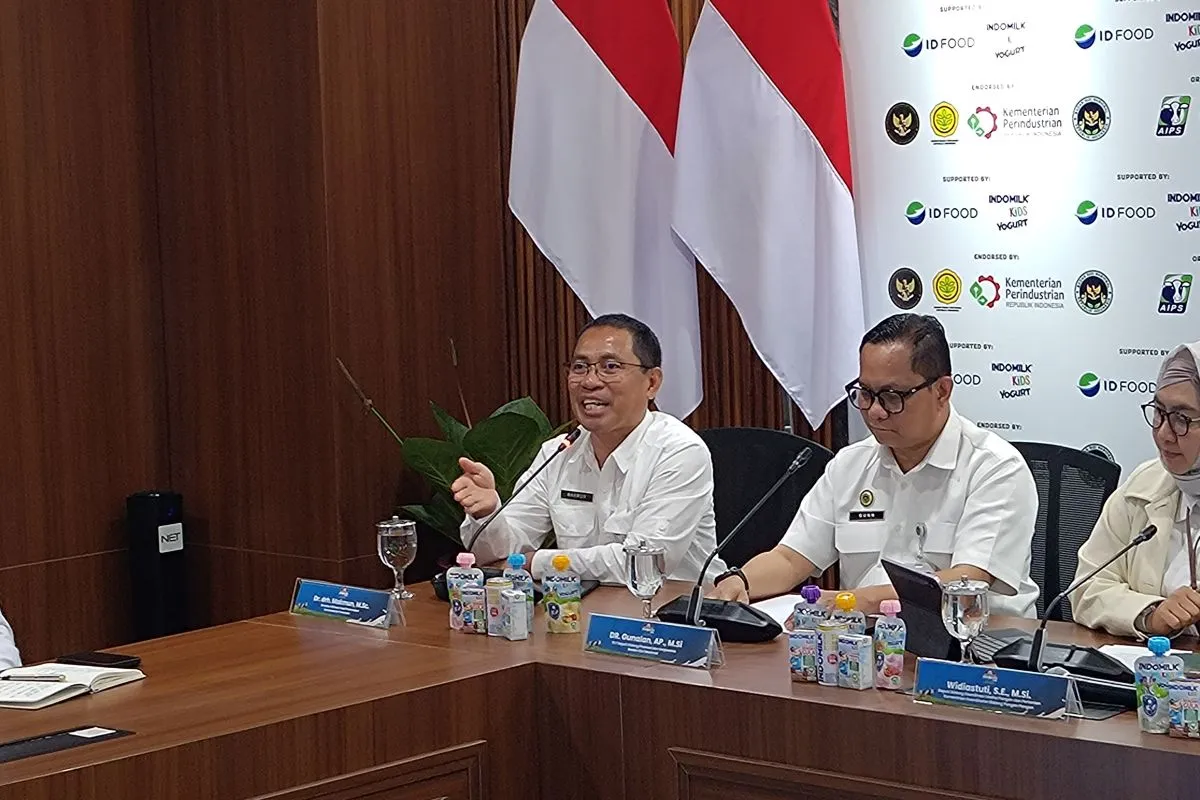
Indonesia is preparing to launch an innovative dairy development initiative called the “Indonesian Milk Kitchen” (Dasi) to strengthen domestic milk production and support the country’s Free Nutritional Meals (MBG) programme.
The initiative, announced by the Ministry of Agriculture, aims to establish small-scale milk processing units integrated with Nutrition Fulfillment Service Units (SPPG) and MBG kitchens across the country. The program is expected to create a stable market for locally produced milk while accelerating the development of Indonesia’s dairy sector.
Connecting Farmers to Nutrition Programs
Speaking during a press conference for Nusantara Milk Day 2026 in Jakarta, Makmun, Director of Livestock Product Downstreaming at Indonesia’s Ministry of Agriculture, explained that the Dasi concept is designed to directly connect dairy farmers with government nutrition programmes.
“We call it Dasi, meaning Indonesian Milk Kitchen,” Makmun said.
Under the model, milk processing facilities will be linked with nearby MBG kitchens and SPPG centers, ensuring efficient procurement and utilization of fresh milk produced by local farmers.
The approach is expected to improve milk absorption, reduce marketing challenges for dairy farmers, and create reliable demand for domestic milk production.
Expanding Dairy Development Beyond Java
Indonesia’s dairy industry has historically been concentrated on the island of Java. However, government officials believe significant growth opportunities exist in other regions, including:
- Sumatra
- Kalimantan
- Sulawesi
- Bali
- Nusa Tenggara
- Eastern Indonesia
The government is encouraging dairy expansion into these regions as part of a broader strategy to increase national milk self-sufficiency.
Officials noted that advances in dairy farming technology have made it possible to successfully raise dairy cattle in lowland areas, reducing dependence on traditional highland production zones.
National Nutrition Program Creates New Demand
The government’s Free Nutritional Meals (MBG) Programme is expected to become a major driver of dairy sector growth.
Since milk is included as one of the nutritional components of the programme, the initiative is creating a large and stable market for dairy products.
Industry stakeholders believe the guaranteed demand generated by government-backed meal programmes can encourage investment in dairy farming, milk collection systems, and local processing infrastructure.
According to Makmun, many small-scale dairy enterprises previously struggled with marketing and product sales. The integration of milk production into government nutrition programmes now provides a more secure business environment with established off-takers and predictable demand.
Addressing Indonesia’s Milk Supply Gap
Indonesia continues to face a significant gap between domestic milk production and national demand.
The Ministry of Agriculture estimates that the country’s dairy cattle population currently stands at approximately 540,657 animals, with more than 90% owned by smallholder farmers.
Despite this large farmer base, domestic milk production currently satisfies only around 25% of national consumption requirements, with the remaining demand met through imports.
Reducing dependence on imported dairy products remains a key government objective.
Improving Productivity and Herd Expansion
To strengthen domestic milk production, the government is implementing programs focused on:
- Improving feed quality
- Enhancing animal health services
- Expanding dairy cattle populations
- Increasing milk productivity
- Supporting farmer training and extension services
Current average milk productivity remains below international benchmarks.
According to government estimates, Indonesian dairy farmers generally produce less than 20 litres of milk per cow per day, compared with more than 30 litres per cow per day in several leading dairy-producing countries.
The government aims to increase productivity to above 20 litres per cow per day in the short term and eventually reach 25 litres per cow per day.
Investment in Dairy Herd Growth
To meet rising demand, Indonesia has also accelerated dairy cattle imports.
Government and private-sector stakeholders imported nearly 15,000 pregnant dairy cows during the previous year as part of efforts to expand the national dairy herd and boost future milk production.
Industry analysts believe that combining herd expansion with improved productivity and market access initiatives such as Dasi could significantly strengthen Indonesia’s dairy sector over the coming decade.
A New Model for Dairy Development
The Indonesian Milk Kitchen initiative represents an innovative approach to linking dairy farming with national food security and nutrition objectives.
By integrating milk production, processing, and nutrition delivery systems, the government aims to create a sustainable dairy value chain that benefits farmers, improves nutritional outcomes, and reduces reliance on imported dairy products.
If successfully implemented, the Dasi model could serve as a blueprint for other developing countries seeking to strengthen domestic dairy production while supporting public nutrition programmes.
Join Our “Dairy & Food Jobs Updates” WhatsApp group
Follow the Agri Jobs Updates channel on WhatsApp:
Disclaimer
I do my best to share reliable and well-researched insights but occasional errors or omissions may slip through. Please view all content as informational.
Stay informed on all the latest news updates
All Agriculture Books Free Download
All Dairy Technology Books Free Download
All Agricultural Engineering Books Free download
All Horticulture Books Free Download
All Fisheries Science Books Free Download
For Daily Update follow us at:
Facebook Telegram Whatsapp Instagram YouTube
The contents are provided free for noncommercial purpose such as teaching, training, research, extension and self learning.
If you are facing any Problem than fill form Contact Us
If you want share any article related Agriculture with us than send at info@agrimoon.com with your contact detail.