New Delhi, December 24, 2025 — India’s dairy industry, long defined by milk volumes and procurement economics, is entering a strategic turning point, shifting focus to value-added products (VAPs), advanced distribution channels, and impulse-driven consumption, according to a new sector analysis by Systematix Research.
As the calendar turns toward 2026, the narrative shaping India’s dairy landscape is no longer just about litres produced — it’s also about products consumed, channels chosen, and margins earned.
Cycles, Surpluses and Supply Shifts
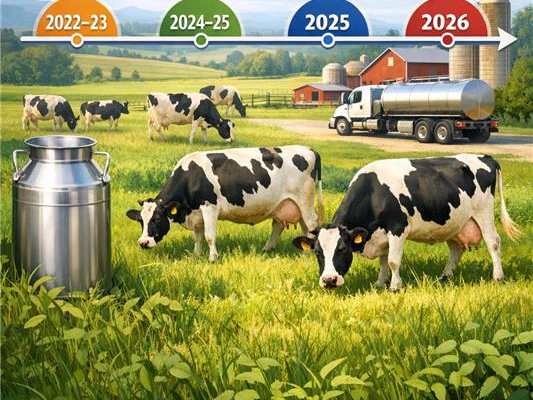
The dairy sector traditionally oscillates through production-demand cycles every five to seven years. The post-Covid period (2022–23) was marked by a sharp drop in milk prices and broken supply chains, discouraging farmers from investing in cattle and weakening output.
From mid-2024, renewed engagement by dairy cooperatives and private players — especially through sustainable fodder programmes and intensified farmer outreach — helped reverse this decline. A robust flush season from **October 2024 to March 2025 saw milk production surge nearly 25%, creating an unexpected surplus.
Dairy firms responded by broadening product portfolios, strengthening cold chain infrastructure, and expanding last-mile reach to absorb inventory.
But 2025 brought fresh disruption:
- Unseasonal rains altered seasonal demand patterns
- Geopolitical uncertainties in northern milk belts disrupted supply dynamics
- Strong festive demand quickly eroded surplus inventories
This combination has tightened supply and firmed up procurement costs, even as retail prices remained stable post-GST cuts.
Value-Added Products: The New Profit Engine
If liquid milk remains the backbone of dairy consumption, value-added products (VAPs) are emerging as its most profitable engine.
Systematix analysts note significant momentum in categories such as:
- Curd, yoghurt and dahi
- Paneer
- Ghee
- Frozen dairy desserts and milk-based beverages
Notably, ice cream demand — once concentrated in summer — has expanded into a year-round category, with peaks observed as early as Ramzan. Similarly, milkshakes and flavoured milks are increasingly replacing carbonated drinks in on-the-go, impulse-buy scenarios.
This shift reflects changing consumer behaviour: dairy products are no longer just staples; they are becoming convenience-led, lifestyle purchases aligned with modern eating patterns.
Distribution Dynamics Evolve Rapidly
One of the most defining shifts in the sector is in distribution channels.
Systematix highlights a decisive trend away from traditional general trade toward e-commerce and quick commerce platforms:
- Quick commerce players such as Blinkit, Zepto and Swiggy Instamart are gaining market share
- Combined, general trade and e/Q-commerce now account for nearly 80% of dairy distribution
- Modern trade, while still relevant, contributes roughly 20% of sales but delivers lower margins and higher promotional costs
For dairy companies, this has prompted rapid reallocation of sales forces, logistics upgrades, and adoption of data-driven inventory and SKU management systems.
UHT Milk: Stable but Not Star
UHT milk continues to have relevance — particularly in metros and eastern states where shelf life and hygiene remain priorities. Yet its growth is now outpaced by value-added UHT formats such as flavoured milks, creams, and ready-to-drink dairy beverages.
Competitive Landscape: Legacy Meets New Challenger
India’s dairy market remains layered and competitive:
- Established giants like Amul, Mother Dairy and Nestlé remain market anchors
- Strong regional brands such as Hatsun, Heritage, Dodla and Parag Milk Foods continue to expand
- Next-generation challengers are innovating in:
- Packaging formats
- A2 milk propositions
- Functional and antioxidant-linked dairy products
- Localized consumer insights
Global players such as Lactalis are also recalibrating strategies, “Indianising” offerings while leveraging global R&D advantages.
Balancing Growth with Margins
Despite resilient demand, margin pressures persist. The GST cut boosted volumes, but also disrupted channel economics. As a result, dairy companies are exploring:
- Selective price increases
- Rollback of volume expansions
- Shift toward higher-margin VAPs
Systematix notes that companies with a higher VAP mix, disciplined channel strategies, and strong geographic diversity — such as Dodla Dairy — are comparatively better positioned to sustain growth and protect margins through FY28.
Read More:
Join Our “Dairy & Food Jobs Updates” WhatsApp group
Disclaimer
I do my best to share reliable and well-researched insights but occasional errors or omissions may slip through. Please view all content as informational.
Stay informed on all the latest news updates
All Agriculture Books Free Download
All Dairy Technology Books Free Download
All Agricultural Engineering Books Free download
All Horticulture Books Free Download
All Fisheries Science Books Free Download
For Daily Update follow us at:
Facebook Telegram Whatsapp Instagram YouTube
The contents are provided free for noncommercial purpose such as teaching, training, research, extension and self learning.
If you are facing any Problem than fill form Contact Us
If you want share any article related Agriculture with us than send at info@agrimoon.com with your contact detail.