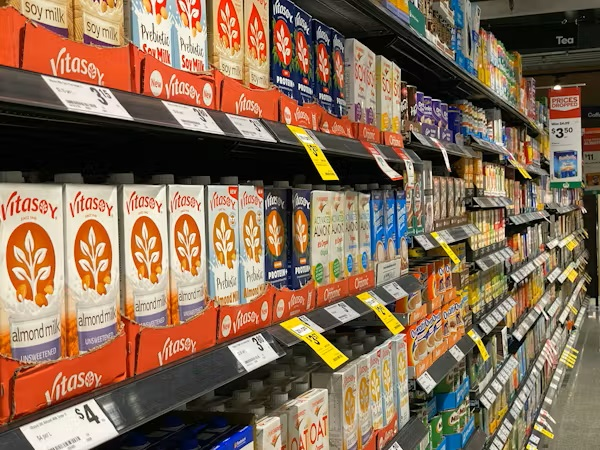
Global regulations on labeling plant-based beverages are becoming increasingly divided, as governments balance consumer clarity, dairy industry protection, and the rapid growth of alternative proteins.
UK Court Ruling Intensifies Debate
A recent ruling by the Supreme Court of the United Kingdom has added momentum to the discussion. The court rejected an attempt by the plant-based brand Oatly to trademark the phrase “Post Milk Generation.”
The decision supported arguments from the dairy sector that the word “milk” should be reserved only for products derived from mammals. The ruling reinforces the UK’s existing regulations that define milk strictly as mammalian secretion.
Strict Rules in the European Union
Across the European Union, labeling laws are even stricter. Regulations prohibit plant-based products from using traditional dairy terms such as:
- Milk
- Cheese
- Butter
- Cream
Under these rules:
- Only cow’s milk can be labeled simply as “milk.”
- Milk from other animals must specify the species (e.g., goat milk or sheep milk).
- Plant-based beverages like oat or almond products must be marketed as “drinks” instead of milk.
More Flexible Approach in the United States
The U.S. Food and Drug Administration has taken a more flexible stance. In the United States, labels such as “soy milk” and “almond milk” are widely allowed due to common consumer usage.
However, debate continues. Dairy industry representatives argue that such labeling can confuse consumers and weaken the value of traditional dairy products.
Australia and New Zealand Allow Plant-Milk Terms
A different approach exists in Australia and New Zealand, where the joint regulator Food Standards Australia New Zealand permits terms like “soy milk” or “almond milk.”
Read More: Dairy Owner Nabbed for Manufacturing Adulterated Ghee Worth ₹18.26 Lakh in Banjara Hills
Regulators argue that when the plant ingredient is clearly mentioned, consumers can easily distinguish between dairy and plant-based beverages.
A 2025 consumer study involving about 3,000 Australians found that most shoppers clearly understand the difference between dairy milk and plant alternatives, including their nutritional differences.
Impact on the Dairy Industry
These regulatory differences are shaping global dairy markets:
- Europe and the UK: Strong protection for traditional dairy terminology.
- United States: Mixed regulatory environment with ongoing debate.
- Australia & New Zealand: Flexible labeling focused on consumer understanding.
For dairy farmers and cooperatives, the issue goes beyond terminology. The labeling rules influence market competition, consumer perception, and the growth of plant-based alternatives in global food markets.
Join Our “Dairy & Food Jobs Updates” WhatsApp group
Follow the Agri Jobs Updates channel on WhatsApp:
Disclaimer
I do my best to share reliable and well-researched insights but occasional errors or omissions may slip through. Please view all content as informational.
Stay informed on all the latest news updates
All Agriculture Books Free Download
All Dairy Technology Books Free Download
All Agricultural Engineering Books Free download
All Horticulture Books Free Download
All Fisheries Science Books Free Download
For Daily Update follow us at:
Facebook Telegram Whatsapp Instagram YouTube
The contents are provided free for noncommercial purpose such as teaching, training, research, extension and self learning.
If you are facing any Problem than fill form Contact Us
If you want share any article related Agriculture with us than send at info@agrimoon.com with your contact detail.