- NIT Rourkela Researchers Secure Patent for Eco-Friendly Innovation
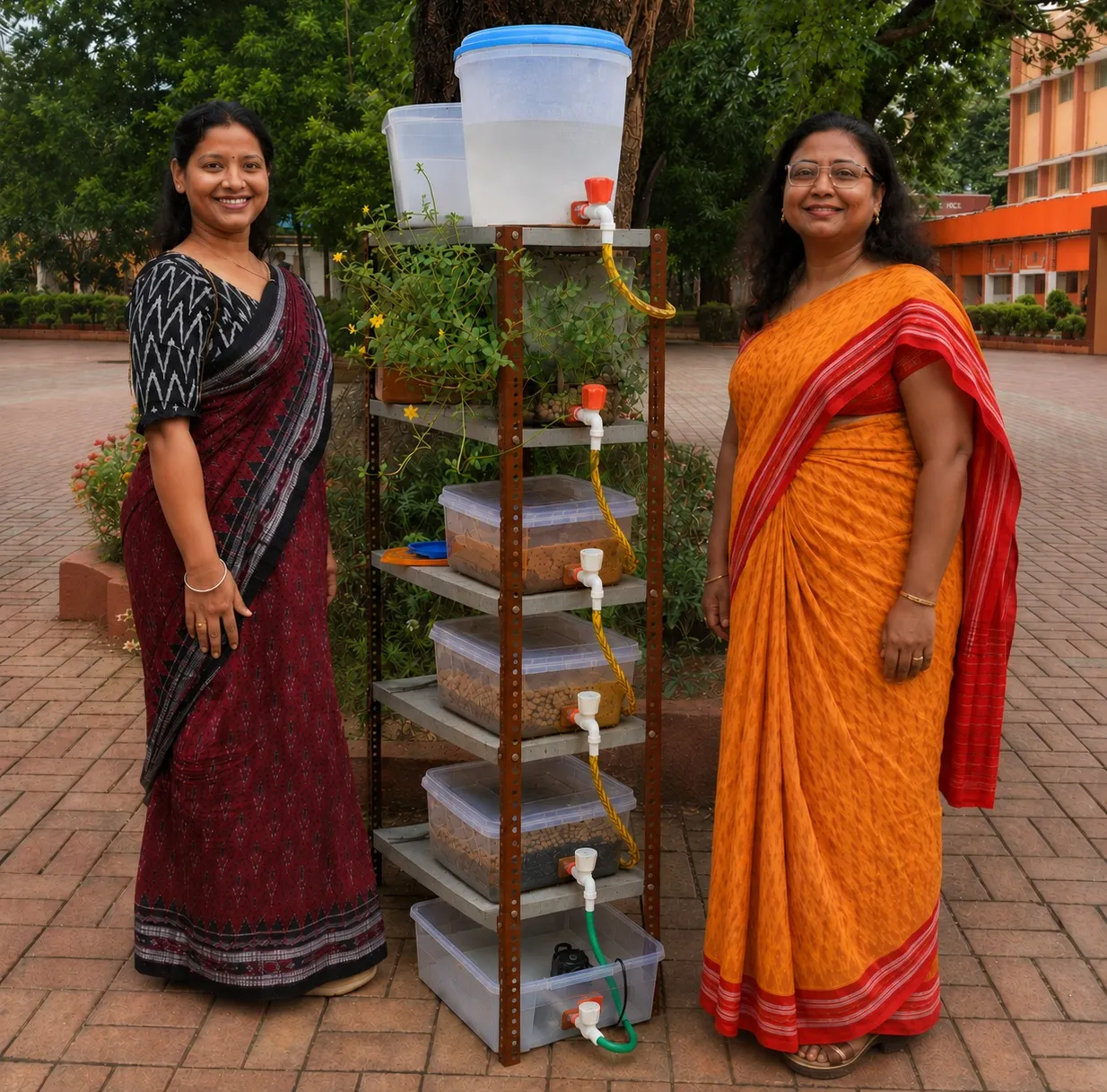
Researchers from the Department of Civil Engineering at National Institute of Technology Rourkela have developed and patented a low-cost biological wastewater treatment system designed specifically for the dairy industry.
The innovative system combines:
- Aquatic plants
- Earthworms
- Beneficial microbes
- Hydroponic filtration technology
to treat dairy wastewater in a sustainable and affordable manner.
The research team was led by KakoliKarar Paul along with research graduate Pragyan Das.
The team secured a patent titled:
“Method and System for Treating Dairy Wastewater”
- Patent Number: 583949
- Application Number: 202431032506
Dairy Wastewater a Major Environmental Challenge
India’s dairy sector generates billions of litres of wastewater daily during the production of:
- Cheese
- Paneer
- Yogurt
- Other dairy products
This wastewater contains:
- High fat content
- Proteins
- Carbohydrates
- Elevated Chemical Oxygen Demand (COD)
High COD levels reduce dissolved oxygen in water bodies, posing serious risks to aquatic ecosystems.
Researchers noted that conventional treatment methods such as membrane filtration often suffer from clogging issues and fail to fully address organic pollutant buildup.
How the Five-Layer Treatment System Works
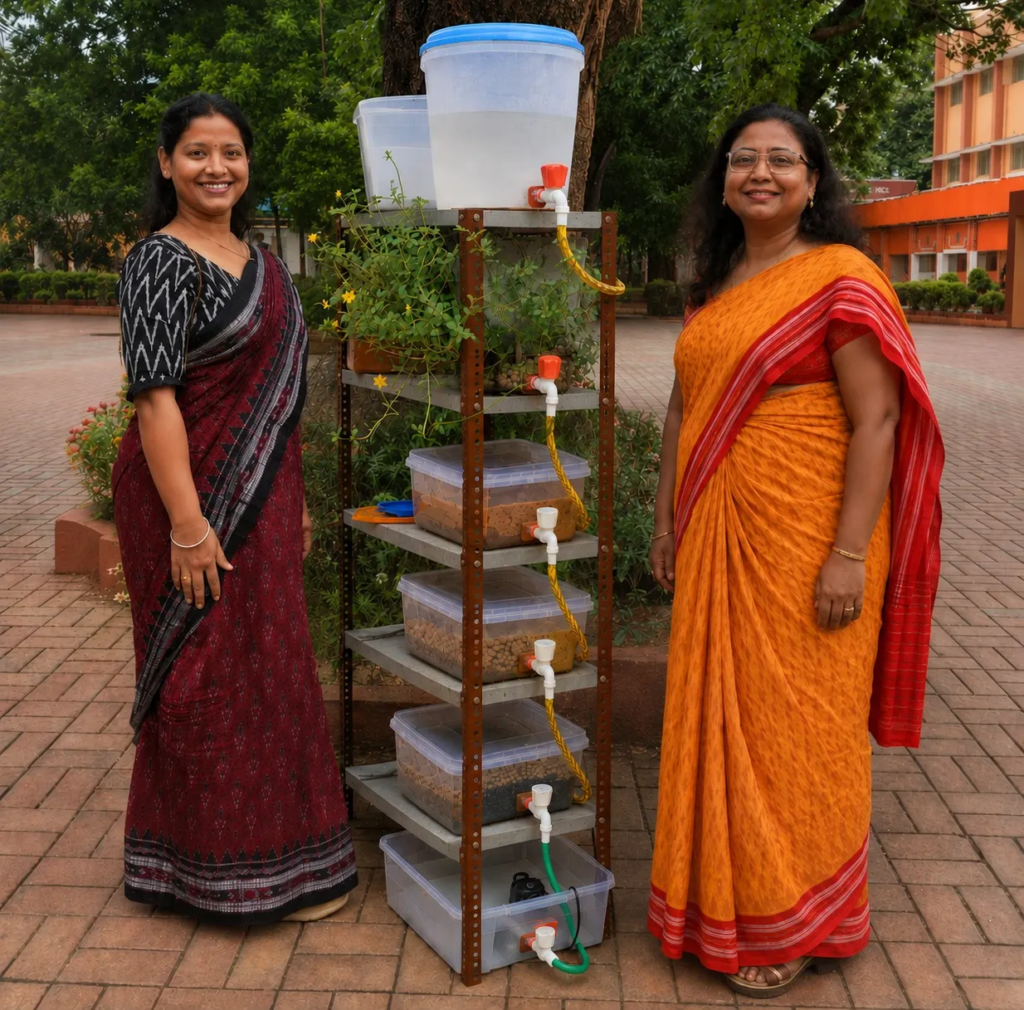
The newly developed system uses a multi-layered natural purification approach.
1st Layer: Vermi-Macrophyte Reactor
The process begins in a reactor containing:
- Earthworms
- Aquatic plants (macrophytes)
Functions:
- Earthworms break down organic waste
- Oxygen levels increase
- Beneficial microbial growth is stimulated
- Plant roots help prevent clogging and provide microbial attachment surfaces
2nd Layer: Sand Filtration
The partially treated water passes through a sand layer that removes suspended solids through physical filtration.
3rd Layer: Fly Ash Pellet Adsorption
Fly ash pellets adsorb pollutants and reduce phosphorus compounds present in the wastewater.
4th Layer: Gravel Bed Bio-Treatment
Residual organic contaminants are degraded by aerobic microbes living within the gravel bed.
5th Layer: Hydroponic Purification Chamber
In the final stage:
- Water enters a hydroponic plant chamber
- Plant roots release oxygen into the water
- Oxygen-rich conditions support microbial biofilm formation
- Remaining pollutants are biologically degraded
This stage further improves treated water quality.
Low-Cost System With Rural Potential
According to KakoliKarar Paul, the laboratory-scale model costs approximately Rs 10,000 and can treat around 30 litres of dairy wastewater per day. The system can also be scaled up for larger applications.
Pragyan Das stated that the technology is especially useful for regions lacking access to expensive large-scale wastewater treatment infrastructure
Read More: KMF Finds Nearly 0.2% of Milk Samples Adulterated
Treated Water Suitable for Irrigation
Laboratory tests using real dairy wastewater showed that:
- The treated water retained useful phosphate nutrients
- Water quality became suitable for irrigation purposes
Researchers also highlighted additional resource recovery benefits:
- Aquatic plants used in the system can serve as cattle feed
- Biomass can be processed into:
- Biogas
- Biodiesel
This creates a circular and resource-efficient waste management model.
Next Step: Large-Scale Commercial Deployment
The research team is now working on:
- Improving treatment speed
- Optimising reactor design
- Scaling the technology for industrial use
- Exploring collaborations with dairy industries
Researchers noted that while individual technologies such as vermifiltration, hydroponics and macrophyte-assisted treatment already existed separately, integrating them into a continuous multi-layered system significantly improved pollutant removal efficiency while reducing clogging problems.
The innovation could become an important low-cost sustainability solution for India’s rapidly growing dairy industry.
Join Our “Dairy & Food Jobs Updates” WhatsApp group
Follow the Agri Jobs Updates channel on WhatsApp:
Disclaimer
I do my best to share reliable and well-researched insights but occasional errors or omissions may slip through. Please view all content as informational.
Stay informed on all the latest news updates
All Agriculture Books Free Download
All Dairy Technology Books Free Download
All Agricultural Engineering Books Free download
All Horticulture Books Free Download
All Fisheries Science Books Free Download
For Daily Update follow us at:
Facebook Telegram Whatsapp Instagram YouTube
The contents are provided free for noncommercial purpose such as teaching, training, research, extension and self learning.
If you are facing any Problem than fill form Contact Us
If you want share any article related Agriculture with us than send at info@agrimoon.com with your contact detail.