
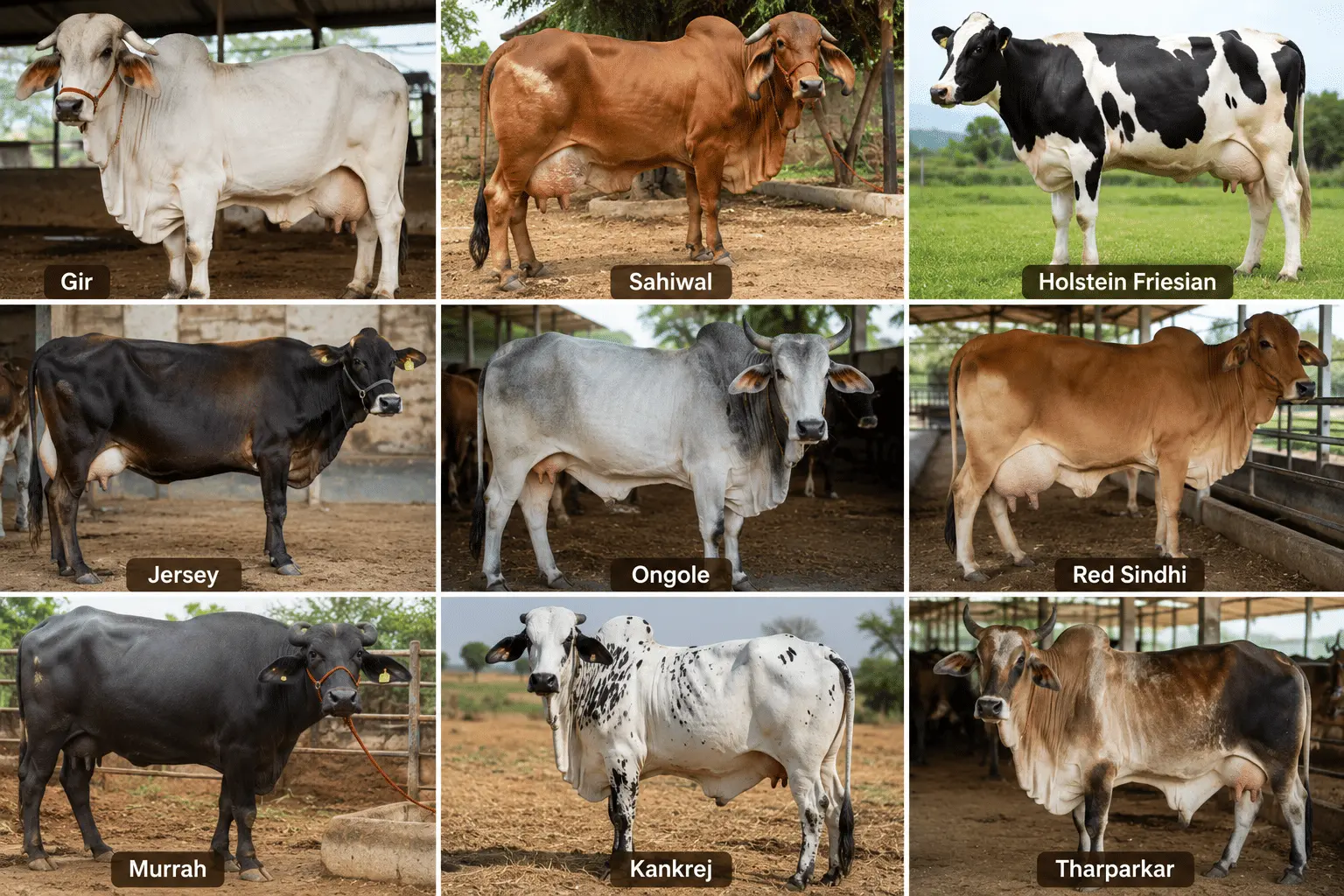
India’s dairy industry remains the backbone of rural livelihoods, contributing significantly to the country’s agricultural economy. As the world’s largest milk producer, India’s success in dairy farming depends heavily on selecting the right cattle breed. From high-yield exotic cows to hardy indigenous breeds and premium milk-producing buffaloes, each breed offers unique advantages in productivity, adaptability, and profitability.
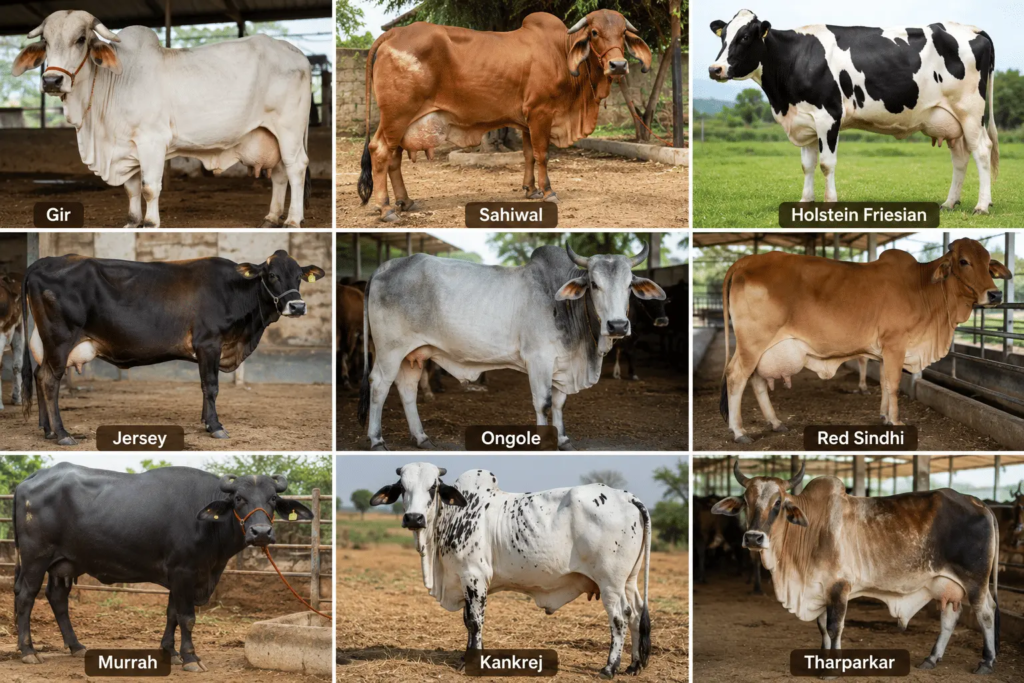
For farmers, dairy entrepreneurs, and livestock enthusiasts, understanding the strengths of different breeds is essential for maximizing milk production while ensuring sustainable farm management.
1. Sahiwal: India’s Premier Indigenous Dairy Breed
Widely regarded as one of India’s finest native dairy cattle breeds, Sahiwal originated in the Punjab region and is renowned for its exceptional heat tolerance and consistent milk production.
Average Milk Yield: 8–16 liters per day
Advantages:
- Excellent heat and disease resistance
- High milk fat content
- Performs well under low-input farming systems
- Calm temperament and easy management
Experts consider Sahiwal an ideal choice for farmers in hot and humid regions where exotic breeds may struggle.
2. Gir: The Dairy Pride of Gujarat
Native to Gujarat, Gir cattle are among the most popular indigenous dairy breeds in India. Their distinctive curved horns and long ears make them easily recognizable.
Average Milk Yield: 10–20 liters per day
Advantages:
- High butterfat content
- Strong immunity and fertility
- Long productive lifespan
- Excellent adaptability to tropical climates
Gir cattle have also gained international recognition and are widely used in breeding programs across several countries.
3. Red Sindhi: Reliable and Low-Maintenance
Known for its adaptability and steady milk production, Red Sindhi is particularly valued in regions with humid climatic conditions.
Average Milk Yield: 10–15 liters per day
Advantages:
- Good milk fat percentage
- Easy calving
- Strong disease resistance
- Suitable for crossbreeding programs
Its resilience and manageable maintenance requirements make it attractive for small and medium-sized dairy farms.
4. Tharparkar: Built for Arid Conditions
Originating from the desert regions of Rajasthan, Tharparkar cattle are highly respected for their ability to thrive in challenging environments.
Average Milk Yield: 8–12 liters per day
Advantages:
- Drought tolerance
- Strong body structure
- Dual-purpose utility
- Efficient use of limited resources
Agricultural experts often recommend Tharparkar for farmers operating in semi-arid and drought-prone regions.
5. Holstein Friesian: The High-Yield Champion
Among exotic dairy breeds, Holstein Friesian remains the benchmark for milk volume production.
Average Milk Yield: 20–30 liters per day or higher
Key Advantages:
- Exceptional milk output
- Ideal for commercial dairy operations
- Strong genetic potential for productivity
However, specialists caution that Holstein Friesians require superior nutrition, housing, and health management to achieve their full potential.
Read More: The Silicon Scramble: How AI Data Centers Are Becoming Dairy Farming’s New Competitor
6. Jersey: Rich Milk and Efficient Production
Jersey cattle have become increasingly popular among Indian dairy farmers due to their adaptability and high-quality milk.
Average Milk Yield: 15–25 liters per day
Advantages:
- High butterfat content
- Better feed efficiency
- Good reproductive performance
- Suitable for value-added dairy products
The breed is especially favored by farmers producing butter, ghee, curd, and premium dairy products.
7. Murrah: India’s Dairy Powerhouse Buffalo
Although technically a buffalo breed, Murrah plays a critical role in India’s dairy economy and remains one of the country’s most valuable milk-producing animals.
Average Milk Yield: 10–18 liters per day
Advantages:
- Extremely rich milk with high fat content
- Strong market demand
- Ideal for premium dairy products
- Excellent adaptability
Murrah milk often commands higher prices due to its superior fat percentage, making it highly profitable for dairy producers.
8. Kankrej: Strength and Sustainability Combined
Native to Gujarat and Rajasthan, Kankrej cattle are known for their endurance, adaptability, and respectable dairy performance.
Average Milk Yield: 6–10 liters per day
Advantages:
- Heat and drought resistance
- Strong work capacity
- Low maintenance requirements
- Good milk quality
The breed remains a popular choice in regions where resilience and sustainability are critical factors.
Why Breed Selection Matters
According to dairy experts, profitability in dairy farming is influenced by more than just milk volume.
Key factors include:
- Climate adaptability
- Disease resistance
- Feed efficiency
- Milk fat percentage
- Fertility and longevity
- Market demand
A breed that performs exceptionally in one region may not deliver similar results elsewhere due to differences in weather, feed availability, and farm management practices.
Choosing the Right Breed for Your Farm
Before investing in dairy cattle, farmers should evaluate:
Climate Conditions
Indigenous breeds such as Sahiwal, Gir, and Tharparkar generally perform better under India’s hot and challenging climatic conditions.
Production Goals
Farmers targeting maximum milk volume may prefer Holstein Friesian cattle, while those seeking higher-fat milk often choose Jersey cows or Murrah buffaloes.
Feed Resources
Exotic breeds typically require higher-quality nutrition and more intensive management than indigenous cattle.
Market Opportunities
Local consumer preferences for cow milk, buffalo milk, or specialty dairy products can significantly influence profitability.
The Future of Dairy Farming in India
As India’s dairy sector continues to modernize, experts emphasize that breed selection remains one of the most important decisions a farmer can make. Indigenous breeds offer resilience and sustainability, while exotic breeds provide higher productivity under intensive management systems.
The most successful dairy operations often align breed selection with local climate, available resources, and long-term business objectives.
Whether the goal is high milk yield, premium-quality milk, or low-maintenance farming, choosing the right breed can significantly improve productivity, animal health, and farm profitability for years to come.
Join Our “Dairy & Food Jobs Updates” WhatsApp group
Follow the Agri Jobs Updates channel on WhatsApp:
Disclaimer
I do my best to share reliable and well-researched insights but occasional errors or omissions may slip through. Please view all content as informational.
Stay informed on all the latest news updates
All Agriculture Books Free Download
All Dairy Technology Books Free Download
All Agricultural Engineering Books Free download
All Horticulture Books Free Download
All Fisheries Science Books Free Download
For Daily Update follow us at:
Facebook Telegram Whatsapp Instagram YouTube
The contents are provided free for noncommercial purpose such as teaching, training, research, extension and self learning.
If you are facing any Problem than fill form Contact Us
If you want share any article related Agriculture with us than send at info@agrimoon.com with your contact detail.