
India’s dairy sector has expanded rapidly over the past several decades, making the country the world’s largest milk producer. Yet the benefits of this growth remain unevenly distributed across regions. While States such as Uttar Pradesh, Rajasthan, Madhya Pradesh, Gujarat and Maharashtra account for a large share of national milk production, several eastern and northeastern States continue to face gaps in productivity, collection infrastructure and milk-cooling capacity.
As the government’s White Revolution 2.0 seeks to bring more villages into the dairy cooperative network and increase cooperative milk procurement, the availability of reliable chilling infrastructure could become increasingly important.
One technology attracting attention is solar-powered milk chilling, particularly systems that combine solar generation with thermal storage and can operate independently of the electricity grid.
India’s Dairy Growth Has an Infrastructure Challenge
India’s milk output was nearly 248 million tonnes in 2024-25, up from around 210 million tonnes in 2020-21, according to government statistics. The country now accounts for close to a quarter of global milk production.
But production is concentrated geographically. Five States—Uttar Pradesh, Rajasthan, Madhya Pradesh, Gujarat and Maharashtra—account for slightly more than 54% of India’s milk output, according to the Animal Husbandry Statistics 2025.
The distribution of milch animals and milk production also reveals significant differences in productivity and infrastructure.
Punjab accounts for around 1.41% of India’s milking animals but approximately 6% of national milk production, while Gujarat has around 5.32% of the animals and contributes 7.78% of output. Bihar, by contrast, accounts for approximately 7.94% of the country’s milking animals but only 5.41% of milk production.
Productivity differences explain part of this variation. However, infrastructure—including collection, refrigeration, transport and access to reliable electricity—also determines how much of the milk produced on farms reaches organised markets in usable condition.
Milk Chilling Is a Race Against Time
Freshly drawn milk leaves the animal at approximately 33°C and needs to be cooled rapidly, generally to around 3–4°C, to slow microbial growth.
This makes electricity an integral part of the dairy cold chain rather than simply another operating expense.
Vishal Sukhija, Senior Programme Associate at the Sustainability, Equity and Diversity Fund, said milk ideally needs to reach a chilling centre within two to three hours. In some regions, however, farmers may take four to six hours to reach a chilling facility.
A NABARD Consultancy Services study across 14 locations found average post-harvest milk losses of 0.87%, but the variation between locations was substantial. Losses ranged from 0.53% in Indore, Madhya Pradesh, to 8.94% in East Medinipur, West Bengal.
The figures indicate that national averages can conceal much larger losses in individual areas where collection and chilling infrastructure is inadequate.
The Cost of Depending on Diesel
Bulk milk coolers (BMCs) are designed to reduce the temperature of milk after collection and hold it until transportation. But their effectiveness depends on reliable electricity.
Where grid supply is unstable, dairy collection centres frequently depend on diesel generators.
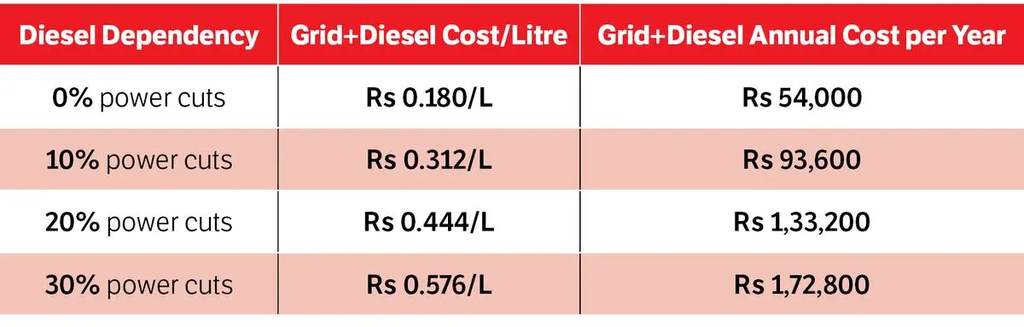
According to estimates cited from cooling-technology company Inficold, electricity used for milk chilling can cost roughly ₹0.15–₹0.20 per litre, compared with up to approximately ₹2 per litre when diesel is used.
For dairy cooperatives, the issue is therefore not simply the cost of electricity. Power interruptions can directly increase the risk of milk deterioration, while diesel adds another layer of operating expenditure and supply uncertainty.
In flood-prone areas, fuel availability can become an additional challenge. Farmers in Bihar’s Begusarai region, for example, have reported difficulties obtaining diesel during periods when floods disrupt electricity and transportation.
Two Different Solar Models
Solarisation does not automatically eliminate dependence on the grid.
According to Nitin Goel, founder of Inficold, dairy operators generally use two broad approaches.
The first is a grid-connected solar system. Solar panels reduce the amount of electricity purchased from the grid, lowering operating costs. However, the dairy remains dependent on the grid when solar generation is insufficient or during power outages. A diesel generator may therefore still be required as backup.
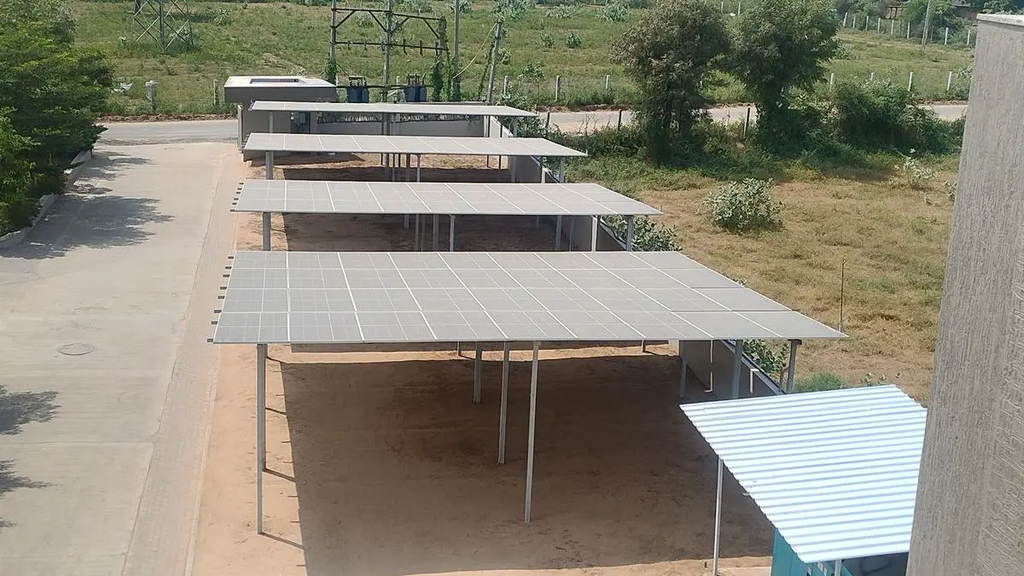
The second is a stand-alone solar chilling system capable of operating independently of the grid. These systems generally involve a higher initial investment but can substantially reduce dependence on both grid electricity and diesel.
For collection centres where power reliability—not merely electricity cost—is the principal concern, the second model can offer a different proposition.
Gujarat Cooperatives Show the Difference
The experience of dairy cooperatives in Gujarat illustrates the distinction.
At Sherpura dairy cooperative in Banaskantha, a 62-kW solar system installed in 2022 reduced the cooperative’s monthly electricity bill from approximately ₹1 lakh to ₹12,000, according to cooperative secretary Dahyaji Hinduji Jat.
The cooperative has more than 500 members and collects around 20,000 litres of milk per day.
However, the solar installation remains dependent on the grid. During outages, the cooperative continues to use a diesel generator, spending approximately ₹2.5 lakh annually on diesel, according to the cooperative.
The experience demonstrates that solar can substantially reduce electricity expenditure without necessarily providing energy independence.
A different model has been adopted at Aambaliyawas near Thara, where a cooperative shifted to a solar-powered chiller with thermal storage. According to cooperative secretary Jagani Jayeshbhai Kumar, the system eliminated the cooperative’s previous expenditure on electricity and diesel for chilling.
Thermal Storage Makes Solar Chilling More Resilient
Stand-alone solar chillers differ from conventional BMCs fitted with solar panels.
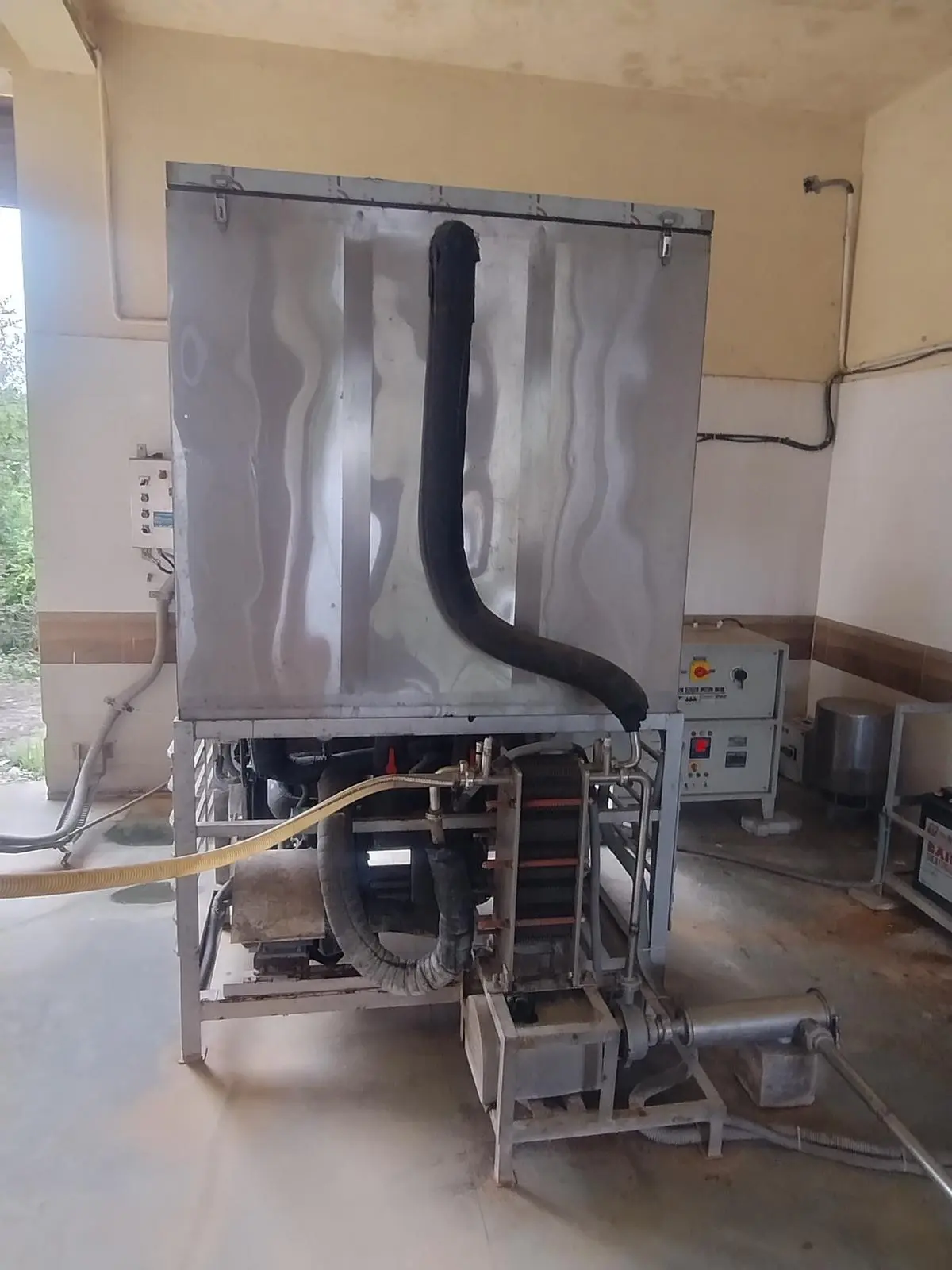
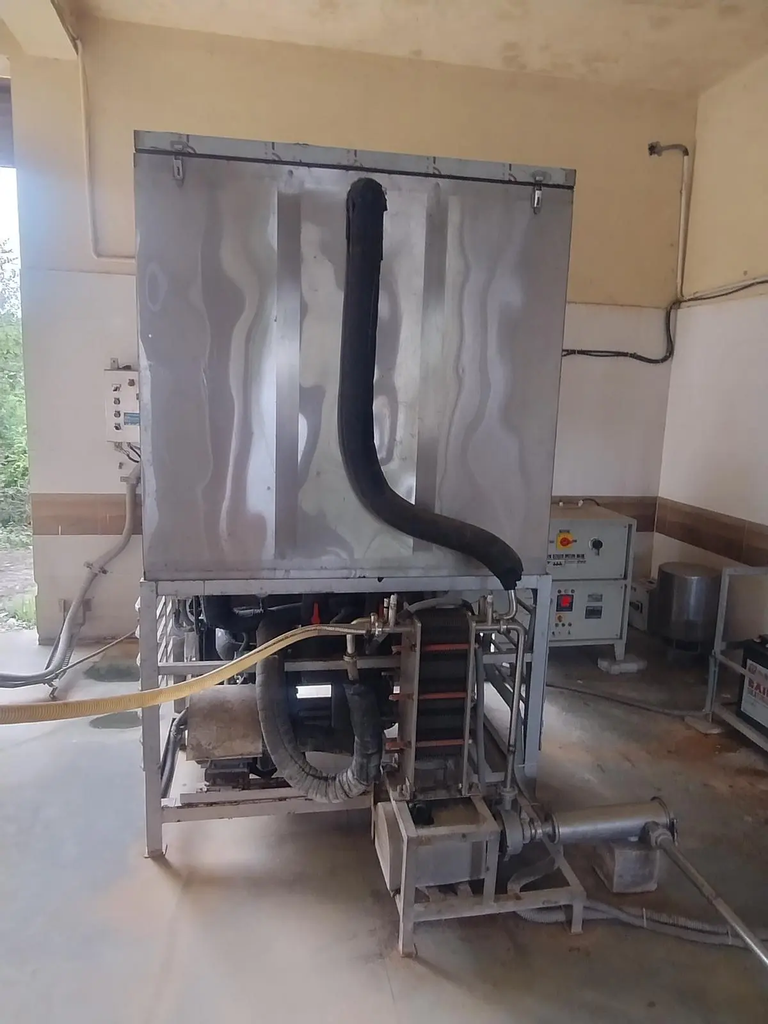
Some systems combine solar photovoltaic panels, a milk-cooling system and ice-based thermal storage.
During periods of strong solar generation, electricity powers the compressor while excess energy is used to produce ice. The stored cooling capacity can then be used when sunlight is unavailable or the grid is down.
This effectively provides the dairy with a form of thermal battery.
The approach is particularly relevant for milk collection because cooling cannot necessarily be postponed until electricity returns. Fresh milk continues to warm and deteriorate regardless of whether the power supply is available.
At Umarava Dairy Mandali in Chhota Udepur, which has around 600 members, cooperative representatives reported that milk spoilage had fallen to zero after adopting a solarised chiller. They also reported savings of approximately ₹12,000–₹15,000 per month in combined electricity and fuel costs.
Solar Chilling in Assam and Rajasthan
The potential benefits extend beyond western India.
In Assam, Sanghamitra Mahila Farmer Producer Company, comprising 1,794 women from self-help groups, reported losing approximately 480 litres of milk during four major power outages in its first six months of milk collection.
The organisation subsequently installed a 10-kW solar system in February 2024 with support from the Sauramandala Foundation. According to the company, monthly energy expenditure fell from approximately ₹22,000 to ₹3,000, while diesel consumption stopped.
In Rajasthan’s Thar region, where some villages have no grid connection or face unreliable supply, stand-alone solar chillers are being used to address a more fundamental infrastructure problem.
Aakriti Srivastava, founder of BahulaNaturals, said her organisation has installed eight 500-litre stand-alone solar chillers in the region. According to her, milk spoilage that had previously reached 40–70% in some areas has fallen to below 10%.
These figures are reported experiences from specific operations rather than a national estimate, but they illustrate the potential impact of reliable decentralised chilling in remote dairy regions.
Solar Can Also Reduce the Cost of Dairy Operations
The economics become more significant where diesel use is substantial.
According to Dr Sudhindra, CEO of Promot Innovations, one case study involving a 2,000-litre BMC estimated annual savings of approximately ₹2.15 lakh after solarisation, based on diesel consumption of around 200 litres per month before the intervention.
The economics depend on milk volumes, operating hours, the proportion of time spent using diesel, solar-system cost, financing terms and maintenance requirements.
For smaller collection centres, however, the initial capital requirement remains a significant barrier.
The Financing Problem
WWF India has supported the installation of more than 100 solar-powered instant chillers across Uttar Pradesh, Gujarat and Rajasthan, with the systems collectively handling approximately 50,000 litres of milk per day.
The installations demonstrate that the technology can work at the collection-centre level. But compared with the scale of India’s dairy cooperative network, deployment remains limited.
Three barriers are particularly important.
First is capital cost. Small village-level collection centres may not have sufficient resources to purchase stand-alone solar chilling systems.
Second is the structure of existing subsidies. According to industry stakeholders, dairy programmes have historically provided greater support for conventional bulk milk coolers, while systems combining solar generation and thermal storage have received less attention.
Third is the limited financial reward for milk quality. If procurement systems primarily reward quantity rather than quality preservation, farmers and collection centres may have less incentive to invest in better chilling infrastructure.
As WWF-India’s Director Vishal Dev noted, high upfront costs can prevent small collection centres from adopting solar-powered systems without external financial support.
Solar’s Role Extends Beyond Milk Chilling
Solar energy is also being applied at other points in the dairy value chain.
Solar-powered milking machines can help farmers operate equipment during electricity interruptions, particularly because milking has to be carried out at fixed morning and evening times.
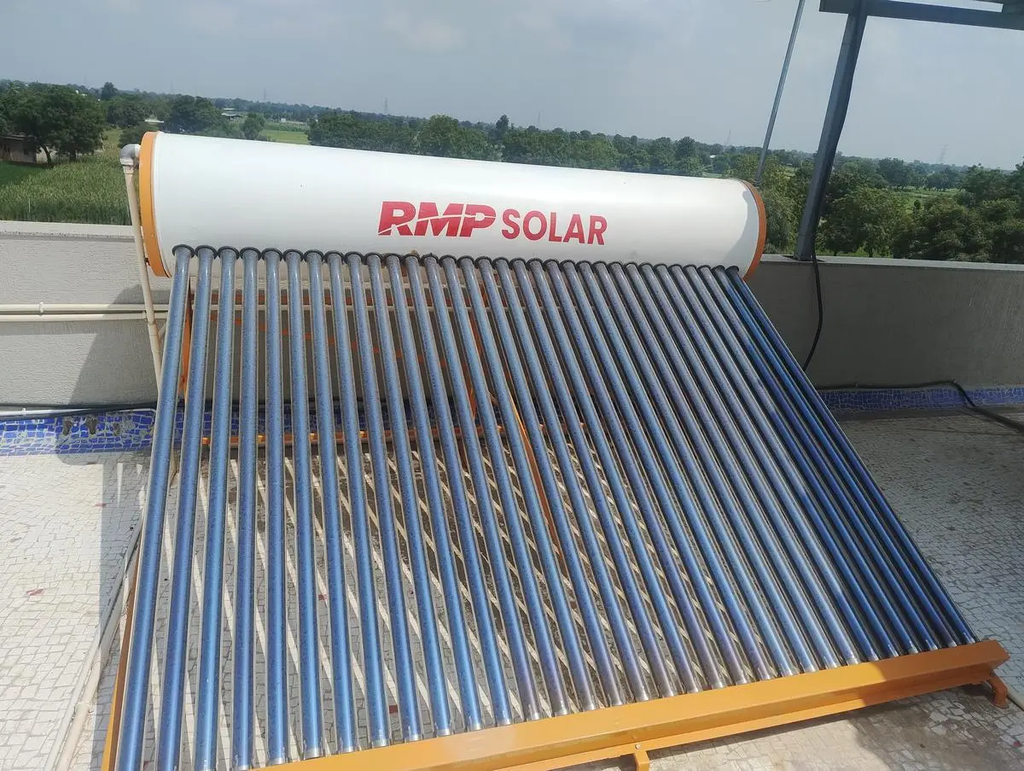
Solar thermal systems can also provide hot water for cleaning dairy equipment. Milk tanks and chillers require regular cleaning with hot water to remove milk fat and protein residues, and solar water heating can reduce the electricity or fuel required for this process.
The technology is also moving into larger-scale processing.
The National Dairy Development Board (NDDB) has established a solar-powered milk processing plant in Kargil intended to supply fresh milk to Army units in Siachen, Nubra Valley and Leh.
In Kerala, NDDB has partnered with the Ernakulam Regional Cooperative Milk Producers’ Union on a milk-processing plant in Kochi supported by a 2-MW solar plant.
Can Solar Support White Revolution 2.0?
White Revolution 2.0 aims to expand India’s cooperative dairy network by bringing uncovered panchayats into the cooperative system and increasing milk procurement.
But creating collection societies alone does not guarantee that additional milk will reach consumers as high-quality fresh milk.
The expansion requires an accompanying investment in milk collection, rapid chilling, cold-chain transportation, testing, storage and processing.
This is where decentralised renewable-energy systems could become relevant, particularly in villages where grid infrastructure is weak or where extending grid capacity is expensive or slow.
Solar-powered chilling is not a universal solution. Conventional grid-connected systems may remain economically appropriate where electricity supply is reliable. Stand-alone systems can involve higher upfront costs and require appropriate maintenance, financing and technical support.
The more important question for India’s dairy expansion may therefore not be whether solar should replace grid electricity, but where energy reliability is sufficiently important that decentralised solar and thermal storage can deliver greater value than conventional backup systems.
The Infrastructure Test Ahead
India’s dairy sector is entering a phase in which increasing milk production alone may not be enough. The next stage of growth will depend increasingly on whether milk produced in underserved regions can be collected quickly, cooled reliably and moved efficiently into formal markets.
For eastern, northeastern and remote western regions, where electricity reliability and chilling infrastructure can constrain dairy development, decentralised solar systems could provide one piece of that infrastructure puzzle.
The technology is already operating in individual cooperatives and producer organisations. The larger challenge is scaling it through appropriate financing, quality-linked procurement incentives, technical support and dairy-development programmes.
If White Revolution 2.0 is to expand India’s dairy economy geographically as well as in volume, the cold chain—and the energy that keeps it running—may prove as important as the number of new dairy cooperatives created.
The board has installed only one solar-powered milk chiller, in 2018. It has also deployed 19 concentrated solar thermal (CST) systems at dairy plants across seven States, with a combined capacity of about 223 lakh kcal a day. However, an RTI response shows that the last such installation was in 2023, with no new systems reported since then.
NDDB also mentions that it is working with the Ministry of New and Renewable Energy on a framework for grid-independent bulk milk coolers. But its RTI response did not provide details on the progress of the framework. As White Revolution 2.0 expands the cooperative dairy network, the challenge is not merely creating more cooperatives but ensuring that they have reliable energy infrastructure.
Solar power is steadily finding its way into India’s dairy sector—cooling milk, heating water, even powering processing plants. The technology has proven itself in villages from Rajasthan to Assam. What remains is scaling it up, through better financing, stronger policy support, and cooperation between government bodies and local dairies. As India’s dairy network grows under White Revolution 2.0, solar power could well become a bigger part of that story.
Join Our “Dairy & Food Jobs Updates” WhatsApp group
Follow the Agri Jobs Updates channel on WhatsApp:
Disclaimer
I do my best to share reliable and well-researched insights but occasional errors or omissions may slip through. Please view all content as informational.
Stay informed on all the latest news updates
All Agriculture Books Free Download
All Dairy Technology Books Free Download
All Agricultural Engineering Books Free download
All Horticulture Books Free Download
All Fisheries Science Books Free Download
For Daily Update follow us at:
Facebook Telegram Whatsapp Instagram YouTube
The contents are provided free for noncommercial purpose such as teaching, training, research, extension and self learning.
If you are facing any Problem than fill form Contact Us
If you want share any article related Agriculture with us than send at info@agrimoon.com with your contact detail.