New Delhi: India’s dairy industry is entering a new phase. After decades of growth driven primarily by milk production and procurement, the focus is increasingly shifting towards value addition, nutrition, premiumisation and consumer-oriented dairy brands.
The change is being driven by several forces at once: rising disposable incomes, greater awareness of protein and wellness, urbanisation, convenience-led consumption and the rapid expansion of quick-commerce platforms.
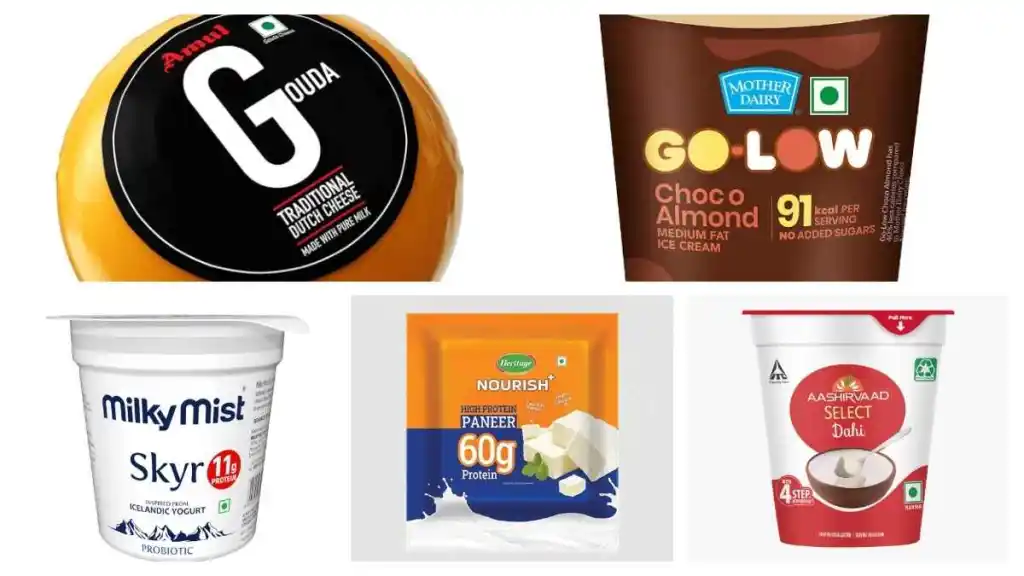
Products such as high-protein paneer, Greek yoghurt, probiotic beverages, A2 milk, low-calorie ice creams, speciality cheeses and ready-to-drink protein beverages are moving beyond niche markets. For dairy companies, the opportunity is no longer simply to collect and sell more milk, but to extract greater value from every litre.
From milk production to value creation
Milk remains one of the world’s most widely consumed foods. According to the Food and Agriculture Organization, more than 6 billion people consume milk and dairy products globally, with consumption patterns increasingly expanding beyond liquid milk towards products such as cheese, yoghurt, butter, whey protein and other value-added dairy foods.
India is at the centre of this transformation. The country is the world’s largest milk producer and accounts for roughly 24–25% of global milk production.
India’s milk production increased from 146.3 million tonnes in 2014-15 to 239.3 million tonnes in 2023-24, and is estimated at around 248 million tonnes in 2024-25.
Per-capita milk availability reached 471 grams per day in 2023-24, compared with a global average of around 322–329 grams. The latest Household Consumption Expenditure Survey also indicates substantial household consumption of milk, averaging 5.085 litres per person per month in rural India and 5.686 litres in urban India in 2024-25.
These numbers underline India’s enormous dairy base. The emerging question, however, is how much additional value the industry can generate from that base.
A structural shift in consumption
Milk and traditional dairy products have long been embedded in Indian diets. But consumer expectations are changing.
“As lifestyles evolve, consumers are looking for value-added offerings that combine the goodness of milk with convenience, indulgence and value without compromising on quality,” said Jayatheertha Chary, MD, Mother Dairy.
According to Chary, categories including curd, paneer, dairy beverages, cheese and ice cream recorded more than 30% volume growth during April-June 2026 compared with the corresponding period a year earlier, driven by demand for value-added dairy and wider availability through quick commerce.
The shift is also visible among large cooperatives. Gujarat Cooperative Milk Marketing Federation (GCMMF), which markets Amul and handles more than 30 million litres of milk a day, has expanded into protein beverages, whey protein, speciality cheeses and premium ice creams.
In FY26, Amul became India’s first FMCG brand to cross ₹1 lakh crore in turnover, according to the company. GCMMF has also been implementing a capital expenditure programme of around ₹11,000 crore to expand milk processing, cheese manufacturing and value-added dairy capacity.
The direction is clear: scale remains important, but value addition is becoming an increasingly significant growth engine.
Organised dairy gains ground
The organised dairy segment is also benefiting from consumers moving from loose and unbranded products towards packaged offerings.
The change is about more than convenience. Consumers increasingly seek consistency, traceability, quality, food safety and product differentiation.
Karnataka Milk Federation’s Nandini is one example. The brand has expanded beyond pasteurised and UHT milk into a portfolio of more than 175 value-added dairy products, including curd, ghee, butter, paneer and functional dairy offerings.
For GRB Dairy Foods, ghee remains an important category, while traditional sweets, instant mixes and festive formats provide additional growth opportunities.
Dhanraj Balasubramaniam, executive director at GRB Dairy Foods, describes the change as structural rather than purely seasonal. In his view, consumers increasingly associate branded dairy products with an important intangible attribute: trust in quality.
That shift could prove significant for organised dairy companies. The challenge is no longer simply capturing seasonal demand but converting consumer trust into regular, year-round consumption.
Protein becomes a major growth driver
Perhaps the most visible change is India’s growing focus on protein.
Products once associated primarily with gyms and sports nutrition are increasingly appearing in mainstream dairy aisles. Companies are introducing protein-enriched milk, paneer, yoghurt, beverages, snacks and desserts for a much broader consumer base.
“Probiotics for gut health, high-protein nutrition, reduced sugar or premium indulgence are seeing strong traction,” said Srideep Kesavan, CEO of Heritage Foods.
Heritage has expanded its portfolio with products including A-One Probiotic Buttermilk, Nourish+ High Protein Paneer, Livo High Protein Fruit Yogurt, Truly Good High Aroma Ghee and GETAWAY High Protein Zero Sugar Ice Creams.
The company reported that its value-added portfolio grew 39.7% year-on-year in Q1 FY27 to ₹5,636 million, contributing 44% of total revenue compared with 36% a year earlier.
According to the company, lassi, buttermilk, paneer and curd recorded strong growth during the quarter, while its ice cream business also expanded significantly.
Yoghurt, beverages and functional dairy expand
Curd remains one of the largest dairy categories, but its organised-market growth is increasingly being supported by product segmentation and branding.
ITC, for example, has been expanding its dairy and beverage portfolio. According to Vivek Kookkal, vice president and business head, dairy and beverages, foods division, ITC, products such as mango lassi and mishti doi are seeing growing consumer interest, while the company is strengthening fresh-dairy distribution in eastern markets including Bihar, Jharkhand and West Bengal.
Greek yoghurt has also become an increasingly visible premium category, with brands such as Epigamia, Milky Mist, Amul and Nestlé offering plain and flavoured variants.
Protein-focused beverages are expanding the category further. Products marketed by brands including Yogabar, Amul and Epigamia are targeting consumers looking for convenient protein sources.
The trend reflects a broader change in consumer behaviour: dairy is increasingly being positioned not simply as a staple food, but as a nutrition and wellness platform.
Companies reposition around nutrition
Private dairy companies are responding by building portfolios that extend beyond traditional milk products.
Parag Milk Foods, which owns brands including Gowardhan, Go Cheese, Pride of Cows and Avvatar, has been positioning itself around nutrition, premium dairy and sports nutrition.
The company reported consolidated revenue of ₹3,818 crore in FY26, with its newer businesses, including Pride of Cows and Avvatar, contributing around 10% of revenue.
In Q1 FY27, Parag reported revenue of ₹945 crore, with its new-age portfolio recording strong growth, according to the company.
“Our value-added and nutrition-led portfolio continues to grow at a faster pace than traditional dairy categories,” said Akshali Shah, executive director, Parag Milk Foods.
The company has also expanded its cheese manufacturing capacity from 60 tonnes per day to 120 tonnes per day, highlighting the scale of investment flowing into value-added dairy.
Cheese emerges as another growth frontier
Cheese is another category where Indian dairy companies are investing aggressively.
Parag’s Go Cheese competes with brands and producers including Milky Mist, D’lecta and Kodai Cheese, while speciality dairy companies such as Mooz and Dairy Craft are targeting consumers seeking mozzarella, feta, cream cheese, cheddar and other speciality products.
The emergence of these categories illustrates how Indian dairy consumption is becoming more diversified.
The recent public-market debut of Milky Mist also provides an example of the changing investment landscape around organised dairy. The company, which began as a milk-trading business in 1985, later moved into paneer and developed a broader portfolio spanning cheese, curd, ghee, ice cream, yoghurt, sweets and condensed milk.
Its expansion illustrates how companies with strong regional roots are attempting to build national dairy brands around value-added products.
Competition shifts from scale to innovation
As more companies enter premium and functional dairy, competition is increasingly moving from procurement scale towards product innovation and consumer engagement.
Mother Dairy plans to introduce more than 30 products during the year across ice cream, fresh dairy and high-protein categories.
Recent launches include high-protein variants of curd and paneer, alongside premium and low-calorie ice cream formats and region-specific products.
The company has also introduced a naturally degradable milk pouch, initially in Delhi-NCR, highlighting another emerging dimension of dairy competition: sustainability.
Britannia, meanwhile, is expanding its dairy presence through its joint venture with France’s Bel Group, with products spanning cheese, Greek yoghurt, paneer, curd, dairy whitener and dairy beverages.
Its backward-integrated dairy facility at Ranjangaon, Maharashtra, supports direct milk procurement and quality management, while the company’s distribution and cold-chain infrastructure provides access to wider markets.
“Consumers today are looking for products that combine great taste, convenience and quality,” said Subhashis Basu, chief business officer, dairy and CEO, Britannia Bel Foods.
Quick commerce changes the route to the consumer
The transformation is not being driven by products alone. The way consumers buy dairy is also changing.
Quick-commerce platforms have become an important distribution channel for premium and value-added dairy products, including speciality yoghurt, flavoured milk, cheese and ready-to-drink protein beverages.
For companies, the platforms offer greater visibility and faster consumer access. For consumers, they reduce the friction associated with trying new products.
This could be particularly important for premium categories, where product discovery and impulse purchases can accelerate adoption.
Start-ups reshape the dairy value chain
The transformation also extends beyond established dairy companies.
Start-ups such as Country Delight and Doodhvale Farms have built direct-to-consumer models around traceability and premium milk. Epigamia has helped expand the market for Greek yoghurt, while dairy-tech company Stellapps uses digital technologies, AI and IoT to support milk procurement and farm operations.
Akshayakalpa Organic has developed a niche around organic dairy, while Sid’s Farm and Milk Mantra have built regional premium-dairy businesses.
Doodhvale Farms, for example, has positioned its portfolio around nutritional attributes including A2, high-protein and low-fat milk. The company says nearly 90% of its revenue comes from its direct-to-consumer business, while value-added products contribute about 35% of sales.
“We have built the range around what urban families are actually asking for, which is milk they can trust in the format that suits their household,” said founder and CEO Aman Jain.
The next white revolution
India’s first major dairy transformation was fundamentally about milk availability and production scale. The emerging phase is different.
The next white revolution is increasingly being shaped by value addition, nutrition, premiumisation, technology, branding and direct consumer relationships.
Companies are investing in cheese and protein manufacturing, cold chains, digital procurement, specialised nutrition products and sustainable packaging. At the same time, consumers are becoming more willing to pay for products offering specific attributes such as high protein, probiotics, low sugar, premium taste or traceability.
The opportunity for India’s dairy industry therefore extends well beyond increasing milk production.
The strategic question for the sector is increasingly not simply how much milk India can produce, but how much value it can create from every litre—and how much of that value reaches farmers, processors and consumers.
Join Our “Dairy & Food Jobs Updates” WhatsApp group
Follow the Agri Jobs Updates channel on WhatsApp:
Disclaimer
I do my best to share reliable and well-researched insights but occasional errors or omissions may slip through. Please view all content as informational.
Stay informed on all the latest news updates
All Agriculture Books Free Download
All Dairy Technology Books Free Download
All Agricultural Engineering Books Free download
All Horticulture Books Free Download
All Fisheries Science Books Free Download
For Daily Update follow us at:
Facebook Telegram Whatsapp Instagram YouTube
The contents are provided free for noncommercial purpose such as teaching, training, research, extension and self learning.
If you are facing any Problem than fill form Contact Us
If you want share any article related Agriculture with us than send at info@agrimoon.com with your contact detail.