
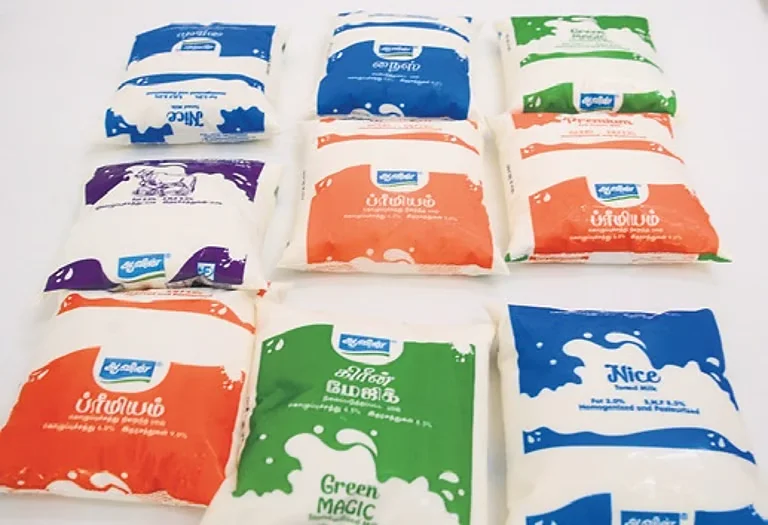
Chennai: Tamil Nadu’s state-run dairy cooperative, Aavin, has reported its worst financial performance since the COVID-19 pandemic, with the federation posting an unaudited loss of approximately ₹120 crore during the financial year 2025-26.
When combined with losses incurred by seven district milk producers’ unions, the total deficit across the cooperative network stands at nearly ₹143 crore, according to official figures.
The seven district unions reporting losses are:
- Coimbatore
- Krishnagiri
- Virudhunagar
- Tirunelveli
- Kancheepuram-Tiruvallur
- Tirupattur
- Theni
Together, these unions accounted for losses of around ₹23 crore. In contrast, the remaining 20 district milk producers’ unions collectively reported profits of approximately ₹53.2 crore, highlighting significant disparities in operational performance across the state’s dairy cooperative system.
Procurement Decline Hits Operations
Officials attribute the losses primarily to two factors: declining milk procurement and continued subsidized milk sales despite rising production costs.
Aavin, which supplies approximately 12.5 lakh litres of milk daily to Chennai, has witnessed a notable reduction in procurement. Average daily milk collection has reportedly fallen from around 36 lakh litres in 2024-25 to approximately 31-32 lakh litres during the current financial year.
The shortfall of nearly four lakh litres per day has had a cascading impact on the cooperative’s operations.
“The decline in procurement is largely because Aavin’s procurement price remains lower than that offered by private dairies,” an official said. “This has significantly increased expenditure on milk reconstitution and, in turn, operational losses.”
Value-Added Products Affected
The procurement deficit has constrained production of higher-margin dairy products such as:
- Ghee
- Butter
- Curd
- Ice Cream
These value-added products are considered critical to improving profitability within dairy cooperatives.
To bridge the supply gap, Aavin has increasingly relied on reconstituting milk using skimmed milk powder and butter—a process that officials say has pushed production costs above retail selling prices.
Industry experts note that while milk serves as the primary revenue stream for dairy cooperatives, value-added products often generate substantially better margins and contribute significantly to financial sustainability.
Pricing Pressures Continue
Sources within the cooperative indicated that Aavin had proposed increasing both farmer procurement prices and retail milk prices by ₹2 to ₹3 per litre during the first quarter of FY 2025-26.
However, no price revision was approved ahead of the Assembly elections, contributing to what officials describe as one of Aavin’s weakest financial performances in the past decade, excluding the pandemic period.
Read More: Lactose-Free Dairy Emerges as a Major Growth Engine for the Global Dairy Industry
Farmer organizations argue that stagnant procurement prices have made it increasingly difficult for dairy producers to absorb rising input costs.
“The government cannot ignore the rising cost of cattle feed and other input expenses borne by dairy farmers,” said M.G. Rajendran, President of the Tamil Nadu Milk Producers’ Welfare Association.
Measures Under Consideration
To improve its financial position, Aavin has reportedly proposed several corrective measures, including:
- Increasing milk procurement across the state.
- Expanding sales of Delite and full cream milk.
- Revising the subsidized milk card scheme.
- Strengthening the value-added dairy products segment.
Officials confirmed that the Coimbatore District Milk Producers’ Union has already withdrawn subsidies under its milk card scheme as part of efforts to reduce losses.
In addition, the Tamil Nadu government is understood to be preparing a broader strategy to strengthen primary milk producers’ cooperative societies and revitalize the state’s dairy sector.
A Broader Challenge
Aavin’s financial difficulties underscore a challenge confronting many dairy cooperatives across India: balancing affordable consumer prices with remunerative returns for milk producers.
With private dairies increasingly offering higher procurement rates, cooperatives are facing growing competition for milk supplies at a time when feed, labor, and transportation costs continue to rise.
Industry observers suggest that unless procurement prices become more competitive, the trend of declining milk collections could persist, further impacting cooperative finances and limiting investments in value-added product categories.
For Aavin, the coming year may prove pivotal. The cooperative’s ability to increase milk procurement, strengthen farmer confidence, and improve profitability will likely determine whether Tamil Nadu’s flagship dairy brand can reverse its recent financial decline and reclaim its position as one of India’s strongest state-run dairy cooperatives.
Join Our “Dairy & Food Jobs Updates” WhatsApp group
Follow the Agri Jobs Updates channel on WhatsApp:
Disclaimer
I do my best to share reliable and well-researched insights but occasional errors or omissions may slip through. Please view all content as informational.
Stay informed on all the latest news updates
All Agriculture Books Free Download
All Dairy Technology Books Free Download
All Agricultural Engineering Books Free download
All Horticulture Books Free Download
All Fisheries Science Books Free Download
For Daily Update follow us at:
Facebook Telegram Whatsapp Instagram YouTube
The contents are provided free for noncommercial purpose such as teaching, training, research, extension and self learning.
If you are facing any Problem than fill form Contact Us
If you want share any article related Agriculture with us than send at info@agrimoon.com with your contact detail.