
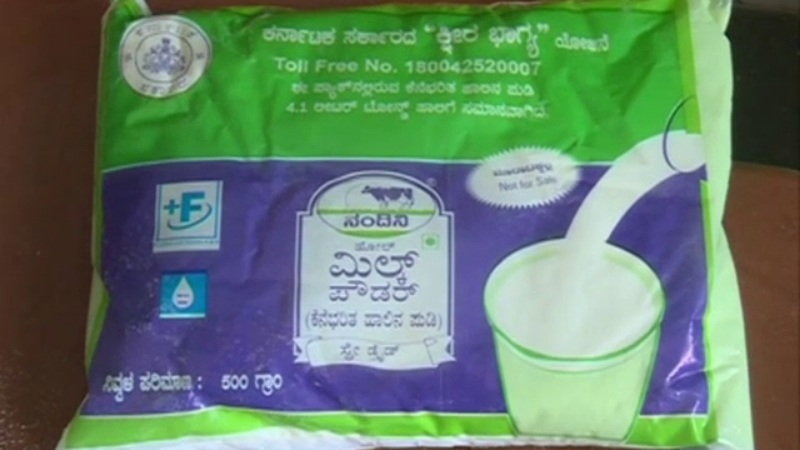
Official testing reportedly confirms compliance with food safety standards, offering reassurance to consumers and institutional buyers of Karnataka Milk Federation products.
KARNATAKA— Laboratory testing commissioned by food safety authorities has reportedly confirmed that Nandini milk powder, marketed by the Karnataka Milk Federation (KMF), meets applicable food safety and quality requirements, dismissing allegations of adulteration circulating about the product.
According to the report, surveillance officers from the Food Safety and Standards Authority of India (FSSAI) collected samples from KMF manufacturing units and procurement dairies on September 26 for comprehensive analysis. The testing was initiated following concerns about product quality, with the objective of verifying compliance with applicable food safety regulations.
The reported clearance is expected to help reassure consumers and institutional buyers about the product’s quality. However, the scope of the findings should be understood in the context of the specific samples tested and the parameters covered by the laboratory analysis.
Laboratory Testing and Milk Powder Quality
Milk powder manufacturing involves several critical processing stages, including milk standardisation, evaporation, spray drying and moisture control. These operations help produce a stable, shelf-ready ingredient while maintaining the product’s required composition and quality.
Testing for milk powder adulteration can involve evaluating composition, protein and fat content, moisture levels, and the presence of unauthorised or extraneous substances. The relevant tests depend on the product category, applicable standards and the suspected form of adulteration.
A laboratory report demonstrating compliance provides an important basis for assessing product quality. Nevertheless, specific claims about the absence of individual adulterants or compliance with every possible quality parameter should be made only when supported by the detailed test report.
Importance of Regulatory Surveillance
Food safety surveillance plays an important role in protecting consumers and maintaining confidence in dairy products. Sampling and laboratory analysis allow authorities to investigate concerns using scientific evidence rather than relying on unverified allegations.
Also Read: Maharashtra Plans Digital Milk Tracking System to Curb Adulteration
For dairy manufacturers and cooperatives, transparent communication of testing results can help address public concerns and reinforce confidence in established quality-control systems. Consumers should refer to verified statements from the relevant authorities and the federation when evaluating claims circulating on social media.
Implications for KMF and the Dairy Cooperative Sector
KMF operates through a network of district milk unions and markets dairy products under the Nandini brand. Milk powder is an important value-added dairy product, supporting product diversification, inventory management and institutional supply requirements.
Maintaining quality assurance is particularly important for products supplied to large institutional buyers, including school nutrition programmes. Any quality concern can affect consumer confidence, procurement decisions and brand reputation, making credible testing and clear regulatory communication essential.
The cooperative’s wider role in collecting and processing milk also connects product demand with the livelihoods of dairy farmers who supply milk through its network. Sustained consumer confidence can support the stability of cooperative markets, although the direct financial impact of this particular episode cannot be established without further evidence.
Transparency Remains Key
The reported laboratory clearance highlights the importance of evidence-based food safety communication. Publishing the laboratory’s identity, test parameters, applicable standards and official findings would allow consumers and industry stakeholders to assess the results more fully.
For the dairy sector, the broader lesson is clear: product-quality allegations should be investigated through established regulatory procedures, and conclusions should be based on documented analytical evidence rather than speculation.
Editorial note: This article is based on the supplied report. Before publication, verify the original FSSAI or Karnataka food safety authority statement, the date and scope of sampling, the laboratory report and the exact findings. Avoid describing the product as “completely safe” or claiming that every possible adulterant was ruled out unless the official report explicitly supports those conclusions.
Join Our “Dairy & Food Jobs Updates” WhatsApp group
Follow the Agri Jobs Updates channel on WhatsApp:
Disclaimer
I do my best to share reliable and well-researched insights but occasional errors or omissions may slip through. Please view all content as informational.
Stay informed on all the latest news updates
All Agriculture Books Free Download
All Dairy Technology Books Free Download
All Agricultural Engineering Books Free download
All Horticulture Books Free Download
All Fisheries Science Books Free Download
For Daily Update follow us at:
Facebook Telegram Whatsapp Instagram YouTube
The contents are provided free for noncommercial purpose such as teaching, training, research, extension and self learning.
If you are facing any Problem than fill form Contact Us
If you want share any article related Agriculture with us than send at info@agrimoon.com with your contact detail.