

Ludhiana: As severe cold wave conditions continue to grip the region, veterinary experts have warned dairy farmers against overlooking animal welfare, cautioning that cold stress can lead to illness and a sharp decline in milk production.
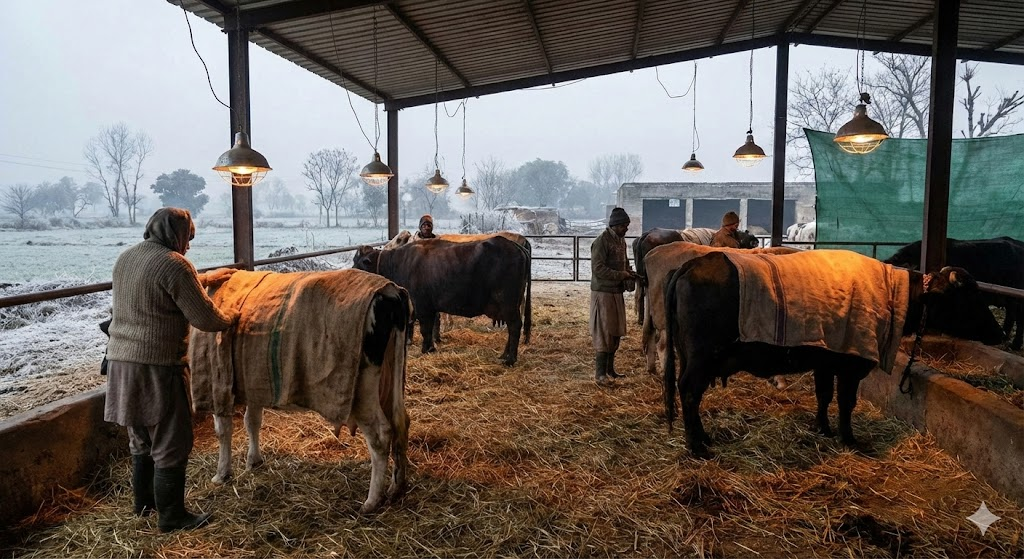
Veterinary specialists from Guru Angad Dev Veterinary and Animal Sciences University (GADVASU) have issued a detailed advisory outlining urgent measures to safeguard dairy animals during extreme winter conditions.
Dr. Yashpal Singh, Head of the Department of Livestock Production Management at GADVASU, said negligence during harsh winters can result in stress, respiratory diseases and reduced productivity. He pointed out that most dairy animals are housed in open systems with minimal protection, which are inadequate during prolonged cold spells.
“Dairies must install curtains, plastic sheets or windbreaks around animal sheds to block cold winds,” Dr. Singh said, adding that chilling winds compromise immunity and increase susceptibility to infections.
Importance of sunlight and ventilation
Dr. Singh stressed that while protection from cold winds is essential, adequate ventilation must not be compromised. He also highlighted the critical role of sunlight in maintaining animal health.
“Sunlight provides natural warmth and acts as a disinfectant. Dairy owners should ensure maximum sunlight reaches animal sheds by trimming trees and overgrown vegetation,” he advised. Animals should be allowed sun exposure whenever weather conditions permit.
Flooring, bedding and thermal comfort
Clean and dry flooring is vital during winter, as damp floors intensify cold stress and raise the risk of infections and hoof-related problems. The advisory recommends covering concrete floors with insulating bedding materials such as paddy straw, wheat straw, rice husk or dried leaves. In extreme cold, animals may also be covered with blankets to help conserve body heat.
Read More: India Charts Vision 2047 Roadmap to Transform Dairy Sector
Higher energy needs during winter
Dr. Singh noted that animals require additional energy during winter to maintain body temperature. He advised feeding leguminous fodder to meet increased protein requirements.
For animals producing around 10 kg of milk per day, the recommended ration includes:
- 20–25 kg barseem
- 5–10 kg wheat straw
- Around 3 kg concentrate feed
The concentrate should be supplemented with a mineral mixture and 1% salt. If barseem is available in sufficient quantity, up to 40 kg can be fed.
Water management equally critical
Water intake often drops during winter, affecting feed consumption and milk yield. Dr. Singh advised that animals should be provided with clean, lukewarm water wherever possible to encourage adequate drinking.
The advisory underlines that timely winter management is not optional—it is essential for maintaining animal health, productivity and farm income during extreme cold conditions. In short, if farmers are layering up, their cattle should not be left out in the cold—literally or economically.
Join Our “Dairy & Food Jobs Updates” WhatsApp group
Disclaimer
I do my best to share reliable and well-researched insights but occasional errors or omissions may slip through. Please view all content as informational.
Stay informed on all the latest news updates
All Agriculture Books Free Download
All Dairy Technology Books Free Download
All Agricultural Engineering Books Free download
All Horticulture Books Free Download
All Fisheries Science Books Free Download
For Daily Update follow us at:
Facebook Telegram Whatsapp Instagram YouTube
The contents are provided free for noncommercial purpose such as teaching, training, research, extension and self learning.
If you are facing any Problem than fill form Contact Us
If you want share any article related Agriculture with us than send at info@agrimoon.com with your contact detail.