
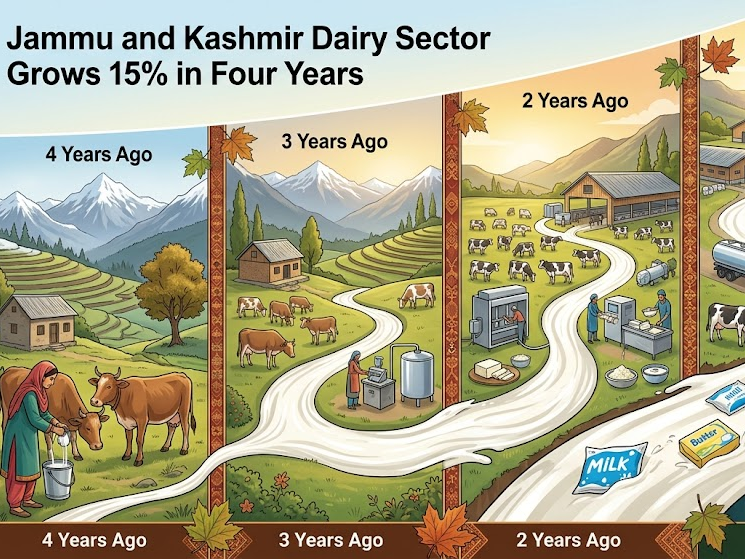
Srinagar: The dairy sector in Jammu and Kashmir has recorded steady growth, with milk production rising nearly 15% over the past four years, even as food safety authorities continue to flag quality violations in a significant number of samples.
Steady Rise in Milk Production
According to data presented in Parliament by Rajiv Ranjan Singh in response to a query by Anil Yeshwant Desai, milk production in the Union Territory increased from:
- 25.94 lakh tonnes (2020–21)
- 27.27 lakh tonnes (2021–22)
- 28.17 lakh tonnes (2022–23)
- 28.75 lakh tonnes (2023–24)
- 29.74 lakh tonnes (2024–25)
The consistent upward trend suggests that the region could cross the 30 lakh tonne mark in the near future.
High Consumption Levels
Jammu and Kashmir also stands out for its high per capita milk consumption, nearly double the national average:
- Rural: ~9.5 litres/month (vs ~5 litres national average)
- Urban: ~10 litres/month (vs ~5.7 litres national average)
Neighbouring Ladakh reports even higher consumption, reflecting strong dairy-based dietary traditions in Himalayan regions.
Quality Violations Raise Concerns
Despite production growth, food safety data from the Food Safety and Standards Authority of India reveals ongoing quality issues:
- 42,271 milk samples tested (5 years)
- 3,124 found non-conforming (~7.4%)
- About 1 in 13 samples failed standards
Most violations were classified as sub-standard, while a smaller portion were deemed unsafe for consumption.
Enforcement Actions
Authorities have intensified enforcement:
- 7,387 civil convictions with penalties
- Over ₹2.91 crore collected in fines
- 82 criminal convictions, including fines and imprisonment
These actions highlight increased regulatory vigilance but also underline persistent compliance gaps.
National Context
India, the world’s largest milk producer, saw output rise to 247.87 million tonnes (2024–25), with leading states like Uttar Pradesh, Rajasthan, Gujarat, Madhya Pradesh, and Maharashtra dominating production.
Read More: From Gulf Return to Dairy Success: Kerala Woman Builds 350-Litre-Per-Day Farm Enterprise
However, quality issues are not unique to J&K. Nationwide, FSSAI reported a 25% non-conformance rate in 2022–23, indicating broader systemic challenges.
Strengthening Food Safety Systems
To address adulteration and contamination risks, Food Safety and Standards Authority of India has:
- Published a Manual of Methods of Analysis (2022) with 110 test methods
- Established 252 NABL-accredited laboratories and 24 referral labs
- Deployed 305 “Food Safety on Wheels” units across India
Consumers are also being empowered through tools like the Food Safety Magic Box and DART (Detect Adulteration with Rapid Test) kits.
Balancing Growth with Safety
While Jammu and Kashmir’s dairy sector reflects strong growth and demand, the data underscores a key challenge: ensuring quality keeps pace with production.
Experts note that improving testing infrastructure, cold chain systems, and farmer awareness will be crucial to sustaining growth while safeguarding public health.
Join Our “Dairy & Food Jobs Updates” WhatsApp group
Follow the Agri Jobs Updates channel on WhatsApp:
Disclaimer
I do my best to share reliable and well-researched insights but occasional errors or omissions may slip through. Please view all content as informational.
Stay informed on all the latest news updates
All Agriculture Books Free Download
All Dairy Technology Books Free Download
All Agricultural Engineering Books Free download
All Horticulture Books Free Download
All Fisheries Science Books Free Download
For Daily Update follow us at:
Facebook Telegram Whatsapp Instagram YouTube
The contents are provided free for noncommercial purpose such as teaching, training, research, extension and self learning.
If you are facing any Problem than fill form Contact Us
If you want share any article related Agriculture with us than send at info@agrimoon.com with your contact detail.