

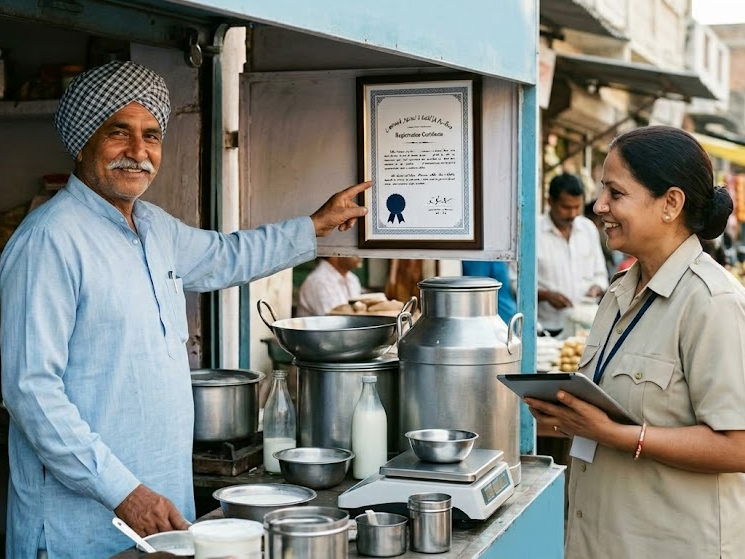
Food safety authorities in India have introduced stricter licensing rules requiring independent milk vendors and small dairy sellers to obtain formal registration with the Food Safety and Standards Authority of India (FSSAI). The move aims to strengthen food safety monitoring and prevent dairy adulteration.
Reason for the Crackdown
The new directive follows a serious contamination incident in East Godavari district, where 13 people reportedly died and several others were hospitalized after consuming contaminated milk.
Victims experienced severe health complications such as:
- Acute renal dysfunction
- Anuria (failure to produce urine)
- Severe abdominal pain
Many affected individuals required emergency dialysis, exposing major gaps in monitoring local milk supply chains.
Mandatory Licensing for Independent Sellers
Under the new guidelines:
- All independent milk producers, vendors, and dairy sellers must obtain FSSAI registration.
- Selling milk without legal registration is now prohibited.
- Authorities will inspect vendors to ensure compliance with hygiene and storage standards.
The rule targets unregulated local dairy businesses, which regulators say often operate without proper food safety oversight.
Exemption for Cooperative Farmers
Farmers supplying milk through registered dairy cooperatives will not need separate individual registration if they sell their entire production to the cooperative.
This means farmers working with organized dairy systems—similar to cooperative models like Gujarat Cooperative Milk Marketing Federation (which markets products under the Amul brand)—remain exempt because the cooperative already operates under regulated food safety standards.
However, if farmers sell even part of their milk independently, they must obtain FSSAI registration.
Read More: Dispute Over the “Vijaya Dairy” Brand Between Telangana and Andhra Pradesh
Inspections and Monitoring
Food safety officials will now carry out regular inspections to ensure compliance. These checks will focus on:
- Vendor licenses and registration certificates
- Milk storage conditions
- Milk chilling equipment and hygiene standards
- Proper temperature control to prevent bacterial growth
Poor storage or lack of refrigeration is a major cause of milk spoilage and microbial contamination.
State-Level Enforcement
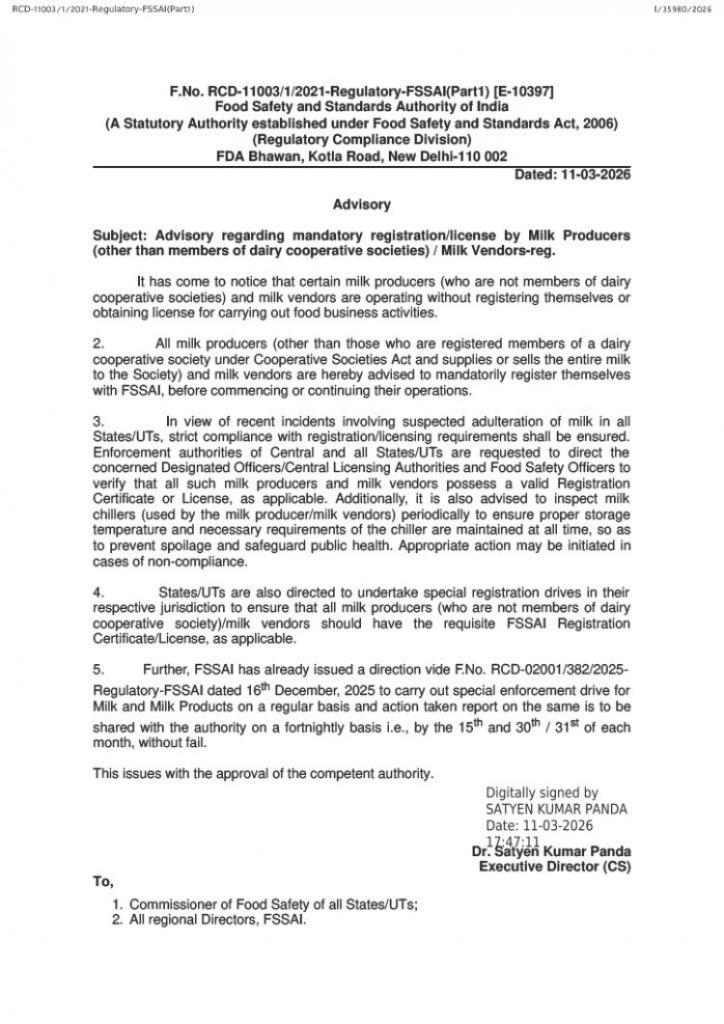
State governments and union territories must also:
- Run registration drives to bring informal milk sellers into the formal system
- Submit progress reports every fortnight (15th and last day of the month)
- Track compliance and enforcement actions
Why This Is Important for the Dairy Sector
The new regulation aims to:
- Improve consumer safety
- Reduce milk adulteration and contamination risks
- Bring informal dairy vendors into the regulated food safety framework
- Strengthen traceability and quality control in the milk supply chain
Industry perspective:
India’s dairy sector still has a large informal market, where milk is sold directly without processing or testing. Mandatory FSSAI registration helps formalize this sector and improves public health protection.
Join Our “Dairy & Food Jobs Updates” WhatsApp group
Follow the Agri Jobs Updates channel on WhatsApp:
Disclaimer
I do my best to share reliable and well-researched insights but occasional errors or omissions may slip through. Please view all content as informational.
Stay informed on all the latest news updates
All Agriculture Books Free Download
All Dairy Technology Books Free Download
All Agricultural Engineering Books Free download
All Horticulture Books Free Download
All Fisheries Science Books Free Download
For Daily Update follow us at:
Facebook Telegram Whatsapp Instagram YouTube
The contents are provided free for noncommercial purpose such as teaching, training, research, extension and self learning.
If you are facing any Problem than fill form Contact Us
If you want share any article related Agriculture with us than send at info@agrimoon.com with your contact detail.