
As India and the United States move closer to finalising a new trade agreement — with tariffs reportedly reduced to 18% — one sensitive issue continues to hover in the background: dairy imports.
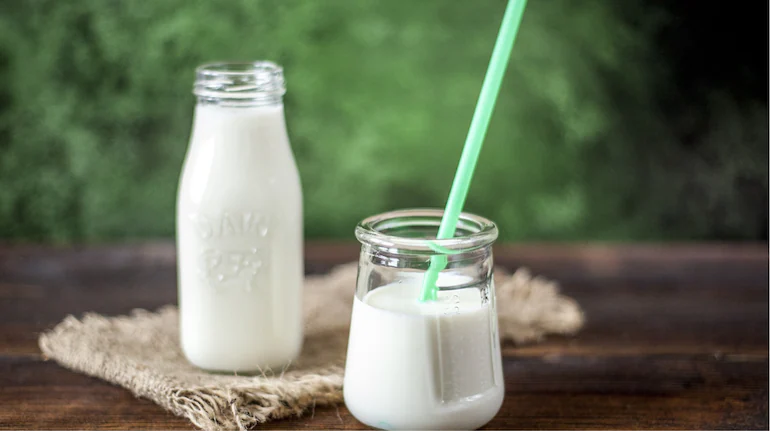
During earlier negotiations, India resisted opening its dairy market to US products. The reason was not price alone, but something far more cultural and religious — what came to be informally labelled as “non-veg milk”.
What Is “Non-Veg Milk”?
The term refers to milk sourced from cows that are fed animal-derived supplements. Under US regulations, certain processed animal by-products are permitted in cattle feed. These may include:
- Meat meal from pigs, poultry, horses, and other animals
- Blood meal from pigs and horses
- Tallow (rendered animal fat)
- Processed poultry waste such as feathers and litter
While these feed ingredients are legally approved and scientifically regulated in the US, their use raises concerns in India, where many consumers follow vegetarian dietary practices rooted in religious and cultural traditions.
Read More: Parag Milk Foods Q3 Profit Falls 13% to ₹32.57 Crore Amid Rising Commodity Costs
Milk and dairy products such as ghee are not just food items in India — they are integral to daily rituals, temple offerings, and religious ceremonies. For many households, the idea that a cow was fed animal-derived feed challenges deeply held beliefs about purity.
Why It Matters Economically
India is the world’s largest producer and consumer of milk, with millions of smallholder farmers dependent on dairy for livelihood. Allowing US dairy imports could introduce competitively priced products into the market.
Cheaper imports might:
- Pressure domestic procurement prices
- Affect cooperative models like Amul and Aavin
- Impact income stability of dairy farmers
So this debate is not just about feed ingredients — it’s about rural economics, food culture, and political sensitivity.
India’s Stand on Certification
India has consistently maintained that if dairy imports are allowed, they must carry strict certification. The requirement is that milk-producing animals must never have been fed:
- Meat or bone meal
- Internal organs or tissues of ruminant or porcine origin
- Blood meal
The US, however, has previously described such certification demands as an “unnecessary trade barrier.”
The Larger Picture
This issue highlights a broader reality in global trade negotiations: technical compliance does not automatically equal cultural acceptance.
From a policy standpoint, India must balance three forces:
- Protecting farmer livelihoods
- Respecting consumer sentiment and religious practices
- Managing strategic trade relations with a major partner
Trade deals are rarely just about tariffs. Sometimes, the real sticking point is what ends up in the cow’s feed trough.
And in India, that detail matters a great deal.
Join Our “Dairy & Food Jobs Updates” WhatsApp group
Follow the Agri Jobs Updates channel on WhatsApp:
Disclaimer
I do my best to share reliable and well-researched insights but occasional errors or omissions may slip through. Please view all content as informational.
Stay informed on all the latest news updates
All Agriculture Books Free Download
All Dairy Technology Books Free Download
All Agricultural Engineering Books Free download
All Horticulture Books Free Download
All Fisheries Science Books Free Download
For Daily Update follow us at:
Facebook Telegram Whatsapp Instagram YouTube
The contents are provided free for noncommercial purpose such as teaching, training, research, extension and self learning.
If you are facing any Problem than fill form Contact Us
If you want share any article related Agriculture with us than send at info@agrimoon.com with your contact detail.