The global dairy industry is entering 2026 with a renewed focus on efficiency rather than expansion, as shrinking profit margins push producers to rethink how every kilogram of feed is converted into milk. Instead of investing in larger herds or new facilities, dairy farmers are increasingly turning to precision nutrition and high-quality forage production to protect profitability and strengthen resilience.
According to the 2026 State of the Dairy Industry Report by Farm Journal, anticipated profitability among dairy producers has dropped sharply, with only 46% of farmers expecting profitable operations in 2026, compared with 74% the previous year. The changing economic landscape has shifted industry priorities from growth to disciplined cost management.
Feed Bunk Becomes the Centre of Profitability
As milk prices remain volatile and production costs continue to rise, nutrition management has emerged as the industry’s most effective strategy for safeguarding margins.
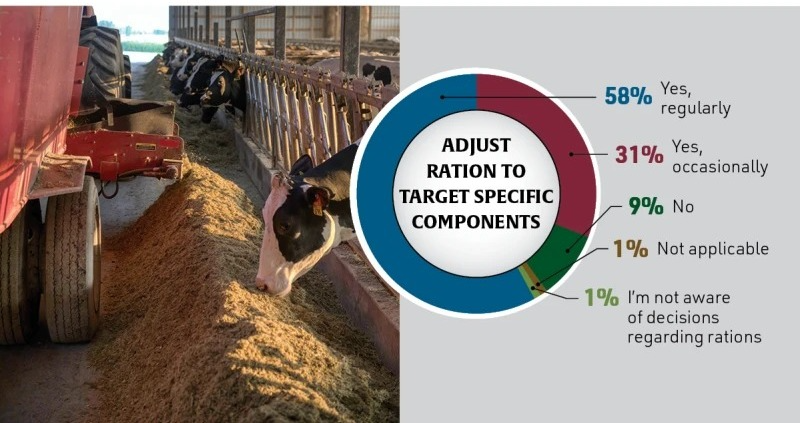
The report found that 89% of dairy producers now adjust rations to improve milk fat and protein components, while 58% make these adjustments proactively as part of routine herd management rather than reacting to market conditions.
Industry experts say the objective is straightforward: when farmers cannot influence milk prices, improving milk composition and feed efficiency becomes the most practical way to increase returns.
Read More: Aavin Introduces Cloud-Based Milk Monitoring System to Ensure Faster Payments for Dairy Farmers
“Today’s dairy producers are extracting greater value from every kilogram of feed by fine-tuning rations to maximise milk components,” the report noted.
Forage Quality Takes Centre Stage
While feed additives and specialised supplements continue to support dairy nutrition, producers are placing greater emphasis on improving home-grown forage, recognising it as one of the most cost-effective tools for reducing feed expenses.
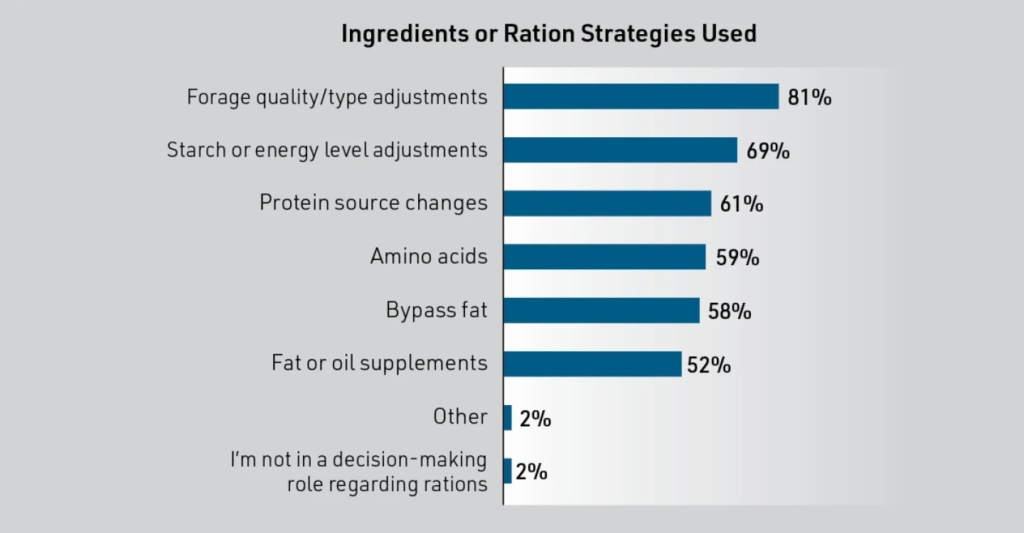
The survey revealed that 81% of dairy producers consider forage quality and forage type their primary area of ration adjustment, highlighting a renewed appreciation for efficient forage production.
According to Derek Nolan, Dairy Extension Specialist at the University of Illinois, improving forage quality remains one of the most effective strategies for enhancing dairy profitability.
“Improving forage quality is a key strategy for dairy producers aiming to enhance feed efficiency and reduce costs,” Nolan said.
By producing higher-quality silage and forage crops on-farm, dairy operations can reduce dependence on expensive purchased feeds while maintaining herd performance.
Climate Challenges Increase Pressure
However, experts warn that achieving consistently high forage quality is becoming increasingly difficult due to changing weather patterns.
Many producers now identify prolonged dry conditions, irregular rainfall, and water-use restrictions as major obstacles to forage production.
As climate variability intensifies, successful forage management is no longer viewed solely as an agronomic objective but as a critical financial safeguard capable of protecting farm profitability during periods of market uncertainty.
Multiple Nutrition Strategies Improve Performance
Rather than relying on a single nutritional solution, dairy farmers are combining several management practices to improve production efficiency.
Nearly 69% of producers reported optimising starch and dietary energy levels to sustain milk yield and component production while controlling feed costs.
At the same time, many operations are incorporating protected amino acids and bypass fats into rations to further enhance milk fat and protein percentages.
The report also found that although 90% of dairy farms use performance monitoring tools, many continue to depend heavily on dairy consultants and Dairy Herd Improvement Association (DHIA) records. Industry observers believe greater adoption of real-time on-farm nutritional monitoring systems could further improve decision-making and feed efficiency.
Nutrition Supports Sustainability Goals
Feed efficiency is also becoming an important contributor to environmental sustainability.
Although the adoption of methane-reducing feed additives has slowed slightly, improving feed conversion efficiency remains one of the most widely implemented sustainability practices across the dairy sector.
More efficient cows require fewer feed resources to produce the same amount of milk, reducing greenhouse gas emissions per litre of milk while lowering production costs.
Water recycling and precision feeding are increasingly being integrated into broader sustainability strategies aimed at reducing the environmental footprint of dairy farming.
Focus Shifts from Expansion to Optimisation
Industry analysts note that the dairy sector is moving away from expansion-driven growth toward operational excellence.
Instead of increasing herd size, producers are investing in better forage management, precision feeding technologies, data-driven nutrition programmes, and continuous monitoring of herd performance.
This shift reflects a broader recognition that profitability in today’s dairy industry depends less on producing more milk and more on producing milk more efficiently.
Outlook
As economic pressures continue throughout 2026, dairy producers are demonstrating that resilience begins at the feed bunk. High-quality forage, precision nutrition, and data-driven feeding strategies are emerging as the foundation of sustainable dairy production.
Experts believe farms that successfully optimise forage quality, improve feed efficiency, and adopt precision nutritional management will be better positioned to navigate market volatility while maintaining profitability and environmental performance.
In an era defined by tighter margins and greater uncertainty, the industry’s future is increasingly being shaped not by herd expansion, but by smarter feeding, better forage, and more efficient cows.
Join Our “Dairy & Food Jobs Updates” WhatsApp group
Follow the Agri Jobs Updates channel on WhatsApp:
Disclaimer
I do my best to share reliable and well-researched insights but occasional errors or omissions may slip through. Please view all content as informational.
Stay informed on all the latest news updates
All Agriculture Books Free Download
All Dairy Technology Books Free Download
All Agricultural Engineering Books Free download
All Horticulture Books Free Download
All Fisheries Science Books Free Download
For Daily Update follow us at:
Facebook Telegram Whatsapp Instagram YouTube
The contents are provided free for noncommercial purpose such as teaching, training, research, extension and self learning.
If you are facing any Problem than fill form Contact Us
If you want share any article related Agriculture with us than send at info@agrimoon.com with your contact detail.