

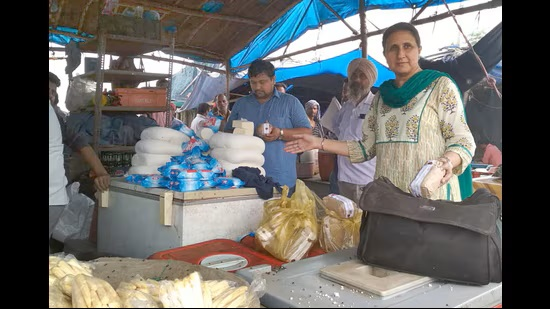
Punjab is facing a serious food safety and market integrity crisis after official testing revealed that nearly 50% of paneer samples collected across the state were spurious or adulterated. The findings expose systemic weaknesses in one of India’s most important dairy supply chains and raise urgent concerns for regulators, consumers, and industry stakeholders alike.
What “Spurious” Really Means
Food safety authorities classified the failed samples as spurious, a designation that goes beyond minor quality lapses. In regulatory terms, this typically points to:
- Use of non-dairy fats or synthetic milk solids
- Substandard or diluted raw materials
- Unhygienic processing conditions
- Non-compliance with prescribed FSSAI compositional standards
In simple terms: a significant share of what is being sold as paneer is not paneer at all.
Structural Failure, Not Isolated Incidents
The scale of non-compliance indicates a systemic problem, not a few rogue operators. When half a market fails basic standards, it reflects gaps in:
- Licensing and monitoring of small-scale manufacturers
- Enforcement consistency across districts
- Supply-chain traceability from milk sourcing to retail
For legitimate dairy processors, this creates a distorted market where compliant producers are undercut by fraudulent players operating at artificially low costs.
Impact on Legitimate Industry and Investment
The economic fallout extends well beyond Punjab’s borders. Widespread dairy adulteration:
- Erodes consumer trust in packaged and loose dairy products
- Undermines brand-based differentiation for quality-focused producers
- Introduces reputational risk for regional sourcing
- Discourages domestic and international dairy-sector investment
For investors and global buyers, inconsistent enforcement translates into unpredictable operational risk, particularly in value-added dairy segments like paneer.
Public Health Risks Cannot Be Ignored
Beyond market distortion, the most serious concern remains consumer safety. Adulterated paneer can expose consumers to:
- Undeclared fats and chemicals
- Microbiological hazards from poor hygiene
- Long-term health risks from repeated consumption
When adulteration is this widespread, public exposure is no longer marginal—it is systemic.
Read More: Sambhesinh Parmar Elected Chairman of Amul Dairy, Vijay Patel Named Vice Chairman
The Way Forward: Enforcement, Not Advisories
Restoring confidence in Punjab’s paneer market will require more than routine inspections. The situation demands:
- Zero-tolerance enforcement, including license cancellations
- Mandatory traceability systems for milk and paneer production
- Frequent, randomized market surveillance
- Public disclosure of violators to deter repeat offenses
Indian dairy standards are already robust on paper. The crisis lies in execution, not regulation.
Bottom Line
A 50% failure rate is not a warning sign—it is a verdict. Unless enforcement tightens rapidly, Punjab risks becoming a case study in how unchecked dairy fraud can damage public health, destroy fair competition, and tarnish the credibility of India’s broader dairy sector.
Join Our “Dairy & Food Jobs Updates” WhatsApp group
Disclaimer
I do my best to share reliable and well-researched market insights but occasional errors or omissions may slip through. Please view all content as informational.
Stay informed on all the latest news updates
All Agriculture Books Free Download
All Dairy Technology Books Free Download
All Agricultural Engineering Books Free download
All Horticulture Books Free Download
All Fisheries Science Books Free Download
For Daily Update follow us at:
Facebook Telegram Whatsapp Instagram YouTube
The contents are provided free for noncommercial purpose such as teaching, training, research, extension and self learning.
If you are facing any Problem than fill form Contact Us
If you want share any article related Agriculture with us than send at info@agrimoon.com with your contact detail.