

In kitchens and supermarkets alike, yogurt and curd are often treated as interchangeable staples. Both are fermented milk products, both are creamy and mildly sour, and both are widely praised for their digestive benefits. Yet food scientists and nutrition experts stress that yogurt and curd are not the same — and understanding the difference matters for nutrition, consistency, and culinary use.
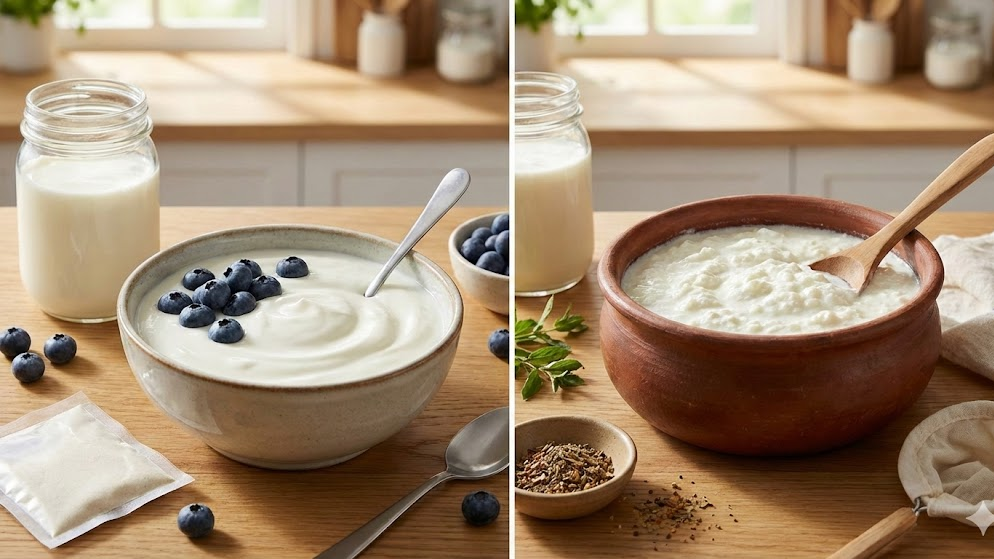
Same Milk, Different Process
Curd has been a cornerstone of Indian diets for centuries. Traditionally prepared at home, it is made by adding a small quantity of existing curd to warm milk and allowing it to ferment naturally. The bacteria responsible for fermentation come from the starter curd and the surrounding environment, making each batch slightly different in taste, texture, and probiotic content.
Yogurt, by contrast, is a more standardized product. It is produced using specific bacterial cultures — primarily Lactobacillus bulgaricus and Streptococcus thermophilus — under carefully controlled temperature and hygiene conditions. This process, commonly used in commercial production, ensures uniform quality and predictable fermentation.
Process Control
| Factor | Curd | Yogurt |
|---|---|---|
| Temperature | Ambient | 42–45 °C |
| Hygiene | Household-level | Industrial GMP |
| Consistency | Variable | Uniform |
| Shelf life | Short | Longer |
Texture & Sensory Quality
- Curd:
- Can be thin, grainy, or whey-separated
- Sourness fluctuates
- Yogurt:
- Smooth gel structure
- Stable acidity
- Creamier mouthfeel
Why? Controlled acidification and protein denaturation in yogurt.
Nutritional & Probiotic Profile
- Both provide:
- Calcium
- High-quality protein
- B-vitamins
- Yogurt advantage:
- Higher, predictable probiotic count
- Better lactose digestion support
Scientific takeaway: Yogurt delivers functional nutrition more reliably.
Read More: From Surplus Milk to Sold-Out Mornings: How a Hoshiarpur Farmer Built a ₹1-Crore Dairy Enterprise
Culinary Role
- Curd → Indian cuisine backbone
- Kadhi, raita, curd rice, marinades
- Yogurt → Global & processed foods
- Smoothies, desserts, bakery, salad dressings
Different kitchens, different chemistry.
Regulatory Perspective (Important)
- Yogurt: Recognised fermented milk product under food standards
- Curd: Traditional food, loosely defined, not suitable for large-scale uniform branding
This matters for exports, quality assurance, and food safety.
Final Verdict
- Curd = traditional, variable, culture-rich, emotionally Indian
- Yogurt = scientific, standardised, probiotic-consistent, market-ready
Neither is “better” universally.
The right choice depends on purpose, not sentiment.
- For home meals & tradition → Curd
- For gut health claims, processing, and commercial dairy → Yogurt
The Bottom Line
While yogurt and curd may look alike and serve similar purposes, they differ significantly in preparation, bacterial composition, and consistency. Curd reflects tradition and natural fermentation, while yogurt represents controlled science and standardisation.
Nutritionists agree that both are healthy and beneficial for gut health. The choice between them ultimately depends on personal preference, dietary habits, and availability — but knowing the difference helps consumers make informed decisions at the table.
Join Our “Dairy & Food Jobs Updates” WhatsApp group
Disclaimer
I do my best to share reliable and well-researched market insights but occasional errors or omissions may slip through. Please view all content as informational.
Stay informed on all the latest news updates
All Agriculture Books Free Download
All Dairy Technology Books Free Download
All Agricultural Engineering Books Free download
All Horticulture Books Free Download
All Fisheries Science Books Free Download
For Daily Update follow us at:
Facebook Telegram Whatsapp Instagram YouTube
The contents are provided free for noncommercial purpose such as teaching, training, research, extension and self learning.
If you are facing any Problem than fill form Contact Us
If you want share any article related Agriculture with us than send at info@agrimoon.com with your contact detail.