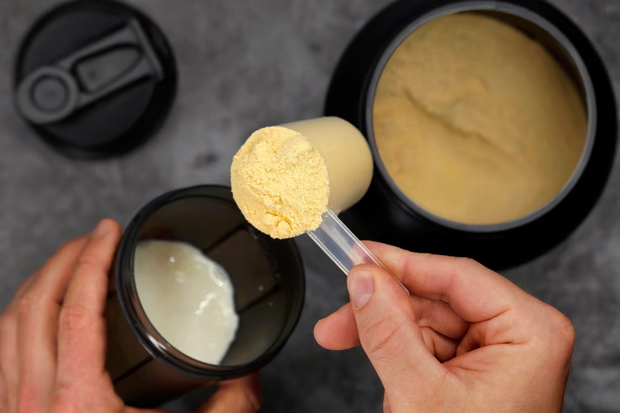
Once dismissed as little more than a watery byproduct of cheesemaking, whey has become one of the most valuable commodities in the global dairy industry. Fueled by the “proteinmaxxing” trend, the growing use of GLP-1 weight-loss drugs, and soaring consumer demand for high-protein foods, whey protein has transformed from industrial waste into a premium dairy ingredient—reshaping dairy economics and manufacturing strategies.
A Byproduct No More
For generations, cheesemakers regarded whey as an unavoidable leftover after milk was separated into curds and whey during cheesemaking. Much of it was used as livestock feed, fertilizer, or processed into products such as ricotta cheese.
Today, that picture has changed dramatically.
“It’s a byproduct no longer. Whey is a co-product now,” says Joshua White, Vice President of Dairy Ingredients at dairy marketer TC Jacoby & Co., highlighting the ingredient’s growing financial importance to dairy processors.
Protein Boom Drives Unprecedented Demand
Protein consumption has become one of the fastest-growing nutrition trends worldwide. Supermarket shelves increasingly feature protein-fortified cereals, beverages, snacks, frozen foods, and even coffee drinks.
According to a 2025 survey of 3,000 U.S. adults:
- 71% reported actively trying to increase protein intake.
- This compares with 59% in 2022, illustrating the rapid rise in consumer interest.
Tony Meives, a Wisconsin entrepreneur whose family has produced cheese for generations, now earns his livelihood selling whey protein instead.
“Twenty years ago, the only people who took whey were bodybuilders,” Meives explains. “Over the past five years, the market has really opened up to each and every type of person you can probably think of.”
How Whey Protein is Produced
Whey is generated during cheese production when enzymes separate milk into curds and liquid whey.
To manufacture whey protein powder, processors:
- Remove fat and lactose through filtration
- Purify the protein
- Concentrate the liquid
- Evaporate excess water
- Spray dry it into powder
The resulting whey protein concentrate or isolate is widely used in nutritional supplements, protein bars, dairy beverages, infant nutrition, and sports nutrition products.
Supply Cannot Keep Pace
The surge in demand has outpaced production capacity.
“There are a lot of unfilled orders,” says Dean Sommers, cheese and food technologist at the Center for Dairy Research, University of Wisconsin.
“There simply isn’t enough product around to fill those orders.”
Manufacturers are now investing in:
- New whey processing equipment
- Expanded filtration systems
- New dairy ingredient plants
- Higher-capacity cheese facilities
Prices Reach Record Levels
The market response has been dramatic.
Industry reports indicate:
- Whey protein concentrate prices have increased up to fivefold in recent years.
- Prices have risen approximately 83% over the past two years alone.
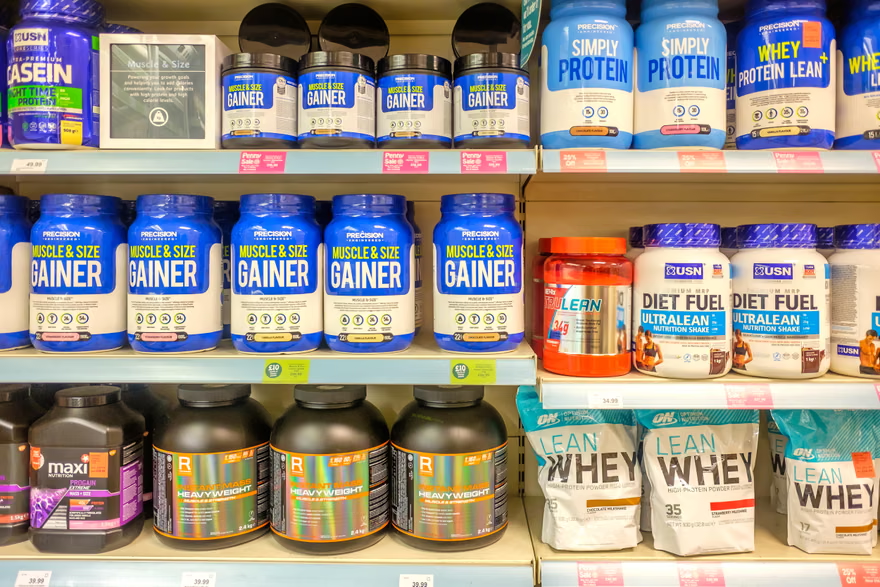
Because whey originates from cheese production, processors cannot manufacture whey independently.
This creates an unusual economic challenge.
“Whey protein is currently driving more of the farmer’s milk check than it ever has before,” says Joshua White.
“That results in the potential of excess cheese production in order to get to that whey. The cart is driving the horse.”
GLP-1 Drugs Add Another Growth Engine
Another major factor accelerating whey demand is the rapid adoption of GLP-1 weight-loss medications such as:
- Ozempic
- Wegovy
- Zepbound
- Tirzepatide
These medications suppress appetite, making it difficult for many users to consume adequate dietary protein.
Studies estimate that 25–40% of weight lost during GLP-1 therapy may come from lean muscle mass unless sufficient protein intake and resistance exercise are maintained.
“I was definitely concerned about losing muscle alongside the other weight,” says GLP-1 user Alex Sullivan.
“I wanted to make sure I retained as much muscle as possible.”
Experts Warn Against Excessive Protein Consumption
Despite the protein craze, nutrition researchers caution that more protein is not always better.
Dr. Ian Neeland, cardiologist specializing in obesity and metabolic diseases, notes that muscle protein synthesis reaches a plateau.
“The muscle building didn’t really improve after about 1.6 grams per kilogram of body weight,” he explains.
“You really just need to eat enough protein to preserve muscle mass. It’s more about preservation.”
For most healthy adults, the Recommended Dietary Allowance (RDA) remains approximately:
- 0.8 g protein per kg body weight per day
Higher intakes may benefit athletes, older adults, and individuals using GLP-1 medications, but consuming substantially more protein provides limited additional benefit.
Changing the Dairy Industry
Growing whey profitability is beginning to reshape dairy manufacturing itself.
Some processors are shifting production toward:
- Cottage cheese
- Greek yoghurt
- High-protein cultured dairy products
Others are expanding exports to markets including:
- Latin America
- China
- Pacific Island nations
These strategies aim to balance increasing whey demand with relatively stable cheese consumption.
Industry Outlook
Recent U.S. Department of Agriculture market reports indicate whey supplies remain tight while prices continue to strengthen.
For companies dependent on whey protein, rising costs pose new challenges.
“I hope less people take whey protein,” Meives jokes.
“That way the price does come down.”
His remark reflects an unusual reality in today’s dairy economy: a product once discarded as waste has become one of the industry’s most valuable revenue streams.
As consumer demand for protein-rich diets continues to grow, whey’s evolution from cheesemaking byproduct to premium dairy ingredient represents one of the most significant value transformations in modern food processing.
Join Our “Dairy & Food Jobs Updates” WhatsApp group
Follow the Agri Jobs Updates channel on WhatsApp:
Disclaimer
I do my best to share reliable and well-researched insights but occasional errors or omissions may slip through. Please view all content as informational.
Stay informed on all the latest news updates
All Agriculture Books Free Download
All Dairy Technology Books Free Download
All Agricultural Engineering Books Free download
All Horticulture Books Free Download
All Fisheries Science Books Free Download
For Daily Update follow us at:
Facebook Telegram Whatsapp Instagram YouTube
The contents are provided free for noncommercial purpose such as teaching, training, research, extension and self learning.
If you are facing any Problem than fill form Contact Us
If you want share any article related Agriculture with us than send at info@agrimoon.com with your contact detail.