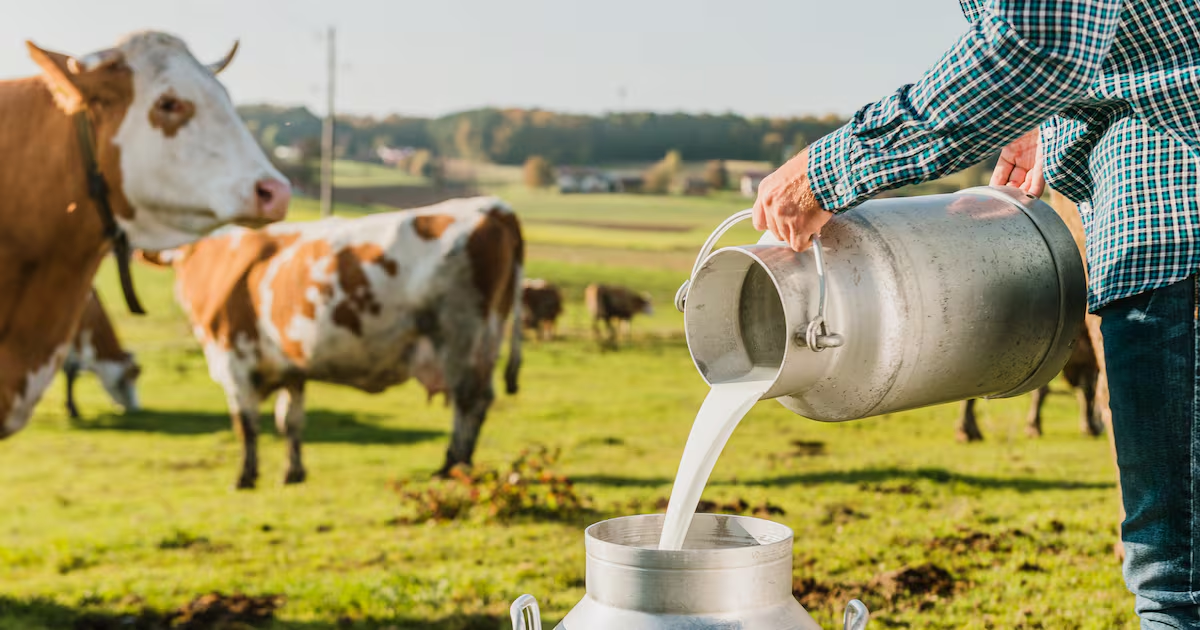
Lucknow: Uttar Pradesh has significantly strengthened its position as India’s leading milk-producing state, with milk production increasing from 277 lakh tonnes in 2016-17 to nearly 388 lakh tonnes in 2024-25, accounting for around 16% of the country’s total output. Backed by policy reforms, infrastructure expansion and increased investment, the state has shifted its focus from merely raising milk production to building an integrated dairy value chain that supports farmers, processors and consumers.
The transformation has been driven by initiatives such as the ₹1,000-crore Nand Baba Dugdh Mission, the Uttar Pradesh Dairy Development and Milk Products Promotion Policy, 2022, and National Dairy Development Board (NDDB)-supported women-led milk producer companies across Bundelkhand, Purvanchal, Awadh, Gorakhpur and the Terai.
Policy Push to Modernise the Dairy Sector
The Dairy Development and Milk Products Promotion Policy, 2022 aims to attract investments worth ₹5,000 crore to expand milk processing capacity and position Uttar Pradesh as a major dairy processing hub.
The policy offers incentives including capital and interest subsidies, stamp duty concessions, support for cold-chain infrastructure, cattle-feed manufacturing units, quality certifications, patent registration assistance and skill development programmes. The objective is to encourage investment in value-added dairy products such as cheese, butter, paneer, yoghurt, ice cream and ghee.
Strengthening Dairy Infrastructure
The state has expanded its organised milk procurement network through the Pradeshik Cooperative Dairy Federation (PCDF) and the Parag Milk brand by connecting thousands of village dairy cooperative societies to organised markets.
Modern milk collection centres equipped with electronic milk analysers now ensure transparent quality-based pricing, while direct bank transfers have reduced dependence on intermediaries. Expansion of chilling centres, bulk milk coolers and refrigerated transport has also improved milk quality and reduced post-harvest losses.
Several dairy plants have been modernised with automated processing lines, advanced packaging facilities, quality-testing laboratories and enhanced cold storage capacity to meet rising demand.
Private Investment and Scientific Dairy Farming
Alongside cooperative expansion, the government has encouraged private investment in dairy processing by offering fiscal incentives and simplified approvals. Increased private participation has boosted procurement competition, improving returns for dairy farmers.
Breed improvement programmes have focused on artificial insemination, embryo transfer technology, conservation of indigenous breeds and the use of high-genetic-merit semen to improve milk yield per animal rather than increasing livestock numbers.
Focus on Animal Health and Fodder
The state has strengthened veterinary services through mobile clinics, vaccination drives, disease surveillance, artificial insemination centres and infertility camps. Mass immunisation against diseases such as Foot and Mouth Disease and Brucellosis has helped improve livestock productivity.
Efforts to address fodder shortages include promoting green fodder cultivation, silage preparation, balanced cattle feed and mineral supplementation, alongside awareness campaigns on scientific feeding practices.
Women Driving the White Revolution
Women’s participation has emerged as a defining feature of Uttar Pradesh’s dairy growth. Self-Help Groups under rural livelihood programmes have increasingly taken up dairy farming, with women managing milk collection centres, dairy cooperatives and producer organisations.
NDDB-supported women-led milk producer companies operating across eastern and central Uttar Pradesh have enabled thousands of women to earn regular incomes, with many becoming successful dairy entrepreneurs under the state’s rural development initiatives.
Dairy as a Rural Economic Engine
For millions of small and marginal farmers owning two to five cattle, dairy farming has become a dependable source of year-round income, reducing dependence on seasonal agriculture. The sector has generated employment across milk production, transportation, veterinary services, feed manufacturing, processing, marketing and cold-chain logistics.
Technology has further improved transparency through electronic milk testing, digital procurement systems and Direct Benefit Transfer (DBT), ensuring timely payments to farmers.
Challenges Remain
Despite the progress, experts note that challenges such as low productivity of indigenous cattle, climate-related stresses, fodder shortages and the need for further quality improvements continue to require sustained policy attention.
Outlook
With continued investment in processing infrastructure, technology adoption, organised milk procurement and export-oriented value addition, Uttar Pradesh is positioning itself to lead the next phase of India’s dairy sector growth under the proposed White Revolution 2.0. The state’s integrated approach is expected to strengthen rural livelihoods, improve nutrition security and enhance women’s economic participation while supporting long-term agricultural growth.
Join Our “Dairy & Food Jobs Updates” WhatsApp group
Follow the Agri Jobs Updates channel on WhatsApp:
Disclaimer
I do my best to share reliable and well-researched insights but occasional errors or omissions may slip through. Please view all content as informational.
Stay informed on all the latest news updates
All Agriculture Books Free Download
All Dairy Technology Books Free Download
All Agricultural Engineering Books Free download
All Horticulture Books Free Download
All Fisheries Science Books Free Download
For Daily Update follow us at:
Facebook Telegram Whatsapp Instagram YouTube
The contents are provided free for noncommercial purpose such as teaching, training, research, extension and self learning.
If you are facing any Problem than fill form Contact Us
If you want share any article related Agriculture with us than send at info@agrimoon.com with your contact detail.