
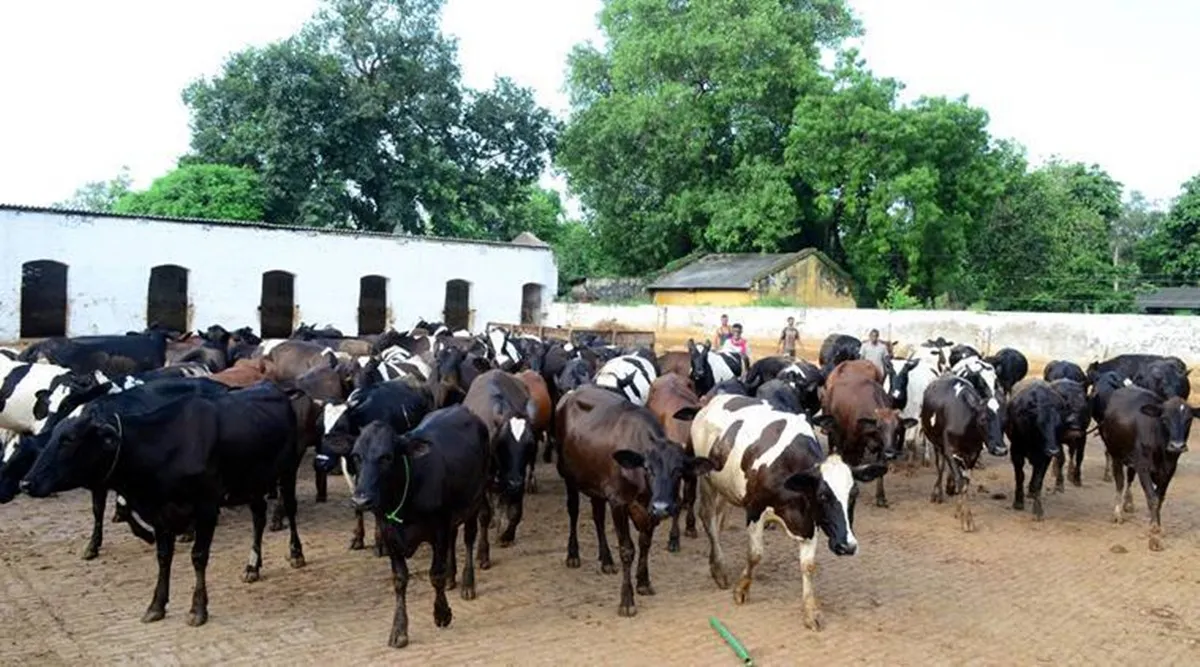
PANCHKULA : Dairy farmers in Haryana are stepping up pressure for higher milk prices, citing rising cattle-feed, fodder and transportation costs that they say are eroding the profitability of dairy farming.
The Dairy Farmers Association (DFA) has submitted memoranda at various Vita dairy plants, seeking an increase of ₹2–₹3 per kg in milk procurement prices.
Farmers argue that the cost of maintaining dairy animals has increased sharply, leaving many livestock owners struggling to maintain viable margins.
Village-Level Price Campaign Gains Momentum
The procurement-price demand is being accompanied by a separate grassroots campaign in several Haryana villages, where farmers are collectively deciding to raise the prices of milk sold directly to consumers and local buyers.
The movement began in Rajthal village of Narnaund, where farmers decided to sell:
- Buffalo milk: ₹100/kg
- Cow milk: ₹80/kg
- Desi ghee: ₹1,500–₹2,000/litre
The initiative has subsequently spread to other villages, with farmers holding meetings to collectively determine minimum selling prices.
Farmers Seek ₹20–₹30/kg Increase
Farmers in Rajthal, Bhaini Amipur and Mirchpur villages of Narnaund have demanded an increase of approximately ₹20–₹30 per kg.
They have announced that from September 4, buffalo milk will be sold at ₹100/kg and cow milk at ₹80/kg.
The farmers have also decided to increase the price of desi ghee by ₹500, reflecting their assessment that current prices do not adequately compensate for rising production costs.
Higher Feed Costs at the Centre of the Dispute
The farmers’ argument is primarily centred on the economics of animal feeding.
In Dhanauri village of Kaithal, dairy farmers have decided to sell milk at ₹100/kg from September 1, citing increases in the prices of khal and binola, important feed ingredients used in dairy-animal nutrition.
Also Read: Punjab Bans Non-Dairy Analog Paneer for One Year Across the State
A similar decision has been taken in Sirsa Kheri village of Julana tehsil in Jind, where farmers have announced a ₹100/kg milk price from September 1.
In an unusually strict measure, farmers there have reportedly agreed to impose a ₹5,100 penalty on any dairy farmer who sells milk below the collectively determined rate.
Proposed Prices Significantly Above Current Levels
Farmers say buffalo milk is currently generally sold for around ₹70–₹80/kg in Haryana, while cow milk fetches approximately ₹50–₹60/kg.
The proposed village-level prices therefore represent a substantial increase:
| Milk type | Current reported price | Proposed price | Approx. increase |
|---|---|---|---|
| Buffalo milk | ₹70–80/kg | ₹100/kg | ₹20–30/kg |
| Cow milk | ₹50–60/kg | ₹80/kg | ₹20–30/kg |
The scale of the proposed increase highlights the extent of the cost pressure being reported by dairy farmers.
Pehowa Farmers Plan Mahapanchayat
The issue is also gaining attention in Pehowa, Kurukshetra, where farmers have already held a meeting at the rest house.
A mahapanchayat has been scheduled for September 10 to discuss milk prices and determine the next course of action.
The gathering could provide a platform for farmers from different areas to coordinate their demands and put greater pressure on procurement agencies and dairy cooperatives.
Procurement Price vs Consumer Price
The Haryana situation illustrates an important distinction in the dairy value chain.
Farmers seeking higher procurement prices are primarily concerned with farm economics, while dairy processors must simultaneously consider processing, packaging, transportation, distribution and consumer affordability.
The chain can be represented as:
Feed & Fodder Costs → Cost of Milk Production → Farmer Margin → Procurement Price → Processing Costs → Retail Price
If the procurement price remains unchanged while feed and maintenance costs rise, farmer profitability is squeezed.
However, a sharp increase in procurement prices can also raise the cost base for dairy processors and potentially result in higher consumer prices.
Why the Haryana Situation Matters
The developments in Haryana are part of a broader debate over the sustainability of dairy farming.
Across India’s dairy sector, farmers are increasingly demanding prices that reflect the rising cost of feed, fodder, labour, veterinary services and animal maintenance.
For cooperatives such as Vita, the challenge is to maintain a procurement system that provides farmers with sufficient economic incentives while keeping milk affordable for consumers.
The issue is particularly important because farmer dissatisfaction with milk prices can eventually affect milk procurement volumes and the stability of organised dairy supply chains.
A Growing Dairy Price Debate
Recent milk-price developments in other parts of India also point towards the same underlying issue: the widening gap between the cost of producing milk and the price received by farmers.
Haryana’s village-level collective pricing campaign adds another dimension by showing farmers attempting to establish their own minimum market prices rather than waiting solely for institutional procurement revisions.
Whether these proposed prices become sustainable market rates will depend on consumer acceptance, local competition, procurement demand and the economics of dairy processing.
Join Our “Dairy & Food Jobs Updates” WhatsApp group
Follow the Agri Jobs Updates channel on WhatsApp:
Disclaimer
I do my best to share reliable and well-researched insights but occasional errors or omissions may slip through. Please view all content as informational.
Stay informed on all the latest news updates
All Agriculture Books Free Download
All Dairy Technology Books Free Download
All Agricultural Engineering Books Free download
All Horticulture Books Free Download
All Fisheries Science Books Free Download
For Daily Update follow us at:
Facebook Telegram Whatsapp Instagram YouTube
The contents are provided free for noncommercial purpose such as teaching, training, research, extension and self learning.
If you are facing any Problem than fill form Contact Us
If you want share any article related Agriculture with us than send at info@agrimoon.com with your contact detail.