
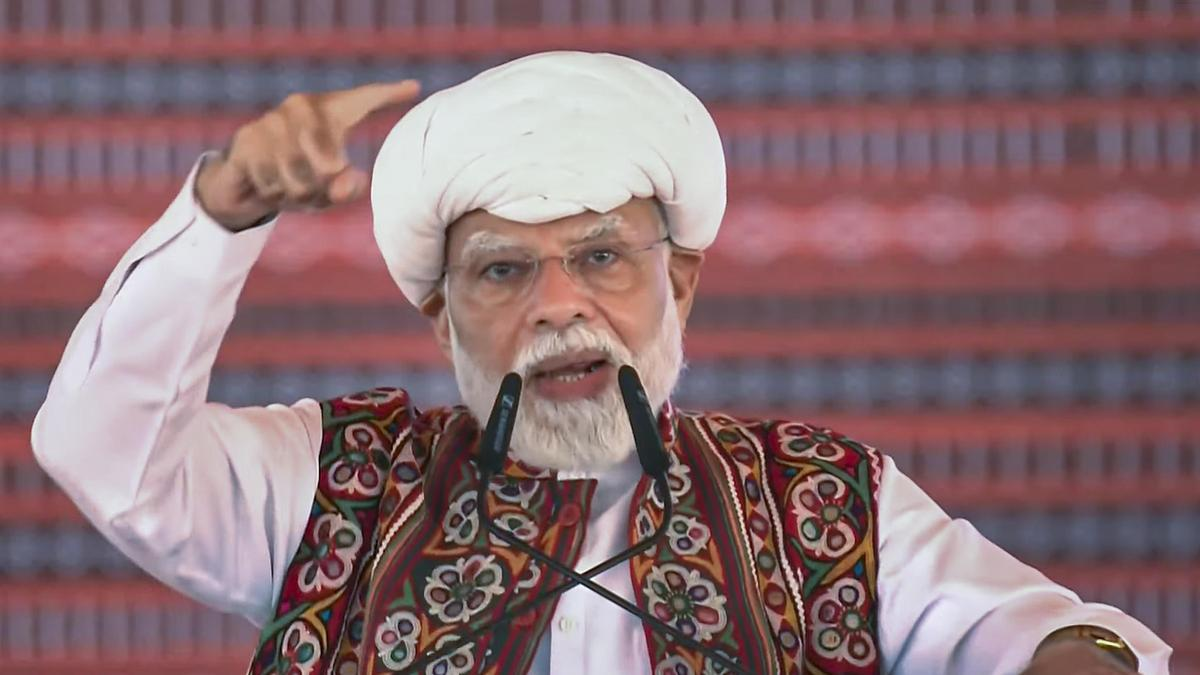
Prime Minister highlights dairy productivity, indigenous breed improvement and Bio-CNG initiatives during Gujarat visit; Banas Dairy projects aim to generate additional farmer income from cattle dung.
GUJARAT: Prime Minister Narendra Modi on Friday highlighted the improvement in India’s average daily milk yield, stating that milk production per cow or buffalo has increased to approximately 8 litres per day, compared with less than 5 litres in FY 2013–14.
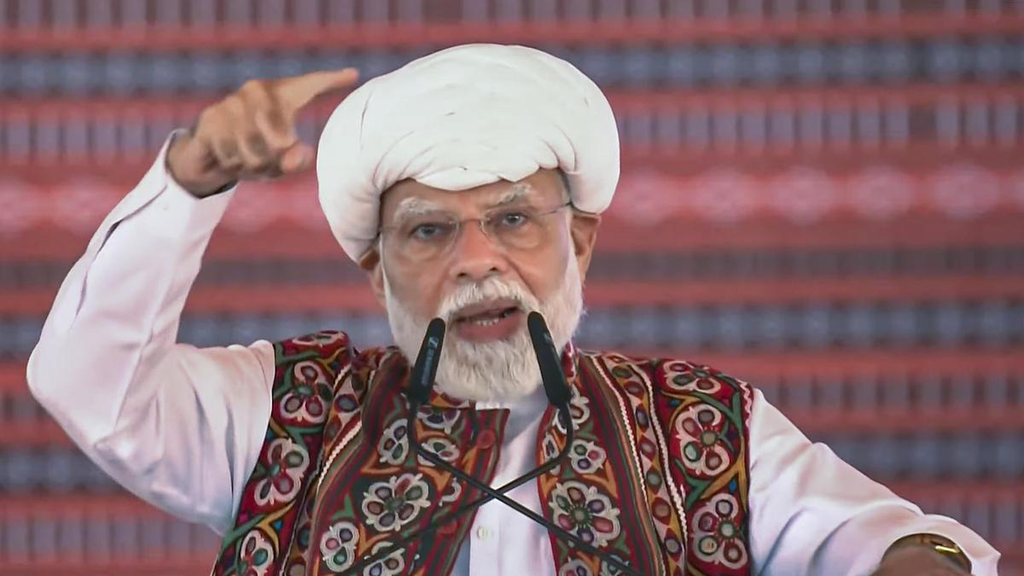
Addressing a public meeting in Banaskantha, Gujarat, he said India remained the world’s largest milk producer and that the expansion of the dairy sector had contributed to rural economic activity and farmers’ livelihoods.
According to the Prime Minister, improvements in breeding infrastructure, indigenous cattle development and dairy-sector initiatives have supported the country’s milk production growth.
Bharat Bovine Breeding and Research Centre inaugurated
During the visit, the Prime Minister dedicated the Bharat Bovine Breeding and Research Centre at Bhildi in Banaskantha to the nation.
Spread across 127 acres, the facility is described as India’s first dedicated centre for the Kankrej cattle breed. It will focus on genetic improvement, advanced reproductive technologies and conservation of indigenous bovine breeds.
The centre will also support the improvement of breeds such as:
- Kankrej
- Gir
- Sahiwal
- Mehsana
- Jafarabadi
PM Modi said the facility could accelerate breed improvement by 10–20 times, helping strengthen the productivity of India’s indigenous cattle and buffalo population.
Banas Dairy to establish two Bio-CNG plants
The government is also seeking to expand the economic value of dairying beyond milk production by promoting the utilisation of cattle dung and agricultural residue.
The Prime Minister laid the foundation stones for two Bio-CNG plants of Banas Dairy at Tharad and Radhanpur, with a combined cattle dung processing capacity of 175 tonnes per day.
The projects are intended to support the production of biogas, Bio-CNG and organic fertilisers, creating additional value from livestock waste.
Modi said dairy farmers should be able to generate income from cattle dung alongside milk production. Dairy cooperatives such as Banas Dairy are expected to play an important role in developing the infrastructure required for this approach.
Government highlights farmer support measures
During his address, the Prime Minister cited several agricultural support programmes and financial interventions, stating that government policies and welfare schemes had helped farmers earn or save a cumulative ₹50 lakh crore over recent years.
Among the figures highlighted were:
- ₹4.5 lakh crore transferred to small farmers through PM-KISAN.
- ₹24 lakh crore paid to paddy and wheat farmers through minimum support price (MSP) over the past 12 years.
- ₹16 lakh crore spent on fertiliser subsidies.
- ₹2 lakh crore disbursed as crop-loss compensation under the Pradhan Mantri Fasal Bima Yojana over the past 10–12 years.
- 12 lakh solar pumps provided under PM-KUSUM.
He also said the solar pumps had helped farmers avoid purchasing nearly 80 crore litres of diesel. These figures were presented by the Prime Minister during his address.
Women’s participation in the rural dairy economy
The Prime Minister highlighted the contribution of women to agricultural and allied activities in Banaskantha.
Also Read: Milk Prices to Increase by ₹5 per Litre in Amritsar from November 1
Recounting interactions with women in the district, he said they reported collectively producing milk worth ₹2 crore annually. He also cited annual honey sales of approximately ₹35 lakh by women in the region.
Modi further stated that India’s honey production had doubled over the past 12 years, making the country the world’s second-largest exporter of natural honey. He credited self-help groups with contributing to the development of the sector.
Banas Dairy expands food processing infrastructure
The Gujarat visit also included the inauguration of Banas Dairy’s expanded French fries processing plant at Sanadar.
Other infrastructure initiatives included Ahmedabad Metro extensions towards the airport and GIFT City, and the widening of the Ahmedabad–Mehsana highway from four to eight lanes at an estimated cost of ₹2,600 crore.
The Prime Minister also dedicated 521 projects under the Agriculture Infrastructure Fund, involving a combined project cost of approximately ₹4,950 crore.
Additionally, he released the 24th instalment of PM-KISAN amounting to ₹19,000 crore and marked the commencement of activities under 12 horticulture clusters covering around 1.46 lakh hectares, expected to benefit more than 1.3 lakh farmers.
Moving towards a broader dairy-based rural economy
The initiatives highlighted during the visit reflect an approach to dairy development that extends beyond increasing milk production.
Breed improvement, reproductive technologies, cooperative infrastructure and the conversion of cattle dung into energy and organic fertiliser could create additional economic opportunities across the dairy value chain.
For dairy cooperatives, the proposed Bio-CNG projects also demonstrate the potential to integrate milk production with waste management and renewable energy, supporting a more diversified rural economy.
Join Our “Dairy & Food Jobs Updates” WhatsApp group
Follow the Agri Jobs Updates channel on WhatsApp:
Disclaimer
I do my best to share reliable and well-researched insights but occasional errors or omissions may slip through. Please view all content as informational.
Stay informed on all the latest news updates
All Agriculture Books Free Download
All Dairy Technology Books Free Download
All Agricultural Engineering Books Free download
All Horticulture Books Free Download
All Fisheries Science Books Free Download
For Daily Update follow us at:
Facebook Telegram Whatsapp Instagram YouTube
The contents are provided free for noncommercial purpose such as teaching, training, research, extension and self learning.
If you are facing any Problem than fill form Contact Us
If you want share any article related Agriculture with us than send at info@agrimoon.com with your contact detail.