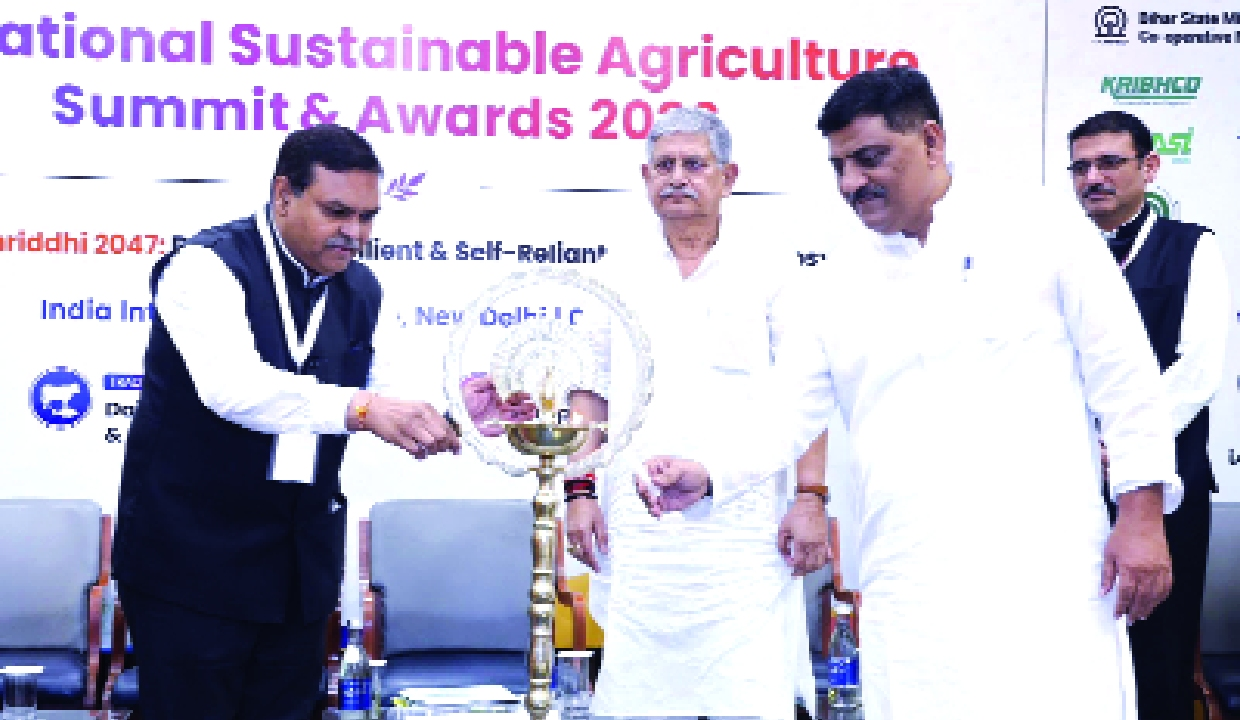
New Delhi: India is aiming to transform its position as the world’s largest milk producer into a stronger presence in global dairy trade, with the government targeting a place among the world’s leading exporters of milk and dairy products, Union Minister for Fisheries, Animal Husbandry and Dairying Rajiv Ranjan Singh said.
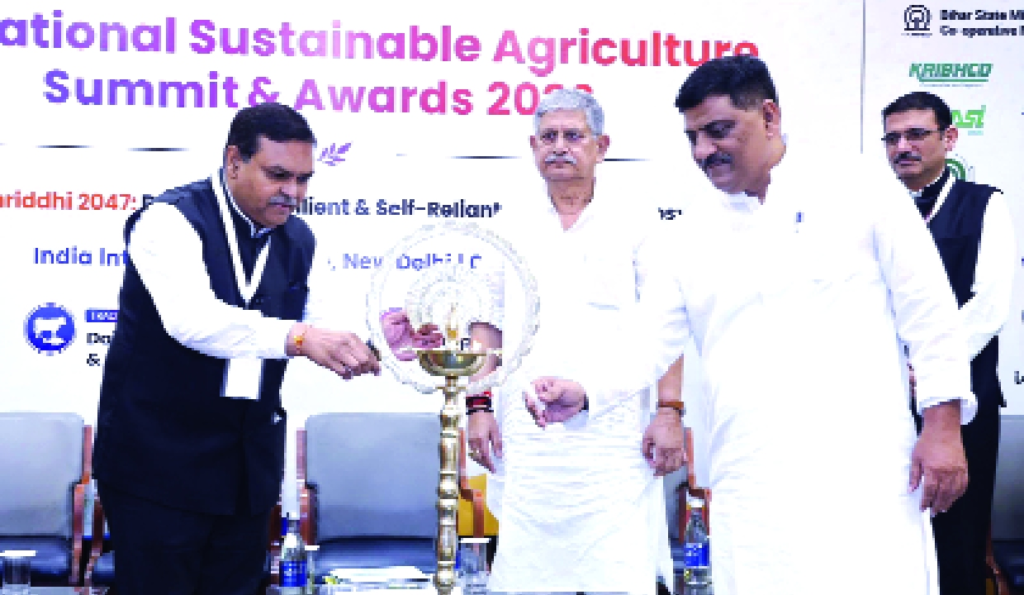
Speaking at the 3rd National Sustainable Agriculture Summit & Awards 2026 in New Delhi, Singh said India’s dairy strategy is increasingly focused not only on expanding milk production but also on improving productivity, disease control, infrastructure, value addition and export readiness.
India produced nearly 248 million tonnes of milk in 2024-25, retaining its position as the world’s largest milk producer. However, its relatively modest share of global dairy trade highlights the need to move from production-led growth towards a more competitive, export-oriented dairy value chain.
From milk production to export competitiveness
The minister said the government’s objective is to replicate the progress achieved in fisheries exports in the dairy sector. He highlighted scientific interventions, infrastructure development, livestock health programmes and value-chain investments as important building blocks for improving India’s competitiveness in international markets.
Among the technologies being promoted are sex-sorted semen, artificial insemination and in-vitro fertilisation (IVF), which are aimed at improving livestock genetics and milk productivity.
The government has also been strengthening dairy infrastructure and organised milk procurement through cooperative institutions, while initiatives under White Revolution 2.0 seek to expand cooperative coverage, improve chilling and testing facilities and increase farmer participation.
Disease control emerges as an export priority
Industry experts note that improving production alone will not be sufficient for India to become a major dairy exporter. Animal health, traceability, food safety, residue compliance and internationally accepted quality standards will increasingly determine India’s ability to access premium overseas markets.
Singh pointed to India’s vaccination campaign against Foot-and-Mouth Disease (FMD) and engagement with the World Organisation for Animal Health (WOAH) to establish internationally recognised disease-free zones.
Such disease-control measures could become strategically important because access to several high-value international markets depends on stringent animal-health and sanitary requirements.
Value addition and sustainability
The minister also highlighted the potential of biogas and the productive utilisation of agricultural and animal waste to generate additional rural income while supporting environmental sustainability.
Also Read: Milky Mist Dairy Food Raises ₹465 Crore from 19 Anchor Investors Ahead of IPO
The emerging circular dairy economy could create multiple revenue streams from cattle dung and agricultural residues, including biogas, compressed biogas and organic fertilisers. This approach aligns dairy development with India’s broader waste-to-wealth and clean-energy objectives.
Experts: Export ambition needs structural reforms
Dairy-sector experts say India’s enormous milk production base provides a strong foundation, but export leadership will require a significant improvement in milk productivity, processing efficiency, cold-chain infrastructure, quality assurance and value-added product manufacturing.
India’s highly fragmented dairy structure—dominated by millions of small producers—also makes aggregation, traceability and consistent quality more challenging than in countries where milk production is concentrated in large commercial farms.
At the same time, the fragmented structure can become an advantage if cooperative networks, farmer-producer organisations and private processors are able to integrate smallholders into modern value chains.
The expansion of processing capacity for products such as cheese, milk powder, whey proteins, butter, ghee and specialised dairy ingredients could also help India move beyond bulk commodity exports towards higher-value dairy products.
A larger opportunity for India’s dairy sector
The government’s export ambition comes at a time when global demand for dairy proteins and value-added products is expanding. India possesses a major structural advantage in the form of its huge domestic milk pool and extensive farmer network.
The challenge now is to convert that production advantage into internationally competitive products.
As Singh emphasised, India’s next phase of dairy development will have to go beyond producing more milk. The sector will need to produce higher-quality milk, process it more efficiently and develop products capable of meeting global standards.
For India, therefore, the path from being the world’s largest milk producer to becoming a leading dairy exporter will depend less on volume alone and more on productivity, quality, food safety, disease control, value addition and reliable export-oriented supply chains.
Join Our “Dairy & Food Jobs Updates” WhatsApp group
Follow the Agri Jobs Updates channel on WhatsApp:
Disclaimer
I do my best to share reliable and well-researched insights but occasional errors or omissions may slip through. Please view all content as informational.
Stay informed on all the latest news updates
All Agriculture Books Free Download
All Dairy Technology Books Free Download
All Agricultural Engineering Books Free download
All Horticulture Books Free Download
All Fisheries Science Books Free Download
For Daily Update follow us at:
Facebook Telegram Whatsapp Instagram YouTube
The contents are provided free for noncommercial purpose such as teaching, training, research, extension and self learning.
If you are facing any Problem than fill form Contact Us
If you want share any article related Agriculture with us than send at info@agrimoon.com with your contact detail.