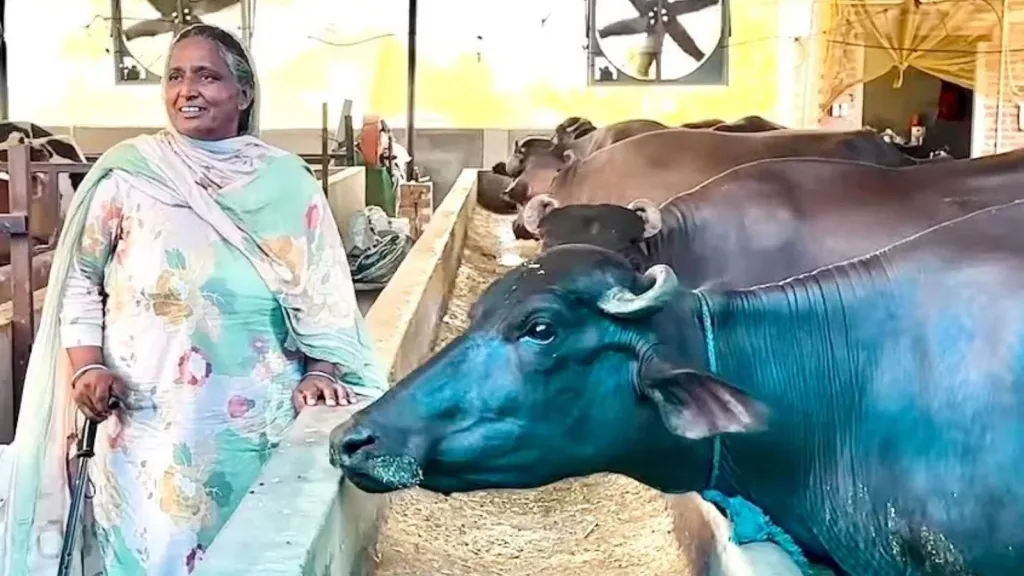
Mansa, Punjab: Nineteen years ago, at the age of 35, Sukhpal Kaur lost her husband and was left to raise two young sons while supporting her family.
Today, at 54, the resident of Guradi village in Budhlada tehsil of Mansa district has built a substantial dairy enterprise. Her herd is valued at more than ₹70 lakh, while the business generates around ₹50 lakh annually from milk sales, according to her account.
For Sukhpal, however, dairy farming is more than a source of income. It has become a means of financial independence and an enterprise she continues to develop despite having reached a relatively secure stage of life.
From a few animals to a 40-animal herd
Sukhpal began her dairy journey with only a couple of cattle that she and her husband had owned.
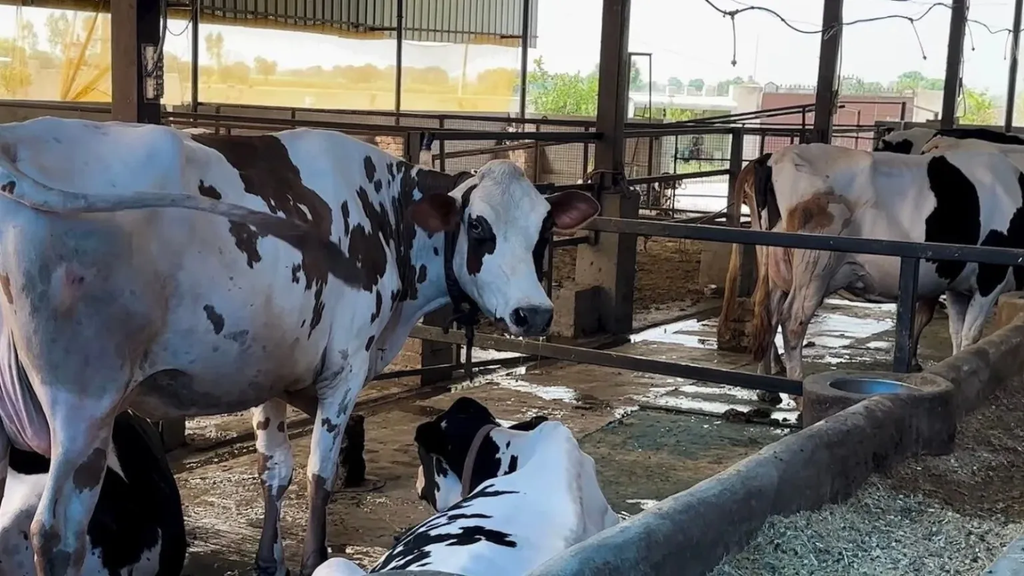
Over the years, she expanded the herd and developed practical expertise in animal management. Today, she keeps around 40 animals — 26 adult animals and 14 young ones — including Murrah and Neeli Ravi buffaloes and Punjab and Himachal Jersey cows.
With an intermediate-level education, much of her expertise has come through years of hands-on experience. She monitors animal health, feed requirements, nutrition and disease risks as part of her daily management.
Milk sales generate around ₹50 lakh annually
Sukhpal currently sells around 150–200 litres of milk a day, although production and sales can reach about 300 litres during some months.
Her customers include households as well as village-level dairy channels. She receives around ₹80–85 per kg of milk, she said.
Based on her figures, annual milk sales generate approximately ₹50 lakh in revenue. After accounting for feed, labour and other operating expenses, she estimates that around half of the sales value remains with the enterprise.
Two permanent workers currently assist her in running the dairy.
Livestock has become a major asset
Sukhpal owns around 12 acres of family land, but uses only about one acre for growing green fodder and purchases much of the remaining feed required by the herd.
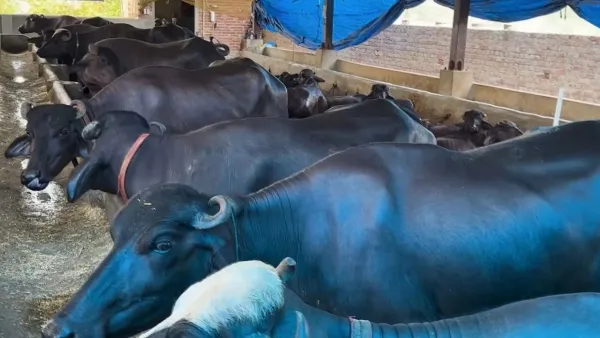
Feed remains one of her major costs.
At the same time, she sees the animals themselves as an important store of value. She estimates that many of her well-maintained adult animals could fetch ₹3–4 lakh each in the current market.
However, she has shifted away from selling animals as a regular source of income.
“My focus now is on retaining animals and expanding the herd,” she said.
Earlier, livestock sales formed a significant part of her earnings. She used to sell around six animals a year, generating approximately ₹12–13 lakh, in addition to income from milk.
Choosing dairy over agricultural cultivation
Managing a large dairy alongside farming became increasingly difficult. Sukhpal therefore leased out around 11 acres of agricultural land, earning approximately ₹6 lakh annually in lease income.
She could have relied more heavily on agriculture and land-lease income, but chose to continue working with livestock.
Also Read: India to Launch Digital Livestock Insurance Portal on September 28
“I chose dairy farming over agriculture; I love being among them and taking care of them,” she said.
For Sukhpal, financial security has not ended her desire to work. She continues to manage the dairy, maintain savings and expand her livestock assets.
Sons are independent, but she continues to work
One of her sons has been working in Canada for seven years, while the other runs a travel business in India.
She says both sons are supportive, but their financial independence has not changed her approach to work.
“I want to be a giver, not a taker,” she said.
She also emphasises that she wants to remain financially independent rather than depend on her children.
Her message to rural women
Sukhpal believes rural women should seek ways to generate an income of their own, whether through employment, livestock or another form of self-employment.
In her view, dairy farming can begin on a small scale. A woman starting with two cows or buffaloes, she argues, can gradually build a larger herd by retaining productive animals and reinvesting income. Where cattle ownership is difficult, she points to goats as another possible entry point into livestock-based self-employment.
Her own experience shapes this philosophy: start with limited resources, protect the productive asset and expand gradually.
“Start small, protect the asset, reinvest and grow”
Sukhpal also believes that livestock can contribute to household nutrition by providing access to fresh milk and dairy products. She sees participation in productive farm activities as another way of giving rural families and children greater exposure to work and responsibility.
Her views on government assistance are personal and reflect her own approach to self-reliance; they should not be taken as a general assessment of the effectiveness or necessity of social-welfare programmes.
For Sukhpal, the central lesson from nearly two decades of dairy farming is straightforward:
“If you are not working anywhere, create work for yourself. Start small, protect the asset, reinvest, and grow.”
From two animals to a herd of around 40, her journey illustrates how livestock can evolve from a household asset into a structured rural enterprise when combined with sustained management, reinvestment and market-oriented milk production.
Join Our “Dairy & Food Jobs Updates” WhatsApp group
Follow the Agri Jobs Updates channel on WhatsApp:
Disclaimer
I do my best to share reliable and well-researched insights but occasional errors or omissions may slip through. Please view all content as informational.
Stay informed on all the latest news updates
All Agriculture Books Free Download
All Dairy Technology Books Free Download
All Agricultural Engineering Books Free download
All Horticulture Books Free Download
All Fisheries Science Books Free Download
For Daily Update follow us at:
Facebook Telegram Whatsapp Instagram YouTube
The contents are provided free for noncommercial purpose such as teaching, training, research, extension and self learning.
If you are facing any Problem than fill form Contact Us
If you want share any article related Agriculture with us than send at info@agrimoon.com with your contact detail.