Agreement provides duty-free access for Indian exports to New Zealand while excluding major Indian dairy imports from tariff concessions
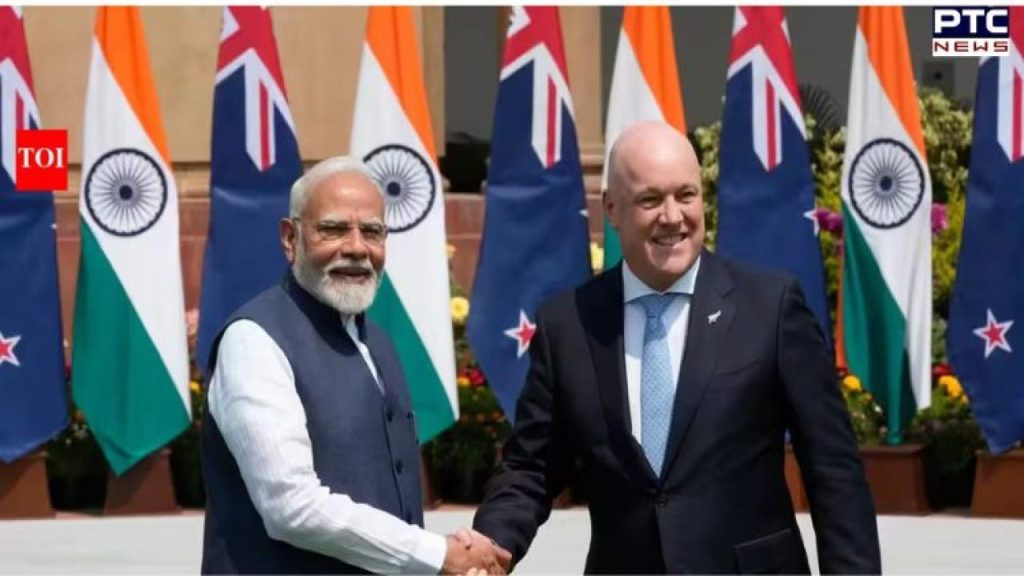
NEW DELHI : The India–New Zealand Free Trade Agreement (FTA) has entered into force, opening new opportunities for bilateral trade, investment and professional mobility while maintaining India’s tariff protection for major dairy products.
The agreement, signed on April 27, 2026, aims to increase bilateral trade in goods and services to NZ$7 billion by 2030. It provides duty-free access from day one for Indian merchandise exports to New Zealand, while India is extending tariff concessions to selected New Zealand products through immediate reductions, phased liberalisation and tariff-rate quotas.
Dairy products remain on India’s exclusion list
India has excluded major dairy products from tariff concessions under the agreement. These include milk, cream, whey, yoghurt and cheese, alongside other sensitive agricultural commodities.
According to the Indian government’s parliamentary response, approximately 29.97% of India’s tariff lines remain on the exclusion list, with dairy among the principal categories protected from preferential tariff reductions.
The exclusion preserves India’s existing tariff treatment for these products under the agreement. It means New Zealand dairy exporters will not receive the same preferential access to the Indian market as exporters of goods covered by tariff concessions.
For India’s dairy sector, the provision is particularly relevant because milk production supports millions of rural households and supplies a large domestic processing industry. The decision keeps major dairy commodities outside the agreement’s tariff-reduction commitments, although the broader effects on farmgate prices, imports and domestic competition will depend on market conditions.
Indian exports receive expanded market access
The FTA provides immediate duty-free access in New Zealand for Indian merchandise export lines, creating opportunities for sectors including textiles, engineering goods, pharmaceuticals, leather and footwear.
The agreement also establishes a framework for closer cooperation in services, investment and professional mobility. New Zealand has committed to facilitate US$20 billion in investment into India over 15 years, according to the Indian government’s announcement. The investment commitment is a facilitation commitment, rather than evidence that the full amount has already been invested.
Selected New Zealand agricultural exports receive concessions
While dairy remains excluded, selected New Zealand products benefit from preferential access under the agreement. These include sheep meat, wool, forestry products, kiwifruit, apples and mānuka honey, subject to the applicable tariff schedules, quotas and conditions of entry.
For example, the agreement provides a quota-based tariff arrangement for New Zealand apples. The official schedule specifies a quota of 32,500 tonnes at a 25% tariff in year two, rising to 35,000 tonnes in year three, subject to the agreement’s conditions. Kiwifruit also receives quota-based treatment.
These arrangements illustrate the agreement’s selective approach to agricultural market access: concessions apply to specified products under defined conditions rather than creating unrestricted access across all agricultural categories.
New Zealand dairy exporters face continued tariff barriers
The exclusion of major dairy products means New Zealand processors and exporters will not receive preferential tariff access for those categories under the FTA.
Also Read: FSSAI Initiates Prosecution Against Dodla Dairy, Priyagold Manufacturer and Ueir Organic Foods
New Zealand is a significant participant in international dairy trade, and the Indian market presents substantial potential because of its population and dairy consumption. However, the agreement does not provide the broad dairy-market opening that exporters might seek.
The exclusion also maintains the existing policy distinction between expanding international trade and protecting sensitive domestic agricultural sectors. Any future change in dairy access would depend on India’s trade policy and applicable tariff arrangements, rather than the concessions currently provided under the agreement.
Dairy cooperation can extend beyond commodity trade
Although major dairy products are excluded from tariff concessions, the agreement’s broader framework creates scope for commercial and technical engagement in areas such as food processing, agricultural technology, animal health and supply-chain development.
Potential cooperation in these areas could support technology exchange and industry modernisation without requiring tariff concessions on liquid milk, milk powder, butter or cheese. The extent of such cooperation will depend on future business activity and the implementation of relevant arrangements.
A selective approach to trade liberalisation
The India–New Zealand FTA combines expanded access for Indian exports with targeted concessions for New Zealand goods, while retaining exclusions for sensitive Indian sectors, including dairy.
For India’s dairy industry, the immediate significance is that major dairy commodities remain outside the agreement’s preferential tariff framework. The longer-term effects will depend on how trade flows develop in eligible product categories, how businesses use the agreement and whether technical and investment partnerships emerge.
The agreement therefore expands bilateral economic engagement without extending preferential tariff access to major New Zealand dairy products in the Indian market.
Join Our “Dairy & Food Jobs Updates” WhatsApp group
Follow the Agri Jobs Updates channel on WhatsApp:
Disclaimer
I do my best to share reliable and well-researched insights but occasional errors or omissions may slip through. Please view all content as informational.
Stay informed on all the latest news updates
All Agriculture Books Free Download
All Dairy Technology Books Free Download
All Agricultural Engineering Books Free download
All Horticulture Books Free Download
All Fisheries Science Books Free Download
For Daily Update follow us at:
Facebook Telegram Whatsapp Instagram YouTube
The contents are provided free for noncommercial purpose such as teaching, training, research, extension and self learning.
If you are facing any Problem than fill form Contact Us
If you want share any article related Agriculture with us than send at info@agrimoon.com with your contact detail.