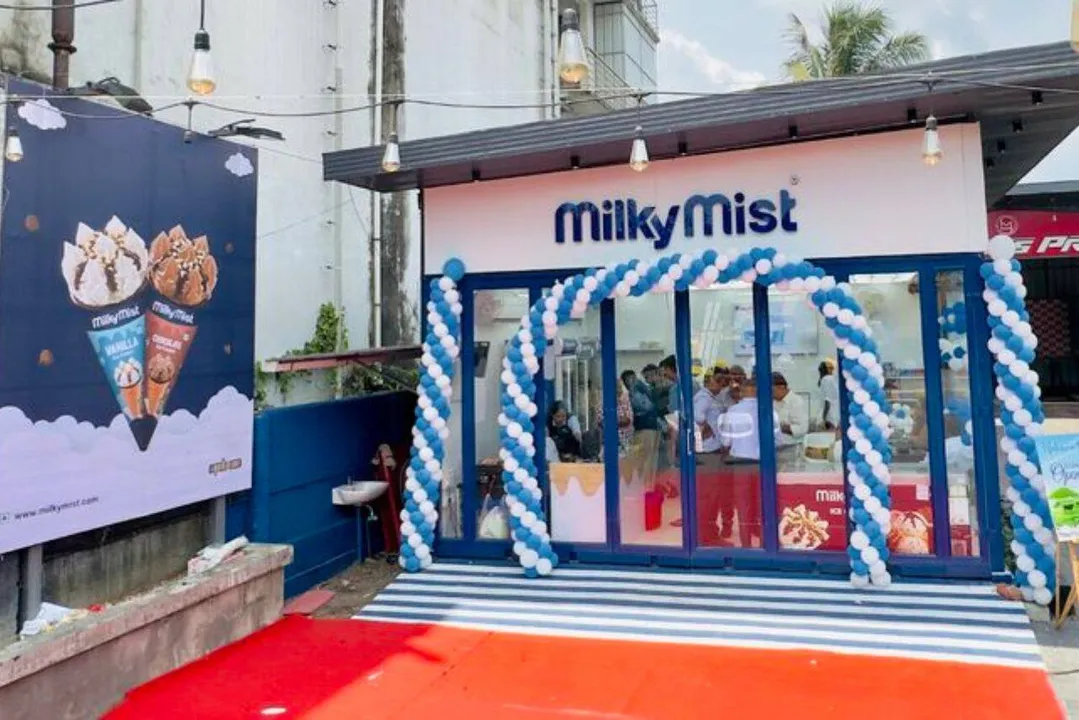
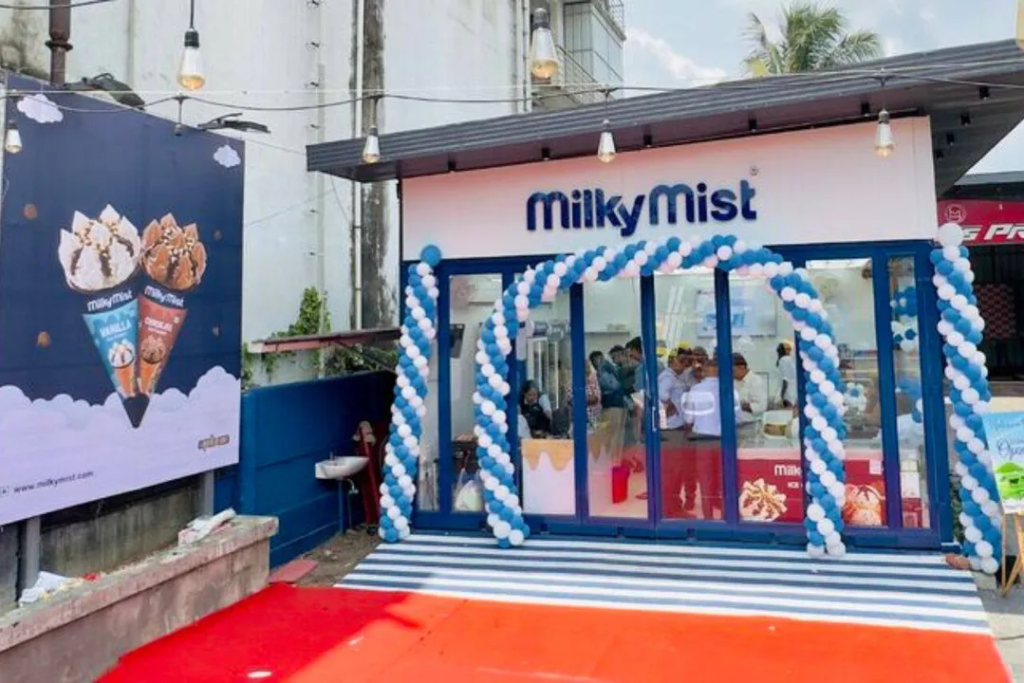
India’s largely unorganised paneer market is creating a major opportunity for organised dairy companies such as Milky Mist, as growing regulatory scrutiny of analogue paneer could accelerate formalisation and increase consumer demand for branded, quality-assured products.
India’s paneer market was valued at around ₹73,140 crore in 2025, according to IMARC, while industry estimates suggest that only about 5–7% of the market is organised and branded.
That leaves the overwhelming majority of the market with local halwais, small processors and informal producers—creating significant headroom for organised dairy companies that can offer consistent quality, hygiene, cold-chain distribution and regulatory compliance.
For Milky Mist Dairy Food, the opportunity comes at a time when its paneer business is already expanding rapidly.
Regulatory Pressure Could Accelerate Paneer Formalisation
The analogue-panneer segment has come under increasing regulatory scrutiny in several states.
Maharashtra’s Food and Drug Administration tested 308 paneer and dairy-analogue samples between April 2025 and March 2026, with 109 samples, or 35.4%, found non-compliant with prescribed standards.
Of these, 79 were classified as sub-standard and 30 as unsafe, according to the findings cited in the report.
The scrutiny has focused attention on products in which milk fat and milk solids are partly or wholly replaced with non-dairy ingredients such as vegetable fats and other substitutes.
Maharashtra subsequently moved to prohibit the manufacture, storage, distribution and sale of analogue, non-dairy and synthetic paneer for one year.
Karnataka has also issued a Gazette notification prohibiting the manufacture, storage, distribution and sale of non-dairy paneer for one year.
At the national level, FSSAI has also been tightening its focus on the correct identity and labelling of dairy analogues, including ensuring that non-dairy products are not marketed as conventional paneer.
Why This Matters for Organised Dairy
The regulatory push could have a broader consequence: formalisation of the paneer supply chain.
Organised dairy companies typically have established milk procurement systems, processing controls, quality laboratories, cold chains, traceability systems and standardised packaging.
If enforcement reduces the availability of non-compliant analogue products, consumers and food-service businesses could increasingly turn towards established brands.
That could create an opportunity for companies with existing paneer manufacturing and distribution capabilities to capture incremental market share.
Milky Mist Is Already Seeing Strong Paneer Growth
Milky Mist enters this opportunity with paneer already established as one of its largest businesses.
The company reported 34% year-on-year growth in paneer revenue in Q1 FY27, indicating strong momentum in its branded paneer business.
Its overall Q1 FY27 performance was also strong:
- Revenue: ₹973.45 crore, up 43.6% YoY
- EBITDA: ₹144.89 crore, up 74.5%
- EBITDA margin: 14.9%, compared with 12.2% in Q1 FY26
- PAT: ₹64.68 crore, compared with ₹6.53 crore a year earlier
The performance demonstrates the growing contribution of value-added dairy to Milky Mist’s overall business.
Nearly One-Fifth Share of Organised Packaged Paneer
According to the 1Lattice report cited by the company, Milky Mist held approximately 19% of India’s packaged paneer market by value in FY26.
The company also reported an approximately 12% share of South India’s organised cheese market and 13% of India’s organised yogurt market.
Paneer remained Milky Mist’s largest individual revenue category, contributing 29.42% of FY26 revenue.
Cheese contributed 16.37%, while curd accounted for 13.26%.
However, the revenue mix is gradually becoming more diversified.
Ice cream’s contribution increased to 6.73% in FY26 from 1.89% in FY24, while yogurt rose to 6.20% from 2.73% over the same period.
Other categories—including ghee, butter, UHT products, powder and desserts—accounted for 18.20% of FY26 revenue.
Paneer Is Only One Part of the Growth Story
The potential upside for Milky Mist extends beyond capturing additional paneer market share.
The company has been expanding across several value-added dairy categories, including cheese, yogurt and ice cream.
Its cheese manufacturing capacity has also increased substantially, with cheddar capacity rising from 15.6 tonnes per day to 120 tonnes per day.
That expansion gives the company additional scope to increase value realisation from its milk procurement and processing ecosystem.
The strategy is therefore increasingly shifting from simply selling milk-derived products to extracting greater value from every unit of milk processed.
Whey Could Create Another High-Value Revenue Stream
One of the more interesting opportunities lies in whey.
Cheese manufacturing generates whey as a by-product. Traditionally, whey can be converted into relatively lower-value products such as commodity whey powder.
Also Read: Telangana Bans Artificial and Non-Dairy Paneer for One Year
Milky Mist is developing a Whey Protein Concentrate (WPC) facility, potentially allowing the company to convert more of this by-product into a higher-value ingredient for sports nutrition and food applications.
If successfully executed, the project could create an additional profit pool without requiring the company to depend entirely on proportional increases in fresh milk procurement.
However, the eventual financial benefit will depend on factors including commissioning timelines, product quality, customer acceptance, utilisation and realisations.
Significant Capacity Headroom
Milky Mist’s existing manufacturing infrastructure could also support further growth.
The company generated ₹3,138 crore in revenue in FY26, while management has indicated that the Perundurai facility could support approximately 3–3.5 times FY26 revenue at prevailing realisations before significant additional investment becomes necessary.
If achieved, higher utilisation of existing infrastructure could provide operating leverage and improve the economics of the company’s expanding value-added portfolio.
The Real Opportunity: Formalisation + Premiumisation
The potential opportunity for Milky Mist is therefore larger than simply selling more packets of paneer.
Three structural trends could work together:
1. Formalisation
Regulatory action against non-compliant analogue products could push consumers and institutional buyers towards organised brands.
2. Premiumisation
Consumers increasingly willing to pay for quality, hygiene, consistency and convenience can support branded dairy products.
3. Value addition
Paneer, cheese, yogurt, ice cream and whey-derived ingredients allow companies to generate higher value from processed milk than through liquid milk alone.
Together, these trends could strengthen the economics of an integrated dairy business.
What Investors Should Watch
The opportunity is significant, but regulatory action alone will not guarantee growth.
For Milky Mist, investors will need to monitor whether the company can convert the broader formalisation opportunity into actual market-share gains and sustainable profitability.
Key indicators include:
- Paneer volume and market-share growth
- Capacity utilisation
- Distribution expansion
- Gross and EBITDA margins
- Cheese capacity utilisation
- WPC project execution
- Growth of yogurt and ice cream
- Milk procurement requirements
- Working-capital efficiency
The ability to scale without allowing costs, working capital or distribution expenses to rise disproportionately will ultimately determine how much value the company can extract from the opportunity.
The Bigger Picture
India’s paneer market represents one of the clearest examples of the country’s broader dairy formalisation opportunity.
With estimates suggesting that only a small portion of the market is currently organised and branded, even modest formalisation could create substantial opportunities for established processors.
For Milky Mist, the timing is particularly interesting. The company already has a strong paneer franchise, expanding cheese and yogurt businesses, a growing ice-cream portfolio and plans to move further up the value chain through whey-protein production.
The key question is therefore not simply whether Milky Mist can benefit from India’s ₹73,000-crore paneer market.
It is whether the company can use its existing manufacturing, distribution and product ecosystem to turn the formalisation of Indian dairy into sustained, profitable market-share gains.
Join Our “Dairy & Food Jobs Updates” WhatsApp group
Follow the Agri Jobs Updates channel on WhatsApp:
Disclaimer
I do my best to share reliable and well-researched insights but occasional errors or omissions may slip through. Please view all content as informational.
Stay informed on all the latest news updates
All Agriculture Books Free Download
All Dairy Technology Books Free Download
All Agricultural Engineering Books Free download
All Horticulture Books Free Download
All Fisheries Science Books Free Download
For Daily Update follow us at:
Facebook Telegram Whatsapp Instagram YouTube
The contents are provided free for noncommercial purpose such as teaching, training, research, extension and self learning.
If you are facing any Problem than fill form Contact Us
If you want share any article related Agriculture with us than send at info@agrimoon.com with your contact detail.