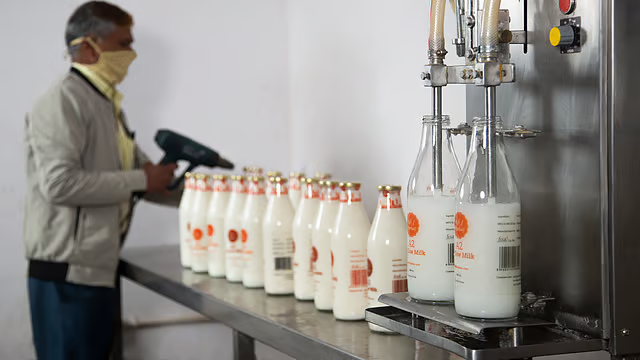
New Delhi: Despite being the world’s largest milk producer, India is grappling with a deep structural crisis in its dairy sector, marked by slowing production growth, rising costs, and a widening demand–supply gap.
Slowing Growth, Rising Prices
Milk production growth, which stood at 6–7% until 2022, has slowed significantly to 3.5–3.8% annually over the past few years. Meanwhile, consumer demand continues to grow at nearly 6%, creating a clear imbalance.
This has pushed milk prices up by ₹2–₹5 per litre across the country.
Industry leaders, including Srideep Kesavan of Heritage Foods, point to a severe supply crunch since late 2025, with farm-level milk prices hitting a five-year high.
Fodder Crisis at the Core
A major driver of the crisis is the shortage of cattle feed and green fodder:
- Feed prices have surged by 35–40%
- India requires ~120 million tonnes of feed annually
- Production capacity is barely 10 million tonnes
Experts like Rahul Kumar of Parag Milk Foods highlight that poor feed availability is directly affecting milk yield and animal health.
Quality and Nutrition Concerns
Despite high production, India faces quality challenges:
- Only 30–35% of milk is handled by the organised sector
- Majority production remains unorganised
- Farmers rely on raw feed materials like mustard cake and cottonseed
According to A.Y. Rajendra of Godrej Agrovet, lack of balanced nutrition leads to:
- Poor reproduction rates
- Lower milk quality
- Increased risk of adulteration and toxins
Climate and Disease Pressures
Climate change is further worsening the situation:
- Shrinking flush season due to heat stress
- Dependence on rain-fed fodder crops
- Limited fodder availability beyond monsoon months
Additionally, diseases like Lumpy Skin Disease are causing:
- Increased cattle mortality
- Reduced productivity
- Financial losses due to limited insurance coverage
Rising Costs and Farmer Disinterest
Milk production costs in India are now 10–15% higher than global levels, making dairy less attractive for farmers.
Read More: Fonterra Highlights Grass-Fed Standard as Key to Consumer Trust in Dairy
There is a growing trend of:
- Youth shifting to horticulture and floriculture
- Declining interest in traditional dairy farming
However, a parallel trend is emerging where corporate-style dairy farms with 50+ animals are gaining traction.
Additional Cost Pressures
The industry is also facing:
- Increased packaging costs due to polymer shortages linked to geopolitical tensions in West Asia
- Higher operational and logistics expenses
The Road Ahead
Experts believe the sector requires urgent reforms:
- Improved fodder production and feed quality
- Expansion of organised dairy sector
- Investment in animal genetics and breeding
- Better disease management and insurance coverage
Without these interventions, the gap between milk demand and supply could widen further, impacting both farmers and consumers.
Join Our “Dairy & Food Jobs Updates” WhatsApp group
Follow the Agri Jobs Updates channel on WhatsApp:
Disclaimer
I do my best to share reliable and well-researched insights but occasional errors or omissions may slip through. Please view all content as informational.
Stay informed on all the latest news updates
All Agriculture Books Free Download
All Dairy Technology Books Free Download
All Agricultural Engineering Books Free download
All Horticulture Books Free Download
All Fisheries Science Books Free Download
For Daily Update follow us at:
Facebook Telegram Whatsapp Instagram YouTube
The contents are provided free for noncommercial purpose such as teaching, training, research, extension and self learning.
If you are facing any Problem than fill form Contact Us
If you want share any article related Agriculture with us than send at info@agrimoon.com with your contact detail.