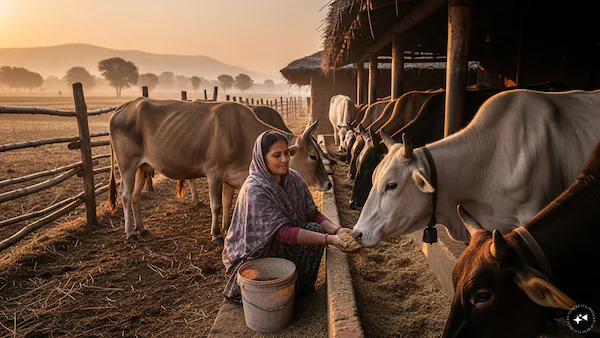
As the world prepares to observe the International Year of the Woman Farmer 2026, India’s dairy sector stands at a pivotal moment. Experts argue that empowering women in dairying is no longer just a social objective—it is an economic necessity capable of strengthening rural livelihoods, increasing farm incomes, and driving inclusive growth across the country.
In a nation that accounts for nearly one-fourth of global milk production, women perform much of the day-to-day work that sustains the dairy economy. Yet their contributions often remain invisible in ownership records, financial systems, and market transactions.
Women: The Hidden Force Behind India’s Dairy Success
From milking animals and collecting fodder to feeding livestock and managing household nutrition, women are at the heart of dairy farming operations across rural India. Despite their central role, men continue to dominate ownership of land, livestock, and financial assets in many regions.
This disconnect means that many women dairy farmers lack access to formal credit, insurance, training programs, and decision-making opportunities that could improve productivity and income.
Agricultural economists believe that recognizing women as independent dairy producers could transform the rural economy.
“When women gain direct access to markets, payments, and financial services, the benefits extend beyond individual households to entire communities,” dairy development experts note.
Why Dairy Is Uniquely Positioned
Unlike many agricultural sectors, dairy generates daily income and involves continuous engagement throughout the year. The village-based nature of milk procurement systems offers a practical pathway for women’s economic inclusion.
Experts suggest that registering women as milk producers and ensuring direct payments into their bank accounts can significantly strengthen financial independence, improve savings behavior, and enhance access to institutional credit.
Direct village-level procurement systems can also reduce dependence on intermediaries while increasing transparency and income security.
Persistent Challenges
Despite progress in rural development programs, several barriers continue to limit women’s participation in the formal dairy economy:
- Limited ownership of land and livestock assets.
- Difficulty accessing collateral-based loans.
- Lack of documentation required for formal banking.
- Restricted participation in training and extension programs.
- Social norms that limit representation in producer organizations.
- Lower participation in leadership and decision-making roles.
Experts warn that unless these structural issues are addressed, the dairy sector may struggle to fully unlock its productivity potential.
Building a Gender-Responsive Dairy Policy
Policy analysts argue that a modern dairy strategy must move beyond production targets and focus on inclusion.
A gender-responsive dairy framework would include:
- Registration of women as milk producers.
- Direct payment transfers to women farmers.
- Easier access to livestock ownership.
- Women-focused credit and insurance products.
- Inclusive extension and training services.
- Greater representation in dairy cooperatives and producer organizations.
- Support for women-led dairy enterprises.
Such measures could improve productivity while strengthening household resilience and food security.
Success Stories Emerging
Several dairy organizations across India have already demonstrated that targeted interventions can produce measurable results.
In some procurement networks, women manage a significant share of village collection centres, participate in local governance, and access dedicated financing programs designed for dairy entrepreneurship.
These initiatives have helped women move beyond animal care roles into leadership positions within the dairy value chain.
Read More: JKDFA Raises Milk Prices by ₹5 Per Litre Across Jammu & Kashmir
Experts believe similar models can be scaled nationally through cooperatives, private dairies, farmer-producer organizations, and self-help groups.
The Importance of Measuring Progress
Industry leaders increasingly emphasize the need for transparent reporting on gender outcomes.
Recommended indicators include:
- Number of women registered as milk producers.
- Percentage of payments made directly to women.
- Access to loans and financial services.
- Women’s participation in leadership positions.
- Income growth among women dairy farmers.
- Time savings through technology and infrastructure support.
Such data would allow policymakers and dairy companies to track progress and identify areas requiring additional support.
A Stronger Dairy Future
As India continues its journey as the world’s largest milk producer, experts believe the next phase of dairy growth must be built on inclusion as much as innovation.
Empowering women through direct market participation, financial independence, leadership opportunities, and entrepreneurship could significantly enhance dairy productivity while promoting social equity.
With the United Nations spotlighting women farmers in 2026, India’s dairy sector has an opportunity to become a global example of how gender-responsive policies can drive economic growth, strengthen rural communities, and build a more resilient food system.
The message is increasingly clear: the future of Indian dairying depends not only on better breeds, better feed, and better technology—but also on ensuring that the women who sustain the sector are recognized, empowered, and rewarded.
Join Our “Dairy & Food Jobs Updates” WhatsApp group
Follow the Agri Jobs Updates channel on WhatsApp:
Disclaimer
I do my best to share reliable and well-researched insights but occasional errors or omissions may slip through. Please view all content as informational.
Stay informed on all the latest news updates
All Agriculture Books Free Download
All Dairy Technology Books Free Download
All Agricultural Engineering Books Free download
All Horticulture Books Free Download
All Fisheries Science Books Free Download
For Daily Update follow us at:
Facebook Telegram Whatsapp Instagram YouTube
The contents are provided free for noncommercial purpose such as teaching, training, research, extension and self learning.
If you are facing any Problem than fill form Contact Us
If you want share any article related Agriculture with us than send at info@agrimoon.com with your contact detail.