
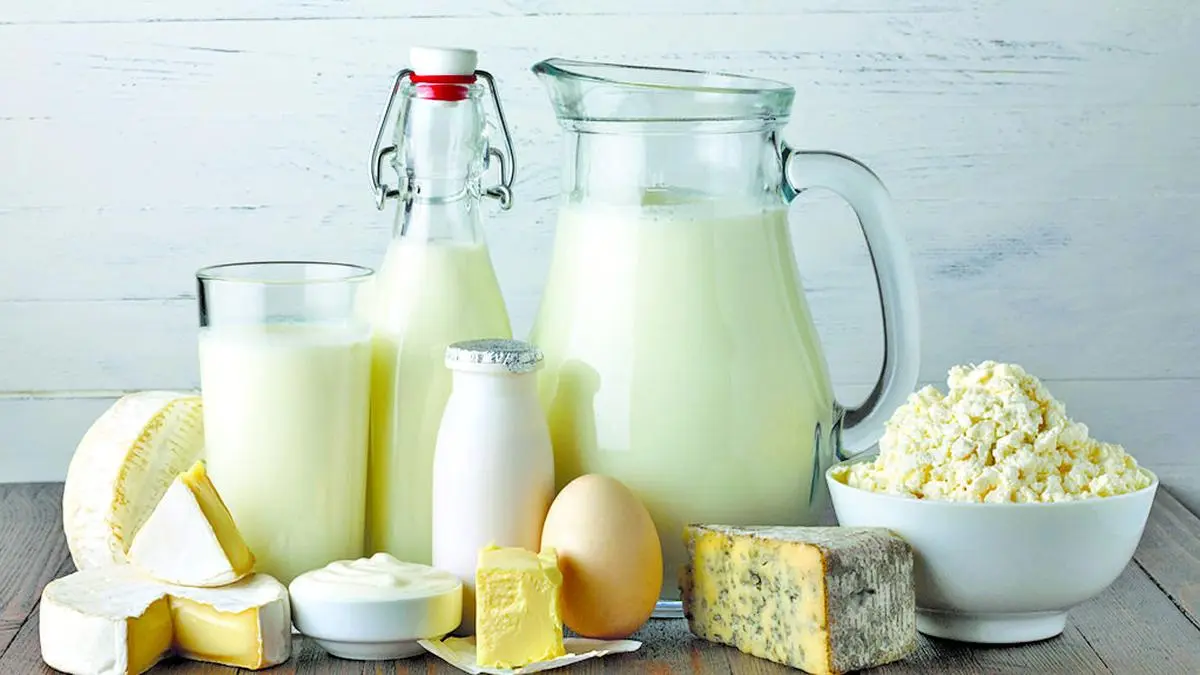
With milk production nearing 248 million tonnes, India has the scale to become a major dairy exporter. But turning that production strength into global competitiveness will require a shift from traditional ghee exports towards industrial dairy fats such as anhydrous milk fat (AMF), along with better market access and export infrastructure.
NEW DELHI: India’s position as the world’s largest milk producer has yet to translate into a comparable presence in global dairy trade. The country produced an estimated 247.87 million tonnes of milk in 2024-25, accounting for nearly a quarter of global production, but its share in international dairy exports remains below 1%.
The gap points to a fundamental challenge for India’s dairy industry: production scale alone does not guarantee export competitiveness.
One potential opportunity lies in anhydrous milk fat (AMF) — a highly concentrated, neutral dairy fat used extensively by food manufacturers, confectionery companies, bakeries and other industrial users worldwide.
From ghee to industrial dairy fat
India already has a large dairy-fat ecosystem. Butter and ghee production together reached around 5.1 million tonnes, while exports of butter and ghee were valued at approximately $330 million in 2024.
However, India’s export basket remains heavily oriented towards ghee, particularly in Gulf markets.
Industry observers believe this creates an opportunity to diversify into neutral AMF, which serves a much broader industrial market than traditional consumer-oriented ghee.
The distinction is important. Ghee has strong cultural and culinary demand, particularly across South Asian and Middle Eastern markets. AMF, on the other hand, is primarily an industrial ingredient, where buyers evaluate consistency, functionality, specifications, food-safety compliance and supply reliability.
For India to compete in this segment, simply increasing production will not be enough.
Geography could become India’s competitive advantage
A more targeted export strategy could help India build a stronger position in international dairy-fat markets.
The Gulf region remains a natural market because of India’s geographic proximity, established trade relationships and existing demand for Indian dairy products.
The next opportunity could be Bangladesh and wider South Asia, where geographical proximity and growing food-processing industries could support Indian dairy-fat exports.
India could then selectively expand into South-East Asian and African markets, while treating China as a longer-term strategic market rather than an immediate export destination.
Such a strategy would avoid spreading limited export resources across too many markets simultaneously.
Two engines for an AMF export strategy
India could potentially pursue two parallel models.
The first would be domestic-surplus conversion.
Where genuine milk-fat surpluses are available, dairy processors could convert them into neutral AMF for export. This would allow India to capture greater value from its domestic milk pool while developing capabilities in industrial dairy ingredients.
The second would be an import-processing-re-export model.
Bonded facilities and Special Economic Zone (SEZ) platforms could potentially allow processors to import commodity butterfat, undertake value-added processing in India and re-export finished dairy ingredients.
Also Read: Amul Dairy Crosses ₹15,114 Crore Turnover in FY 2025–26, Marks 80 Years of Cooperative Growth
This approach would be particularly relevant when domestic milk-fat availability is insufficient or domestic prices make Indian AMF uncompetitive in global markets.
Domestic demand remains the biggest structural constraint
India’s enormous domestic dairy market is both an advantage and a challenge.
Milk fat is strongly absorbed by the domestic market through products such as ghee, butter, sweets and other traditional dairy products. As a result, the quantity of competitively priced milk fat available for export-oriented processing can be limited.
Exporters therefore face a difficult equation: Should available milk fat be sold into India’s large domestic market, or converted into higher-value industrial ingredients for international buyers?
The answer will depend on milk procurement costs, domestic dairy-fat prices, international AMF prices, logistics and the ability to secure long-term export contracts.
Ghee is not AMF
Another challenge is product positioning.
India’s established expertise in ghee production does not automatically translate into global competitiveness in neutral AMF.
Industrial buyers typically require consistent specifications, controlled processing, traceability, food-safety compliance and reliable bulk supply. AMF therefore requires a different commercial and technical ecosystem from traditional ghee exports.
This includes specialised processing facilities, bulk storage and handling systems, quality laboratories, export certifications and strong relationships with industrial customers.
Market access remains critical
Even a cost-competitive AMF product cannot reach global markets without regulatory and commercial access.
Indian dairy exporters continue to face challenges related to market-specific food-safety requirements, residue regulations, facility registration, documentation and approval procedures.
Different countries can impose different requirements on dairy products, making market access a significant component of export strategy.
For AMF exporters, compliance therefore needs to be designed into the production and traceability system rather than treated as an export-stage formality.
From trader-led exports to customer-led exports
India’s dairy export business has traditionally relied heavily on traders and intermediaries.
While traders remain important for market access, an industrial AMF strategy would require processors to develop direct knowledge of international customers.
Large food manufacturers and ingredient buyers want more than a competitive price. They need consistency, technical specifications, supply assurance and the ability to solve formulation and processing requirements.
Developing direct relationships with industrial buyers could therefore help Indian dairy companies understand international demand and build products around specific customer requirements.
Can AMF become India’s global dairy-fat play?
India already possesses three major advantages: scale of milk production, a large dairy-processing ecosystem and proximity to several high-potential markets.
The missing pieces are competitive milk-fat economics, specialised AMF capacity, regulatory access, bulk infrastructure and deeper relationships with industrial customers.
The opportunity, therefore, is not simply to export more dairy products.
It is to move up the dairy value chain — from exporting traditional products such as ghee to supplying standardised industrial dairy ingredients that can enter global food-manufacturing supply chains.
If India can combine domestic surplus conversion with strategically designed bonded or SEZ processing platforms, AMF could become one component of a broader strategy to build India’s presence in the global dairy-ingredient market.
For India, the question is no longer whether it has enough milk.
The bigger question is whether it can convert its enormous milk production base into globally competitive dairy ingredients — and AMF could be one of the products that tests that capability.
Join Our “Dairy & Food Jobs Updates” WhatsApp group
Follow the Agri Jobs Updates channel on WhatsApp:
Disclaimer
I do my best to share reliable and well-researched insights but occasional errors or omissions may slip through. Please view all content as informational.
Stay informed on all the latest news updates
All Agriculture Books Free Download
All Dairy Technology Books Free Download
All Agricultural Engineering Books Free download
All Horticulture Books Free Download
All Fisheries Science Books Free Download
For Daily Update follow us at:
Facebook Telegram Whatsapp Instagram YouTube
The contents are provided free for noncommercial purpose such as teaching, training, research, extension and self learning.
If you are facing any Problem than fill form Contact Us
If you want share any article related Agriculture with us than send at info@agrimoon.com with your contact detail.